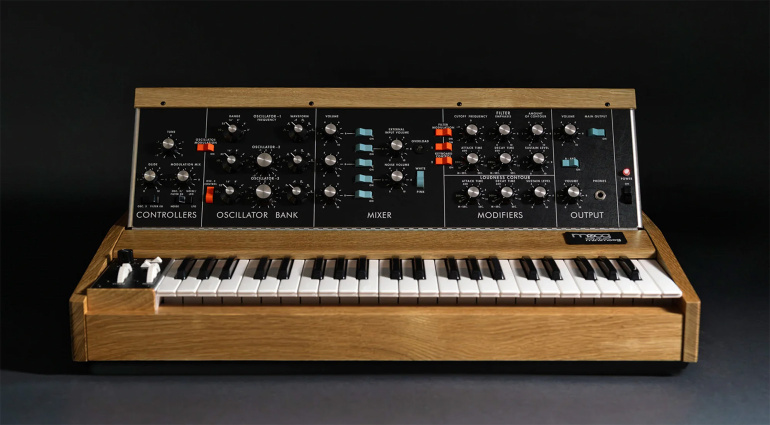
TL;DR: Moog has released a limited-edition Bob Moog Tribute Edition Minimoog Model D, limited to 500 units. It features a distinctive oak cabinet, is technically identical to the standard reissue, and for each sale, $500 is donated to the Bob Moog Foundation. It’s priced slightly lower than the previous Geddy Lee edition.
- Limited to 500 handcrafted units with a sleek oak wood cabinet.
- Technically identical to the standard Minimoog Model D reissue, featuring the classic architecture with added LFO, MIDI, and hard-wired mixer feedback.
- Includes a 44-key Fatar keybed with velocity and aftertouch (patchable via rear panel jacks) and a matching soft case.
- Priced at $4,699, making it more affordable than the Geddy Lee Edition.
- Moog will donate $500 to the Bob Moog Foundation for each unit sold.
Reading time: 4 min
Want more synth news before your next coffee break? Join the Noxal newsletter — no spam, just gear worth knowing about.
The Legend Gets a New Suit

Here at Noxal, we’ve developed a Pavlovian response to Moog press releases. The email arrives, the subject line promises something “special,” and my hand instinctively reaches for the coffee grinder. It’s going to be a nuanced read. True to form, Moog has unveiled the Bob Moog Tribute Edition Minimoog Model D. This marks the second major limited-edition variant of the reissued classic in just over a year, following the Geddy Lee signature model. The core news is simple: 500 units, an elegant oak cabinet, and a donation to the Bob Moog Foundation. On the surface, it’s a heartfelt tribute. Dig a little deeper, and it’s a fascinating case study in brand legacy, collector psychology, and the economics of reverence.
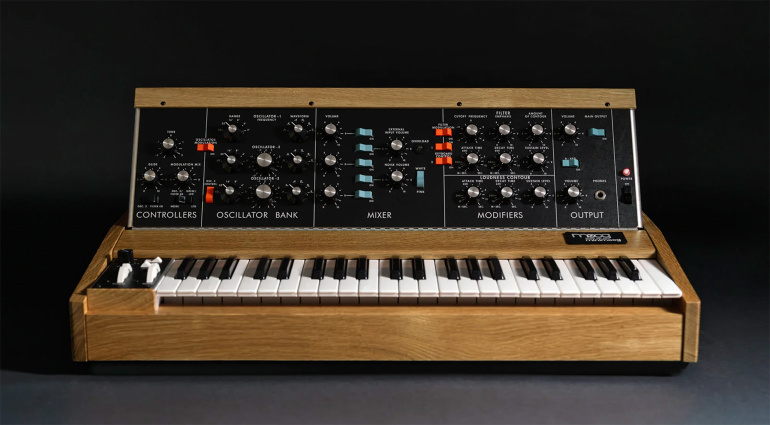
The visual shift is the headline. Swapping the standard walnut or the Geddy Lee’s racing red for a sleek oak finish is a masterstroke in perceived vintage aesthetic. Oak has that warm, mid-century modern, almost laboratory-furniture vibe that feels intrinsically linked to the era of Bob’s early tinkering. It doesn’t scream for attention like the red edition; it whispers with authority. It’s the difference between a rock star’s stage synth and the instrument a visionary might have had in his workshop. This isn’t just a new color; it’s a calculated narrative told through wood grain.
What’s Under the Oak Hood?
Technically, there are no surprises, and that’s precisely the point. Moog is smart enough not to mess with the sacred text. The Tribute Edition is functionally identical to the standard reissue Model D. That means you get the holy trinity of analog synthesis: the three legendary VCOs, the soul-defining ladder filter, and the two contour generators. Crucially, it also includes the thoughtful modern updates that make the reissue a practical instrument for the 21st century: a dedicated LFO, full MIDI implementation, and the hard-wired mixer feedback circuit—a mod that was practically mandatory on the originals.
The keybed remains the excellent 44-key Fatar unit with velocity and aftertouch sensitivity. It’s worth reiterating that these are not default mod sources on the front panel; you must patch them in via the rear jacks. This maintains the classic, uncluttered interface while offering modern expressive potential for those who seek it. It’s a respectful compromise. The package is completed with a matching SR Series soft case, which feels like a non-negotiable inclusion for an instrument at this price and pedigree. You’re not just buying a synth; you’re buying a curated artifact, and it needs appropriate transport.
The Tribute Edition Market Math
Let’s talk numbers, because at nearly five thousand dollars, we have to. The Tribute Edition is listed at $4,699. Interestingly, this undercuts the Geddy Lee Edition, which still commands a higher price. This creates a peculiar tiered system within the limited-edition ecosystem: the “artist” edition (Geddy) sits above the “founder” edition (Bob). One could cynically view this as a pricing strategy to make the new release seem like a relative “value,” or more charitably, as a reflection of different licensing or cost structures. The more important number is 500—the production limit. This artificial scarcity is the engine of desire for collectors.
The most commendable number, however, is the $500 donation to the Bob Moog Foundation per unit sold. This transforms the purchase from a mere transaction into a philanthropic act, however small relative to the total cost. It’s a powerful piece of marketing that aligns perfectly with the tribute theme. It allows the buyer to feel connected to Bob’s legacy in a tangible way, supporting the Foundation’s work in education and preservation. It’s a feel-good factor that the standard model or even the Geddy Lee edition can’t claim, and it morally justifies the premium over the base model for those on the fence.
Who Is This For, Really?
This is not an instrument for someone seeking their first analog monosynth. For that, the world is your oyster, from a used Subsequent 25 to a dozen fantastic competitors. The Bob Moog Tribute Edition Minimoog D exists for a specific confluence of individuals: the serious collector, the Moog completist, the studio owner with disposable income who wants a definitive, beautiful centerpiece, and the devout fan for whom the tribute aspect and charitable donation resonate deeply. It’s for the person who already appreciates what the Model D is and now wants a version that tells a more specific story.
It also exists for Moog itself. In a challenging market for hardware manufacturers, leveraging your most iconic product with low-volume, high-margin, high-desirability editions is simply good business. It keeps the brand in the conversation, generates press (case in point), and services the high-end collector market without disrupting the production of more accessible lines. The Tribute Edition is a luxury item, a piece of functional art, and a brand-building exercise all in one beautifully crafted oak box. Whether you find that inspiring or exasperating depends entirely on your relationship with your bank account and your view of synth culture as a whole.
Frequently Asked Questions
Is the sound any different from the standard reissue Minimoog Model D?
No, the sound engine is identical. Moog has not altered the oscillators, filter, or any part of the audio path. The differences are purely cosmetic (the oak cabinet), the included soft case, the limited edition numbering, and the associated donation to the Bob Moog Foundation.
How does this compare to the Geddy Lee Minimoog Model D?
Technically, they are the same instrument. The differences are aesthetic (oak vs. red finish), philanthropic (the Tribute Edition includes a $500 donation), and financial (the Tribute Edition is currently priced lower than the Geddy Lee Edition). The choice boils down to which story and visual you prefer.
If I patch in velocity and aftertouch, do they affect the filter and amplifier?
Yes, but not by default. The velocity and aftertouch outputs from the Fatar keybed are available as control voltage signals via jacks on the rear panel. You must physically patch a cable from, for example, the Velocity Output jack into the Filter Frequency CV Input on the front panel to have velocity control the filter. This modular approach maintains the original front-panel layout while offering modern functionality.
As I finish this, my coffee’s gone cold contemplating the price of legacy. Time for a refill and a session with a synth I already own—the best tribute to any pioneer is to actually make some noise.