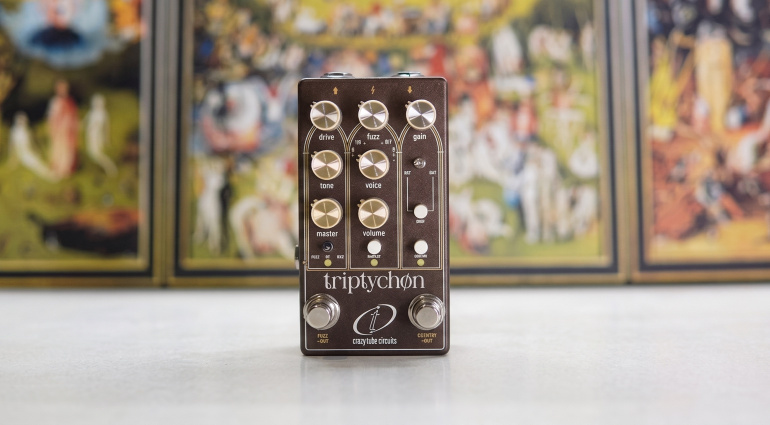
TL;DR: Crazy Tube Circuits has unveiled the Triptychon, a three-in-one pedal combining fuzz, harmonic shaping, and amplifier drive. It packs four classic fuzz modes, two boost/octave options, and a cranked-amp-style compression section into a compact enclosure, complete with anti-buffer circuitry for vintage feel.
- Four fuzz modes (Fuzz Face, Vox Tone Bender, Mk1.5, MkII) using a custom six-metal-can silicon transistor design for germanium-like tone without instability.
- Right side offers treble boost, mid boost, or upper-octave fuzz with two distinct characters (clear/articulate or thick/saturated).
- Left panel mimics a cranked tube amp, adding compression and sustain to shape your overall sound.
- Switchable anti-buffer circuits preserve guitar’s natural response when used after buffers, wireless, or active pickups.
- Available at Thomann for €315.
Reading time: 3 min
Want more synth news before your next coffee break? Join the Noxal newsletter — no spam, just gear worth knowing about.
What Is the Triptychon?

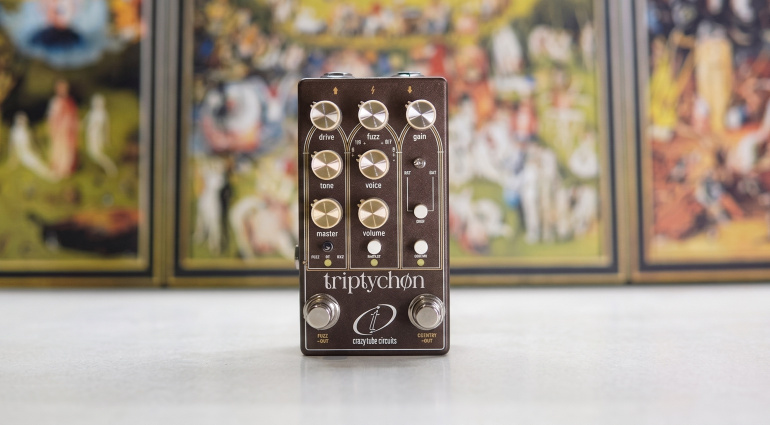
Crazy Tube Circuits, a name that tends to make gear nerds perk up like a dog hearing a cheese wrapper, has dropped the Triptychon. As the name suggests, it’s a three-in-one pedal that distills fuzz, harmonic shaping, and amplifier drive into a single stompbox. The idea, as the company explains, is to recreate the magic of a vintage studio setup where a fuzz or treble booster was pushed into an already cranked tube amp. That interaction created the sustain and “creaminess” we hear on classic records—something often lost when using a clean amp as a pedal platform.
Now, we at Noxal have seen plenty of multi-effect pedals that promise the moon but deliver a soggy biscuit. The Triptychon, however, seems to understand that the magic isn’t just about stacking effects; it’s about the interplay between sections. Each part is designed to work in concert, not just as a collection of disjointed circuits. It’s a refreshing approach in a world where “more” often means “more confusion.”
Fuzz Section: Four Iconic Voices
The heart of the Triptychon is an analog fuzz engine with four modes, each modeled after legendary circuits. You can toggle between the touch-sensitive feel of a Fuzz Face, the bite of a Vox Tone Bender, or the heavy saturation of the Tone Bender Mk1.5 and MkII. That’s a lot of vintage grit packed into a single dial, and it covers everything from subtle edge-of-breakup to a total wall of sound.
What’s particularly clever here is the use of a custom six-metal-can silicon transistor design. Crazy Tube Circuits claims this gives it a germanium voice without the instability—temperature sensitivity, weird biasing, and general finickiness—that makes germanium pedals a headache for live use. I can’t count the number of times I’ve seen a germanium fuzz die mid-set because of a drafty stage. Silicon might lack the mystique, but it’s reliable, and that’s worth something when you’re paying €315.
Harmonic Shaping and Amp Drive
Moving to the right side of the pedal, we find the harmonic shaping section. In boost mode, you get a choice between a sharp treble boost or a warmer, mid-focused sound—think Rangemaster territory. Switch to octave mode, and it acts as an upper-octave fuzz with two distinct options: one clear and articulate, another thick and saturated. This is the kind of flexibility that lets you dial in everything from a piercing lead tone to a grimy rhythm grind without swapping pedals.
The left panel is where the Triptychon earns its keep. Instead of a standard overdrive, it mimics a cranked tube amp, adding compression and feel. It’s not trying to be a distortion pedal; it’s creating the environment your fuzz and boost need to shine. You can use it for a touch of sustain or push it harder to shape your entire sound. It’s the closest thing I’ve seen to a “studio amp in a box” that doesn’t require a PhD in knob-twiddling.
Anti-Buffer Circuitry and Flexibility
One of the more thoughtful features is the switchable anti-buffer circuit. Classic fuzz and treble booster pedals often lose their magic when placed after buffers, wireless systems, or active pickups. The Triptychon lets you engage a circuit that restores your guitar’s natural feel and response. Turn it on if there’s a buffer upstream; leave it off if you’re plugging in directly. It’s a small detail, but it shows that Crazy Tube Circuits understands the real-world problems of pedalboard wiring.
For live players, the drive section can be linked to either the fuzz or boost footswitch, or controlled independently via an optional external XT footswitch. This gives you total flexibility without turning your board into a spaghetti mess. It’s the kind of design that suggests the engineers actually play gigs, not just sit in a lab with oscilloscopes.
Market Context and Who It’s For
At €315, the Triptychon sits in the boutique pedal price range. It’s competing with the likes of Strymon, Chase Bliss, and other high-end builders. But unlike those, the Triptychon isn’t trying to be a multi-effects workstation. It’s laser-focused on recreating a specific vintage tone architecture—the interaction of fuzz, boost, and amp drive. That makes it ideal for players who want that classic rock, stoner, or psychedelic sound without hauling a vintage amp to every gig.
Is it for everyone? No. If you’re a clean-tone purist or a digital modeling devotee, this probably isn’t your jam. But if you’ve ever spent hours trying to replicate the sound of a cranked Marshall with a fuzz face and a treble booster, the Triptychon might save you from that particular rabbit hole. We at Noxal appreciate a pedal that knows what it wants to be, and this one knows it wants to be a vintage studio in a box—no apologies.
Frequently Asked Questions
What is the Triptychon’s power requirement?
The Triptychon runs on standard 9V DC center-negative power, drawing approximately 100mA. It does not include a battery compartment, so plan your power supply accordingly.
Can I use the octave effect independently of the fuzz?
Yes, each section—fuzz, harmonic shaping, and amp drive—can be used independently or in combination. The footswitches and mini toggles allow for flexible routing.
How does the anti-buffer circuit affect my tone?
When engaged, the anti-buffer circuit restores the impedance and frequency response of a direct guitar connection, counteracting the loading effects of buffers, wireless systems, or active pickups. It doesn’t add coloration; it removes the veil.
I’ll be honest, I’ve already started saving for one, even though my bank account is currently held together with caffeine and bad decisions. But at least my coffee will taste better knowing the Triptychon exists.