
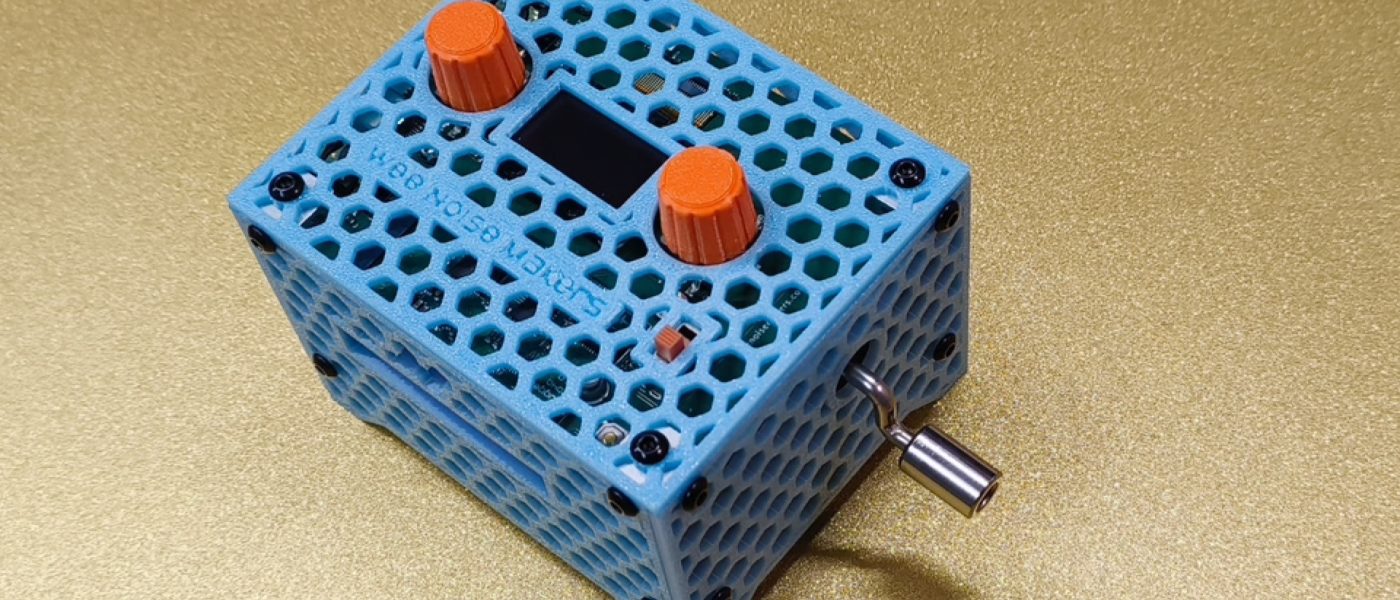
TL;DR: Wee Noise Makers have transformed a vintage paper music box mechanism into a digital synth and MIDI sequencer. The prototype, shown at SynthFest France 2026, uses a paper disc with holes read by photoresistors, feeding a Mutable Instruments Braids-based oscillator. It’s a quirky, hands-on instrument that could hit Kickstarter if enough people are interested.
- Paper music box mechanism digitized: holes in paper discs are read by LEDs and photoresistors, converted to note data via a Raspberry Pi RP2040.
- Sound engine powered by open-source Mutable Instruments Braids oscillator, with options to repitch and transpose via hardware menu.
- Functions as a standalone synth with tweakable engine, or as a manual MIDI sequencer for external gear via MIDI output.
- Prototype debuted at SynthFest France 2026; price and availability TBA, with a potential Kickstarter campaign under consideration.
Reading time: 4 min
Want more synth news before your next coffee break? Join the Noxal newsletter — no spam, just gear worth knowing about.

What Is the Wee Noise Makers Music Box?

If you’ve ever wound up a paper music box and let its tiny metal tines plink out a tune, you know the feeling: a mix of nostalgia and mild disappointment that it only plays one song. Wee Noise Makers, the same crew behind the open-source PGB-1 groovebox, have decided that one song is not enough. At SynthFest France 2026, they unveiled a prototype that turns that old paper mechanism into a fully digital synthesizer and MIDI sequencer.
We at Noxal have a soft spot for anything that makes us grin at a trade show. And this did. The demo unit—a riot of colorful paper discs and exposed PCBs—looked like a prop from a steampunk children’s book. It’s not trying to be the next flagship workstation. It’s a fun, tactile experiment that asks: what if you could compose new songs for a music box, and then make it scream like a synth?
How It Works: Paper Meets PCB
The core trick here is simple and clever. The paper disc—the same kind you’d punch holes into for a vintage music box—feeds through two stacked PCBs. The bottom board has LEDs shining upward; the top board houses photoresistors. When a hole passes between them, light hits the sensor, and the system knows a note should play. It’s an optical reader, essentially, but housed in a modern, compact form factor.
The brains of the operation is a Raspberry Pi RP2040, which converts those light pulses into MIDI note data. The whole thing is called the Noise Nugget, and it’s the processing heart of the instrument. This isn’t just a glorified MIDI controller—the data goes to an onboard sound engine, which we’ll get to in a moment. But the takeaway here is that the interface is purely analog and mechanical. You punch holes in paper, you feed it in, you hear music. There’s no screen, no menu diving for the basic operation. That’s refreshing in a world of endless submenus.
Sound Engine and Sequencing
Where the Wee Noise Makers Music Box really steps away from its 19th-century ancestor is in the sound engine. The prototype uses an open-source Mutable Instruments Braids oscillator as its voice. For those of you who’ve been around the modular block, Braids is a wavetable and macro-oscillator that can do everything from classic analog waves to FM, vocal synthesis, and noise. It’s a versatile choice, and it means this little paper-fed box can sound like a lot more than a gentle music box chime.
Better yet, you can modify the input after the fact. The hardware menu lets you repitch and transpose the notes coming from the paper disc. So if you punch a sequence in C major but want to play it back in D minor with a bit of grit, you can. For those who want to use it as a sequencer for their main rig, there’s a MIDI output. The paper disc becomes a physical, editable sequence that you can hand off to a Eurorack system or a desktop synth. It’s manual sequencing at its most literal—you literally cut the sequence out of paper.
Market Context and Who It’s For
Let’s be honest: this is not a tool for live sets or studio workhorses. It’s a novelty. But novelty, in the synth world, is often where the most joy lives. Wee Noise Makers are positioning this as a fun project, not a serious instrument. They’re considering a Kickstarter campaign but are waiting to see if there’s enough interest. That’s the right move—this is the kind of thing that lives or dies on community enthusiasm.
Who should back it? Educators who want a tactile way to teach sequencing. Hobbyists who enjoy the ritual of punching paper holes. Collectors of oddball gear. Anyone who’s ever looked at a music box and thought, “I wish I could program this to play a distorted bassline.” The price is TBA, but if it lands in the sub-€200 range, it could be a charming addition to a studio shelf that occasionally gets taken down for a creative spark. If it costs more, it’ll be a harder sell. We’ll keep an eye on the campaign page.
Frequently Asked Questions
Does the Music Box require special paper discs?
Yes. You’ll need to use the paper discs designed for the system, or you can punch your own holes into blank discs. The prototype uses standard paper stock similar to vintage music box discs, but the exact specifications will be announced with the final product.
Can I use it as a standalone synth without a computer?
Absolutely. The Music Box has a built-in sound engine based on the Mutable Instruments Braids oscillator, so it makes sound on its own. You don’t need a DAW or any external gear—just paper, holes, and power.
Is the MIDI implementation standard?
From what we saw at SynthFest France, the MIDI output sends standard note data. You can connect it to any synth with a MIDI input and use the paper disc as a sequencer. Transpose and repitch controls are available via the hardware menu, so you can adjust the output without repunching paper.
We at Noxal will be punching holes in paper for the next week, probably while our coffee grows cold. If you see us at a café with a stack of hole-punched discs, just know we’re not being passive-aggressive about the playlist—we’re composing.