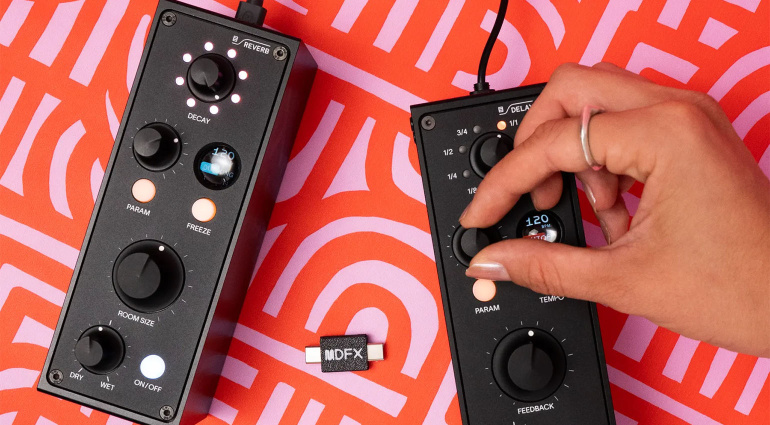
TL;DR: Berlin’s Menura Audio has launched two new digital hardware effects units — the MDFX Delay and MDFX Reverb — designed specifically for DJs who want tempo-synced, studio-quality effects without needing a modern all-in-one mixer. Both units come in horizontal or vertical magnetic enclosures, include USB audio interfaces, and are currently funding on Kickstarter with early bird pricing starting at €340.
- Separate hardware delay and reverb units for DJs, each available in horizontal or vertical magnetic form factors for tight mixer integration.
- Three tempo sync methods: tap tempo, automatic BPM detection (works with vinyl), and MIDI clock. Units can link together.
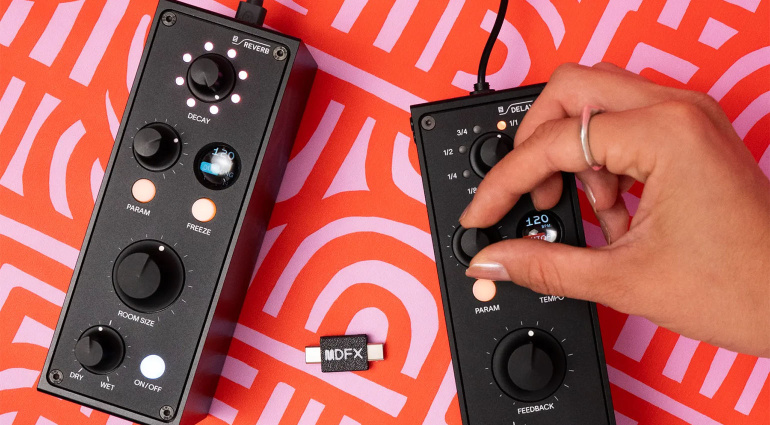
- Delay offers tempo-locked divisions from eighth notes to four bars, self-oscillation, reverse mode, tape echo simulation, filter, and ducking.
- Reverb features plate algorithm, freeze button, BPM-locked tremolo and shimmer, lo-fi ‘80s reverb mode, and ducking.
- Both units run at 96kHz/32-bit float, include a class-compliant USB audio interface for recording, and support USB-C power from power banks.
Reading time: 3 min
Want more synth news before your next coffee break? Join the Noxal newsletter — no spam, just gear worth knowing about.
A DJ’s Effect Palette Gets a Digital Upgrade

I’ve spent more hours than I care to admit staring at the effects section of a DJ mixer, wondering why everything sounds like a washing machine full of marbles. The truth is, most built-in mixer effects are utilitarian at best and sonically offensive at worst. So when Menura Audio announced they were expanding their MDFX line with digital delay and reverb units, I actually put down my coffee. That doesn’t happen often.
We at Noxal have a soft spot for companies that treat DJs like serious musicians rather than just playlist curators. Menura Audio, a Berlin outfit we first encountered when they released the modular MDMX mixer, clearly understands that hardware effects for DJs shouldn’t be an afterthought. These new MDFX units are purpose-built for the dance floor, not repurposed guitar pedals stuffed into a different box. And yes, there is a difference.
MDFX Delay: Dancefloor Time Manipulation
The MDFX Delay is a digital delay unit that understands tempo is king. It offers tempo-locked divisions from eighth notes all the way up to four bars, which means you can go from tight rhythmic repeats to sprawling ambient washes without breaking the mix’s flow. But here’s where it gets interesting: it has stable self-oscillation. For those of us who remember the joy of riding a delay into feedback territory during a breakdown, this is a welcome feature that many modern digital units shy away from.
There’s a reverse mode for those “wait, did that just happen?” moments, and a TAPE parameter that simulates a grungy, warped 1970s-style tape echo. Because sometimes digital perfection is boring. You also get a filter with low- and highpass modes, stereo spread, quantized feedback pitch, a grid with tape-style pitch bends, and ducking. The ducking is crucial — it means your delay repeats won’t clutter the mix when the kick drum hits. Someone at Menura actually understands gain staging.
MDFX Reverb: Space as an Instrument
If the delay is about time, the MDFX Reverb is about space. It offers a plate reverb algorithm, which is a classic choice for electronic music — think lush, smooth, and musical rather than cavernous and muddy. There’s a freeze button for capturing the effect and holding it indefinitely, perfect for building tension before a drop or creating textural pads from a single sound.
The reverb also includes BPM-locked tremolo and shimmer, which means you can add rhythmic movement and ethereal highs that stay locked to your track’s tempo. A highpass filter lets you keep the low end clean — because nobody wants a muddy kick drum swimming in reverb. Ducking and damping give you control over how the reverb behaves in a mix, and there’s a lo-fi ‘80s reverb simulation for when you want to sound like a John Carpenter film soundtrack. We approve.
Under the Hood: USB Audio and Magnetic Mounting
Both units run at 96kHz/32-bit float sound quality, which is more than adequate for live performance and studio recording alike. Every parameter is controllable via USB MIDI, and there are 20 recallable presets accessible with program change commands. This means you can set up specific sounds for different tracks and recall them instantly — no menu diving mid-set.
Here’s the feature that genuinely surprised me: each unit includes a built-in, class-compliant USB audio interface that can record sets pre- or post-effect. It works driverless on macOS, Windows, iOS, and Linux. That’s right — you can plug this thing into an iPad and record your set without any additional hardware. They’re powered over USB-C and will accept power banks, so your setup can be as mobile as you are. And the magnetic mounting? The units are designed to stick to metal surfaces, so they stay put when the bass is rattling your teeth.
Pricing, Availability, and the Kickstarter Gamble
The MDFX Delay and Reverb are currently funding on Kickstarter, and at the time of writing, the campaign is already well on its way to clearing its goal. There are Super Early Bird models available for €340 each, which is reasonable for a boutique hardware effect with this feature set. The campaign runs until August 1.
Menura Audio has done something smart: they’ve loaded the actual DSP into their website via WebAssembly, so you can try the effects in your browser before backing. “Sound quality is everything to us,” says founder Jasper Lauter, “so the browser demo lets everyone judge the sound and the features for themselves.” We at Noxal appreciate transparency, even if it means we can’t blame bad effects on the Kickstarter hype machine.
Frequently Asked Questions
Can I use the MDFX units with vinyl turntables?
Yes. The automatic BPM detection works with vinyl, so you can sync effects to records without needing a digital signal. Tap tempo and MIDI clock are also available for other setups.
Do the units work with a standard DJ mixer that has no effects?
Absolutely. That’s the whole point. The MDFX units are designed to add studio-quality delay and reverb to any mixer, including old-school battle mixers and analog setups. They work as external send/return effects or inline processors.
Can I use them in a studio with a DAW?
Yes. The units feature full MIDI control over all parameters, USB audio interface functionality, and 20 recallable presets. They work as hardware effects processors in any DAW that supports MIDI and class-compliant audio interfaces.
The MDFX units won’t fix your beatmatching or make your record collection less embarrassing, but they will make your transitions sound like you actually care. Now if you’ll excuse me, my espresso is getting cold and there’s a Kickstarter page calling my name.