TL;DR: Crazy Tube Circuits has shrunk their beloved White Whale spring reverb pedal into the White Whale Junior, a compact enclosure that packs the same analog spring reverb and amp-style tremolo circuitry. For around €299, you get real springs, dedicated footswitches, and enough control to make any surf rock purist weep with joy — without needing a second pedalboard.
- Same analog spring reverb and tremolo circuitry as the larger White Whale V2, now in a much smaller pedalboard-friendly enclosure.
- Real spring tank driven by a dedicated analog power amplifier, not a low-level signal path — for that authentic vintage amp saturation.
- Separate footswitch and volume controls for reverb and tremolo, plus dwell, mix, tone, speed, and intensity knobs.
- Available for pre-order at Thomann for $285 / £262 / €299, with estimated delivery in two to three weeks.
- Reverb sits before tremolo in the signal chain, allowing both dry and wet signals to be modulated for extra depth.
Reading time: 4 min
Want more synth news before your next coffee break? Join the Noxal newsletter — no spam, just gear worth knowing about.

The Big Shrink: Same Soul, Smaller Footprint
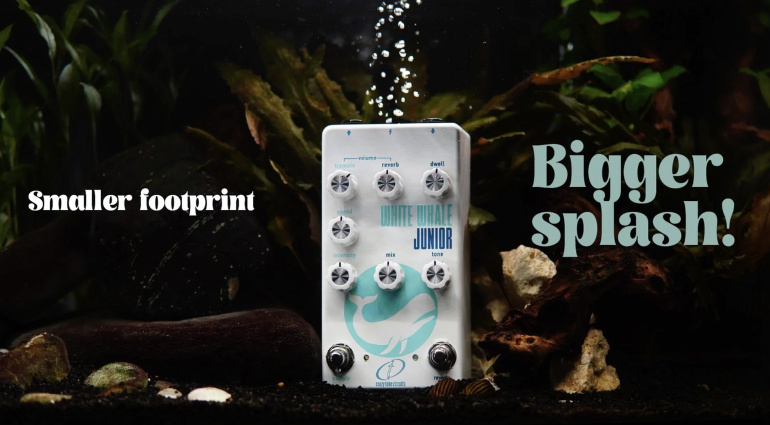
We at Noxal have a soft spot for pedals that don’t compromise. When Crazy Tube Circuits announced the White Whale Junior, my first thought was, “Finally, someone listened.” The original White Whale has been a staple for spring reverb enthusiasts since its debut, and the V2 only solidified its reputation. But let’s be honest — that thing was a beast. For those of us with pedalboards that already resemble a game of Tetris, fitting a White Whale meant sacrificing either real estate or another essential effect.
The White Whale Junior solves this without cutting corners. CTC claims it’s the same circuitry as the bigger model, just in a smaller box. That’s a bold statement, but looking at the specs and hearing the demos, I’m inclined to believe them. The same three-spring tank, the same dedicated analog power amplifier driving those springs, the same subtle saturation that makes vintage amps sing — all in a package that won’t make your board look like a clown car. It’s the kind of engineering we love to see: no bloat, no unnecessary features, just the good stuff.
Spring Reverb vs. Emulation: Why Real Springs Matter
There are two kinds of guitarists: those who think a digital spring reverb emulation is “close enough,” and those who know better. We at Noxal fall squarely in the latter camp, and we’re not sorry. There’s a tactile, almost chaotic quality to real springs that no algorithm has ever replicated. The way the reverb blooms when you dig in, the subtle rattle when you bump the pedal, the way it breathes — it’s not just an effect; it’s an instrument in itself.
The White Whale Junior gets this. By driving the springs with a dedicated analog power amplifier instead of feeding them directly from a low-level signal path, CTC ensures that the reverb responds dynamically to your playing. The dwell knob doesn’t just control decay — it changes how hard the springs are driven, introducing harmonic overtones and compression that sound alive. This is the same philosophy that made the original White Whale a classic, and it’s a joy to see it preserved in a smaller format.
Tremolo and Signal Chain: The Brownface/Blackface Legacy
The White Whale Junior isn’t just a reverb pedal — it’s a dual-effect powerhouse, combining spring reverb with amp-style tremolo. The layout is inspired by classic Fender brownface and blackface amps, where the reverb sits before the tremolo in the signal chain. This means the tremolo modulates both the dry signal and the reverb trails, creating that lush, three-dimensional wobble that surf rock and garage bands have been chasing for decades.
Each effect has its own footswitch and volume control, so you can engage them independently. That’s a godsend for live players who need to switch from a clean, reverb-drenched verse to a tremolo-pulsed chorus without tap-dancing. The tremolo controls — speed and intensity — are straightforward, and the reverb section offers dwell, mix, and tone. It’s a no-nonsense setup that prioritizes sound over gimmicks. And honestly, that’s exactly what we want from a pedal like this.
Controls and Pricing: What You Get for Your Money
Let’s talk details. The White Whale Junior gives you:
- Reverb controls: Dwell (decay/drive), Mix (dry/wet), Tone
- Tremolo controls: Speed, Intensity
- Separate volume knobs for each effect
- Two footswitches for independent bypass
- Real three-spring tank driven by analog power amp
At €299 (or $285/£262), it’s not cheap, but it’s competitive for what you’re getting. Compare it to the Strymon Flint or the SurfyBear Compact, and the White Whale Junior holds its own — especially considering the spring reverb is real, not emulated. For those of us who’ve spent hundreds on digital pedals only to chase that elusive analog mojo, this is a worthwhile investment. Pre-orders are open at Thomann, with delivery in two to three weeks. We recommend jumping on it quickly — CTC tends to sell out fast.
Who Is It For?
This pedal is for the purist who still believes that real springs and analog circuits matter. It’s for the surf rock guitarist who needs that authentic drip, the indie player who wants to add movement to clean arpeggios, and the bedroom producer who demands quality over convenience. It’s not for the digital-only crowd — but that’s fine. We at Noxal know that some things are worth the extra space, and the White Whale Junior proves you don’t have to sacrifice much of it.
If you’re building a compact board and can’t justify the full-size White Whale, this is the answer. It’s a pedal that does one thing — two things, actually — and does them brilliantly. No MIDI, no presets, no fluff. Just springs and tremolo, exactly as they should be.
Frequently Asked Questions
Is the White Whale Junior’s spring reverb real, or is it digital?
It’s real. The pedal uses a physical three-spring tank driven by a dedicated analog power amplifier, just like vintage Fender amps. No digital emulation here.
Can I use the reverb and tremolo separately?
Yes. Each effect has its own footswitch and volume control, so you can engage them independently or together. The reverb sits before the tremolo in the signal chain by default.
How does the White Whale Junior compare to the SurfyBear Compact?
Both offer real spring reverb, but the White Whale Junior adds an amp-style tremolo and a more compact form factor. The SurfyBear is more of a stand-alone reverb unit, while the White Whale Junior is a dual-effect pedal. Pricing is similar, but the CTC offers more versatility for surf and tremolo lovers.
Now if you’ll excuse me, I need to rearrange my pedalboard for the fourth time this month — and figure out how to fit this Junior without sacrificing my coffee mug holder. Priorities.