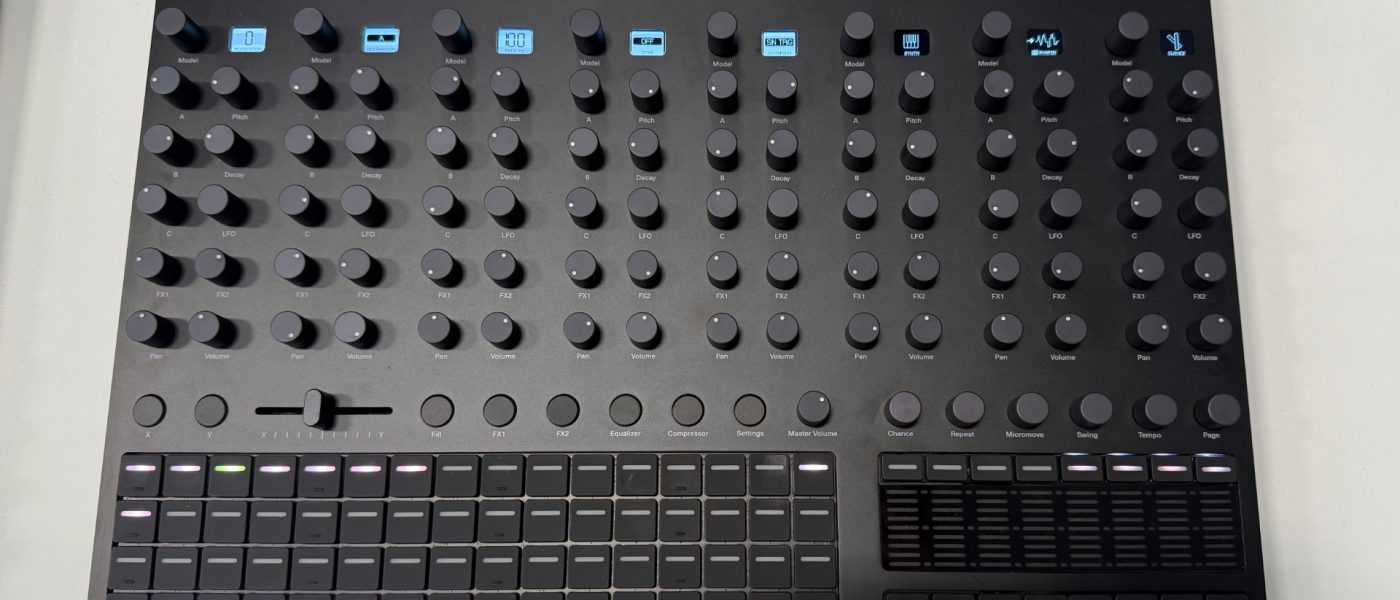
TL;DR: Polyend has unveiled Drums, a hybrid drum machine with four analog SSI-based voices, digital synthesis, sample playback, and a deep sequencer — all housed in a machined aluminum body. At $2,699, it goes head-to-head with Roland’s TR-1000, but brings a distinctly modern, clean aesthetic and Polyend’s signature workflow philosophy to the high-end drum machine market.
- Four analog voices built on modern SSI chips, each with dual VCOs, noise, a digital oscillator for hybrid/FM layering, and a multimode analog filter.
- Over 40 instruments with sub-mode mutations, plus sample-based instruments and eight independent LFOs for modulation.
- 8-track sequencer with per-track probability, micro-timing, parameter locks, pattern chaining, generative tools, and support for 64 patterns, 64 kits, and 48 songs.
- Single-piece aluminum body with custom metal knobs, positioning it as a premium, limited-production instrument.
- Available for reservation with a fully refundable $500 deposit; final price is $2,699 / €2,699 with limited quantities at launch.
Reading time: 4 min
Want more synth news before your next coffee break? Join the Noxal newsletter — no spam, just gear worth knowing about.

The Return to Form

Polyend has been on a bit of a wander lately. Between the Endless looper pedal and the MESS multi-effects stompbox, it felt like the Polish company was trying on hats that didn’t quite fit. But today, they’ve pulled a move that makes me want to pour a second cup of espresso and sit up straight: Polyend Drums, a hybrid drum machine that dares to invoke the ghost of the Roland TR-1000.
Let’s be clear — this isn’t a clone. It’s a statement. A single-piece aluminum chassis, custom metal knobs, and a price tag that will make your bank account wince. CEO Piotr Raczyński calls it “a return to the fundamentals that defined Polyend from the beginning,” and I can almost hear the earnestness through the press release. They’re making these in small batches, with the kind of obsessive attention to detail that usually requires a second mortgage.
We at Noxal have seen plenty of “flagship” drum machines come and go. Most of them end up gathering dust on Reverb. But Drums has something that makes me pause — it’s not trying to be everything to everyone. It’s trying to be the drum machine that Polyend would actually want to use themselves. That’s a rare kind of honesty in a world of feature creep.
Analog Heart, Digital Mind
The architecture is where Drums gets interesting. You get eight tracks, but the real story is the four analog voices based on modern SSI chips. Each voice packs dual analog VCOs, a dedicated noise source, and — here’s the twist — an additional digital oscillator for hybrid layering or FM modulation. That means you can have the warmth of analog sitting next to the precision of digital, and then blend them through a multimode analog filter and VCA.
“Tight percussion to longer evolving sounds” is the promise, and I’m inclined to believe it. The SSI chips are no slouch — they’re the same silicon that powers a lot of modern analog gear, offering stability without sacrificing character. Pair that with a digital synthesis section and sample-based instruments, and you’ve got a palette that can go from TR-808 thump to glitchy IDM in a single pattern.
The instrument library boasts over forty instruments, each with sub-mode mutations. That’s marketing-speak for “lots of presets with clever variations,” but given Polyend’s track record with the Tracker, I suspect the sound design depth is real. Eight independent LFOs per voice means you can modulate damn near anything, which is exactly what you want when you’re trying to make a kick drum sound like it’s falling apart.
Sequencing That Thinks
Polyend knows sequencing. They built their reputation on it with the Tracker, and Drums inherits that DNA. The 8-track sequencer offers per-track probability, micro-timing, parameter locks, pattern chaining, and generative tools. You can store 64 patterns, 64 sound kits, and 48 songs with arrangement options. That’s enough to build a live set that lasts longer than your attention span after three cups of coffee.
The generative tools are the highlight for me. We at Noxal have a soft spot for machines that can write their own parts and then let you tweak them into something human. Probability and micro-timing are the secret sauce for making electronic music feel alive, and Drums seems to offer both in spades. Pattern chaining means you can build complex arrangements without touching a DAW, which is exactly what a hardware-first studio needs.
There’s also performance controls — though the press release is frustratingly vague about what those actually are. I’d expect mutes, fills, and maybe some scene-launching capabilities. If Polyend has baked in the kind of live remix features that made the Octatrack legendary, they might have a real contender on their hands.
The Battle for Your Wallet
Let’s talk money, because $2,699 is not a casual purchase. That puts Drums in direct competition with Roland’s TR-1000, which is essentially the same price point with a similar feature set. The TR-1000 has the brand cachet and the ACB modeling, but Drums counters with genuine analog circuitry, a more modern workflow, and that machined-aluminum build quality.
Polyend is offering a reservation system with a fully refundable $500 deposit. That’s smart — it lets them gauge demand for the limited initial run without committing to a full production line. But it also means you’re betting on a machine that nobody has actually played yet. I’ve been burned by pre-order hype before (looking at you, every Eurorack module ever), so I’d approach with cautious optimism.
Who is this for? It’s for the producer who has outgrown sample packs and wants a single box that can do everything from classic drum machine sounds to experimental percussion. It’s for the live performer who needs reliability and depth. It’s for the collector who appreciates that “made in small batches” means this thing might actually hold its value. It is not for the budget-conscious — and that’s fine. Not every instrument needs to be affordable. Some need to be uncompromising.
Frequently Asked Questions
Does Polyend Drums have built-in effects?
Yes, the press release mentions effects as part of the feature set, though details are sparse. Given Polyend’s history with the Tracker’s effect engine, expect reverb, delay, distortion, and probably some more experimental options. We’ll know more once units ship.
Can I load my own samples into Drums?
Yes. Drums includes sample-based instruments alongside its analog and digital synthesis voices. The exact sample import workflow hasn’t been detailed, but Polyend typically supports standard formats like WAV. Expect a memory card or USB-based loading system.
How does Drums compare to the Roland TR-1000?
Both are high-end hybrid drum machines at the $2,699 price point. The TR-1000 uses Roland’s ACB modeling for its analog emulation, while Drums uses real analog SSI chips. Drums offers a more modern sequencer with generative tools, while the TR-1000 has the classic Roland workflow. The choice comes down to whether you want authentic analog circuitry or authentic analog emulation.
I’ll be honest — at this price, I’ll be watching the demos from my couch with a mug of cold brew, making peace with my bank account. But if Polyend delivers on the promise, I might just start saving my coffee budget. Priorities.