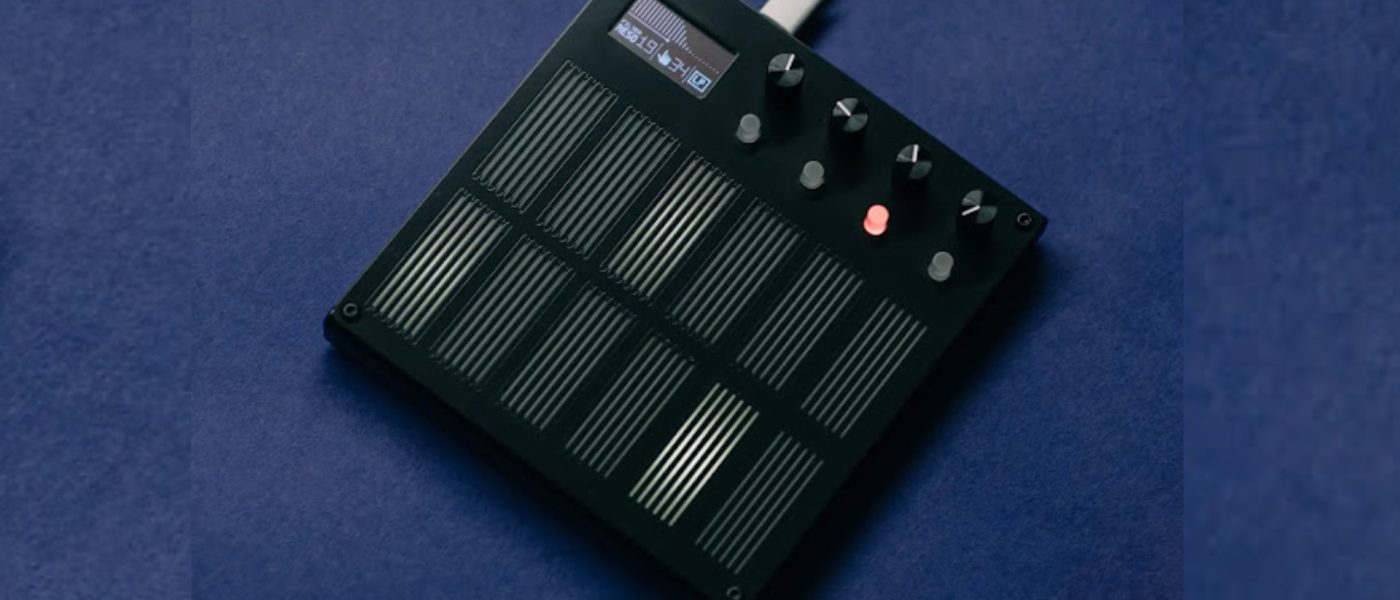
TL;DR: Doboz has released the DVNA, a compact digital touch synthesizer from Budapest that turns monophonic touch input into polyphonic chords and textures. Powered by four oscillators with level-morphing, a stereo multimode filter, and a 12-key capacitive keyboard, it’s available now for 370€. We at Noxal think it’s a clever, if slightly knob-deficient, textural playground.
- Four multi-wave oscillators with FM, shaping, independent tuning, and a 25-scale quantizer; oscillator levels are morphed via a single knob rather than individual mixer controls.
- 12-key capacitive backlit keyboard responds to finger contact area, generating continuous pressure signals for expressive control.
- Stereo multimode filter (LP/BP/HP, 12/24 dB), soft-clip overdrive, and single-selectable reverb/delay FX plus bit-crusher/decimator.
- Two 3-mode looping envelope generators, a sweep envelope for pitch modulation, dual LFOs, arpeggiator, glide, vibrato, and 128 preset slots.
- TRS-MIDI input (14-bit hi-res CC support), 3.5mm stereo line and headphone outs, USB-C power at 5V — all for 370€ shipped from Budapest.
Reading time: 4 min
Want more synth news before your next coffee break? Join the Noxal newsletter — no spam, just gear worth knowing about.

What Is the Doboz DVNA?

The days when we had to press down on black-and-white ivory slabs to make a synthesizer sing are, mercifully, behind us. The Doboz DVNA is a compact digital touch synthesizer that throws away the traditional keyboard in favor of a 12-key capacitive backlit surface. You tap a single key, and out comes a chord or interval — monophonic input, polyphonic output. It’s designed for creating rich harmonic textures with minimal effort, which is a polite way of saying you can sound like a genius without actually having to practice scales.
We at Noxal have a soft spot for gear that rethinks how we interact with sound. The DVNA is from Budapest-based Doboz, and it arrives with a 370€ price tag. It’s not trying to replace your flagship workstation; it’s a focused textural instrument for those who want to explore harmonic landscapes with their fingertips, not their sheet music.
The Engine: Four Oscillators and a Morphing Mixer
Under the hood, the DVNA runs a digital subtractive synth engine with four multi-wave oscillators, each with shaping capabilities. You can independently tune them or quantize them using a 25-scale note quantizer with a selectable root note. FM synthesis is also on the table — because why not add a little cross-modulated chaos to your afternoon? The real party trick, however, is the level-morphing engine. Instead of individual mixer levels, a single knob sweeps through pre-defined oscillator level configurations. Modulate that parameter, and you get rhythmic movements that feel alive. The same morphing concept applies to panning.
The filter section is a stereo multimode affair with low-pass, band-pass, and high-pass options at 12dB and 24dB slopes, plus classic cutoff and resonance. You can dirty things up with a soft-clip overdrive and then apply reverb or delay — though you can only use one effect at a time, which is a bit of a downer for those of us who want to drown everything in both. There’s also a bit-crusher and decimator if you want to summon the DVNA’s evil, noisy twin. Two 3-mode envelope generators (one for engine parameters, one for VCA) with looping, plus a sweep envelope for pitch modulation, give you plenty of movement without needing a patch cable in sight.
The Touch Interface: 12 Keys That Feel
The DVNA’s capacitive keyboard isn’t just a gimmick. Each of the 12 backlit keys responds to the contact area of your finger, generating a continuous pressure signal that can be routed throughout the instrument. That means you can play a note and then press harder for vibrato, filter sweep, or whatever you’ve assigned — no aftertouch programming required. The built-in quantizer lets you play single notes or chords, and even micro-tuning is possible. There’s also an arpeggiator, adjustable glide, and vibrato controls, so you can craft everything from gentle pads to frantic arpeggiated sequences.
Preset storage is generous at 128 slots, and connectivity includes TRS-MIDI input with 14-bit hi-res MIDI CC support and 24-ppqn clock sync. Audio exits via a 3.5mm stereo line output and a 3.5mm headphone jack. Power comes from USB-C at 5V, and firmware updates are handled the same way. It’s a tidy package, though I can’t help but wish for a few more knobs — remembering shortcuts is my least favorite studio ritual, just behind untangling patch cables.
Market Context and Verdict
The DVNA enters a growing field of touch-based synthesizers. It reminds me of the Plinky, with its screen and sound engine, but the DVNA feels more focused on chord and texture generation than the Plinky’s broader experimental palette. At 370€, it’s competitively priced for a boutique instrument from a small developer. Doboz ships from Budapest, so you’re supporting a small team, not a corporate behemoth.
Is it for everyone? No. If you need a full-size keyboard, complex modulation matrix, or multiple simultaneous effects, look elsewhere. But if you want a compact, expressive tool for building harmonic textures with tactile feedback, the DVNA is a worthy addition to your desk. I hope Doboz continues development — a parameter or touch recorder would be a killer addition. For now, it’s a lovely little synth that makes you feel like a chord wizard after one coffee.
Frequently Asked Questions
Can the Doboz DVNA be used with external MIDI controllers?
Yes, it has a TRS-MIDI input with support for both type A and B standards, plus 14-bit hi-res MIDI CC and 24-ppqn clock sync. You can sequence it from a DAW or hardware sequencer, but the touch keyboard is the main draw.
Can I use reverb and delay simultaneously on the DVNA?
No, you can only select one effect at a time — reverb or delay. There’s also a bit-crusher and decimator available, but you can’t stack them. It’s a limitation, but the morphing engine and modulation help keep things interesting.
How many presets does the DVNA store?
128 presets can be saved directly on the hardware, so you can recall your favorite patches instantly. No cloud subscription required — just old-fashioned local storage.
I’ll be spending the weekend with the DVNA and a pour-over, trying to figure out if level morphing can replace my morning existential crisis. Spoiler: it probably can.