TL;DR: Cyma Forma’s ALT is a generative analog soundscape synth that pairs five oscillators, dual MS-20-inspired filters, and a physical pin matrix with light and audio sensors for theremin-like control. Available now for €1279, it blends experimental drone textures with melodic potential and full CV/MIDI integration.
- Five individually controllable analog oscillators with 14 scales, just intonation, and independent panning/detuning
- Two stereo Korg MS-20-style filters in series with self-oscillation and “Ripples” performance buttons
- Physical pin matrix for modulation routing to two LFOs, sample-and-hold, and envelope follower
- Onboard microphone for audio-reactive control and light sensors for theremin-style pitch/volume manipulation
- Full CV and MIDI compatibility with four MIDI modes including voice splitting and real-time scale editing
Reading time: 4 min
Want more synth news before your next coffee break? Join the Noxal newsletter — no spam, just gear worth knowing about.
Meet the ALT: A Soundscape Machine With Personality

We at Noxal have a soft spot for synthesizers that look like they were designed by someone who had one too many espressos and decided to reinvent the wheel. The Cyma Forma ALT is exactly that — a generative analog synth that stands out in a sea of black boxes and menu-diving nightmares. It debuted quietly after the company’s RND single-button randomizer stole the show at Superbooth 2026, but ALT is the more serious, more beautiful sibling that actually wants to make music.
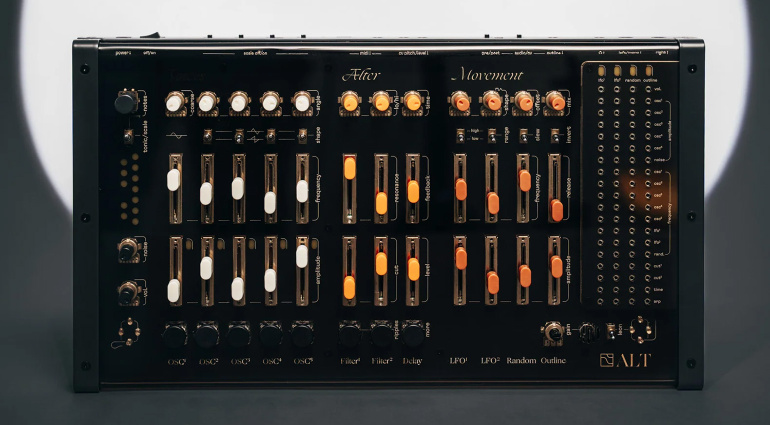
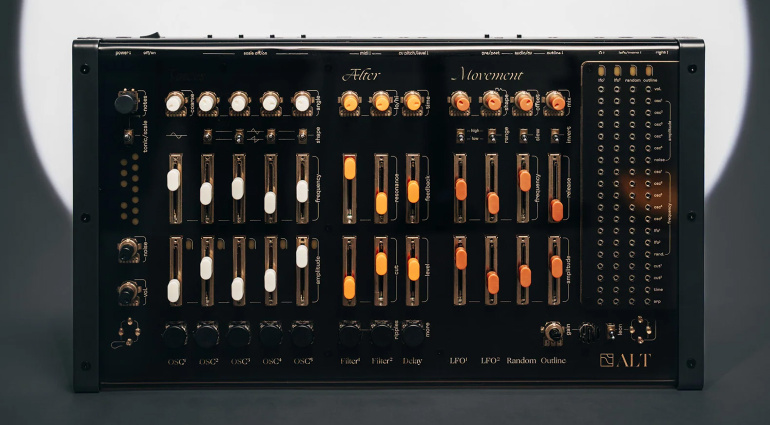
Looking at those column-oriented controls and the pin matrix, you might think it’s a prop from a sci-fi film. But trust me, it’s real, and it’s available now from Thomann for €1279. That’s not cheap, but for what you get — five oscillators, dual filters, and a modulation system that rewards physical interaction — it’s a fair price for a niche instrument that does things its own way.
Oscillators and Filters: Analog Heart, MS-20 Soul
ALT starts with five analog oscillators in its Voices section. Each one has its own shape and frequency range, and you can set them to free-run or lock to one of 14 scales. The inclusion of both equal temperament and just intonation tells me Cyma Forma cares about the people who want their drones to sound in-tune with the universe, not just with a piano.
Then comes the Alter section, which houses two multimode filters inspired by the Korg MS-20 circuit. These are stereo and arranged in series, with lowpass, highpass, and bandpass modes. They can self-oscillate, giving you two extra voices if you need them. There’s also a delay capable of infinite feedback loops, controlled by a “More” button that Cyma Forma insists is self-explanatory. I’ve pressed that button in demos, and yes, it does exactly what you think — it gives you more, until your ears beg for mercy.
The Pin Matrix and Modulation: Where the Magic Happens
The Movement section is where ALT earns its experimental badge. That physical pin matrix — yes, you actually plug patch cables into a grid — assigns modulation to two LFOs that can hit audio rates, a random sample-and-hold circuit, and an envelope follower. There’s also a “strange arpeggiator” that uses modulation amplitude levels to trigger voices in different orders.
This is not a synth you program with a mouse. This is a synth you touch, you patch, you wrangle into submission. The pin matrix forces you to think differently about modulation. It’s tactile, it’s immediate, and it’s a joy to see in a world where most modulation routing happens in submenus. The random arpeggiator, in particular, feels like a happy accident waiting to happen — perfect for generative melodies that don’t sound like a math equation.
Eyes and Ears: Sensory Control for the Experimentalist
ALT has eyes and ears. No, really. The “ears” are an onboard microphone that can trigger sounds and modulation based on what it hears — clap, hum, play a guitar, and the synth reacts. The “eyes” are light sensors that let you control master pitch and volume by waving your hands over the unit, turning it into a kind of theremin on steroids.
This is the kind of feature that could be gimmicky in lesser hands, but Cyma Forma has implemented it in a way that feels musical. The light sensor control, in particular, opens up expressive performance possibilities without needing a separate controller. You could set ALT on a table, let it drone, and then sculpt the sound with hand gestures. It’s dramatic, it’s fun, and it might make you feel like a wizard — which is never a bad thing.
Connectivity and Integration: Bridge the Gap
Many drone synths are islands — beautiful, isolated, and difficult to integrate into a larger setup. ALT bucks that trend with full CV and MIDI compatibility. You can patch it into Eurorack, sync it with a DAW, play it with a MIDI controller, or sequence it with CV. It receives notes, velocity, aftertouch, and pitchbend, and offers four MIDI modes: voice splitting, monophonic transpose, silent tonic change, and real-time scale editing for chord progressions.
This makes ALT surprisingly versatile. You can use it as a standalone generative instrument for ambient soundscapes, or integrate it into a larger studio setup for melodic leads and bass. The real-time scale editing, in particular, is a powerful tool for live performance — you can change the harmonic context on the fly without stopping the music. For the price, it’s a flexible instrument that rewards exploration.
Frequently Asked Questions
Can the Cyma Forma ALT be used as a traditional synthesizer with a keyboard?
Yes. ALT accepts MIDI notes, velocity, aftertouch, and pitchbend, and has four MIDI modes including voice splitting and monophonic transpose. You can connect a standard MIDI controller and play it like a traditional synth, though its true strength lies in generative and experimental use.
What is the pin matrix used for on the ALT?
The pin matrix is a physical modulation routing system. You plug patch cables into a grid to assign modulation sources (two LFOs, random sample-and-hold, envelope follower) to various destinations. It’s tactile and immediate, encouraging hands-on experimentation.
How do the light and audio sensors work on the ALT?
The onboard microphone (ears) can trigger sounds and modulation based on audio input. The light sensors (eyes) control master pitch and volume based on ambient light levels, allowing theremin-like control by moving your hands over the synth.
I’m going to set my ALT on the studio desk, wave my hands at it like a deranged conductor, and see if my cat finally respects me. Failing that, I’ll just let it drone while I make a fresh pour-over — some things are worth the wait.