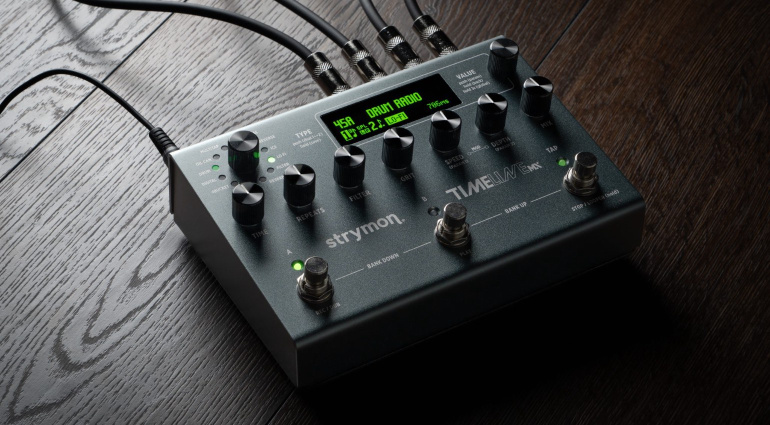
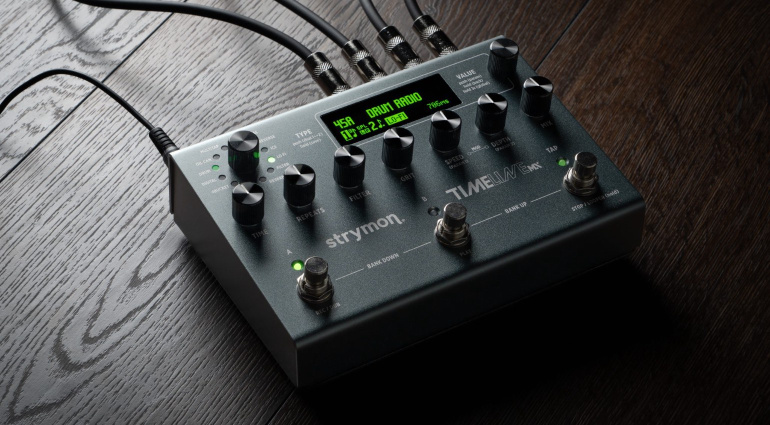
TL;DR: Strymon has released the TimeLine MX, a comprehensive update to their iconic delay pedal. It adds a 5-minute stereo looper, dual effects routing, four new delay/reverb engines, and a built-in reverb, all powered by a faster processor.
- 12 delay and reverb engines, including 4 new ones (8-Tap, Mechanical, Spring Reverb, and upgraded classics).
- Dual effects with Series, Parallel, or Split routing and a built-in reverb with Grit control.
- 5-minute stereo looper with half-speed and reverse options via MIDI.
- TRS stereo I/O, true hardware effects loop, and full MIDI via USB-C, TRS, or DIN.
- Available now for $763/£689/€799.
Reading time: 3 min
Want more synth news before your next coffee break? Join the Noxal newsletter — no spam, just gear worth knowing about.
The Long-Awaited Sequel

It’s been fifteen years. Fifteen. That’s long enough for a teenager to become a full-blown lawyer, or for a delay pedal to achieve near-mythical status. The original Strymon TimeLine, released back in 2011, became the de facto standard for ambient guitarists, synth wizards, and anyone who wanted their echoes to sound like they were coming from a cathedral on the moon. It was a masterpiece of engineering and sound design.
Now, in 2026, Strymon has finally dropped the TimeLine MX. And yes, the name is a bit of a mouthful, but we at Noxal forgive them because the feature list is genuinely impressive. Following the BigSky MX from two years ago, this update brings the same philosophy: more power, more flexibility, and a bigger screen. It’s not a revolution — it’s an evolution, but one that makes the original feel positively ancient.
What’s New Under the Hood
The most significant change is the brain transplant. The TimeLine MX is powered by an 800 MHz tri-core ARM processor, which is basically a supercomputer compared to the original. This allows for more complex algorithms, simultaneous effects, and — crucially — a built-in reverb. Yes, you read that correctly: Strymon’s flagship delay now includes a spring reverb engine inspired by the Flint, complete with a “Grit” control for saturating the wet signal and optional tremolo.
The MX also adds four new delay engines, bringing the total to twelve. There’s an 8-Tap Delay with per-tap control over pan, level, feedback, and filter cutoff — perfect for building hypnotic, rhythmic patterns that would make even the most stoic electronic musician crack a smile. Next up, the Mechanical engine meticulously recreates vintage echo units, delivering dark, murky, syrupy modulations that sound like they’re leaking tape goo. The Spring Reverb engine is a welcome addition, offering everything from tight rooms to massive ambient washes. And the upgraded classics — dTAPE, dBUCKET, DIGITAL, Reverse, Ice, Lo-Fi, and Filter — all get new “MX voice” options that let you drive the virtual circuits harder for extra warmth and grit.
Dual Effects and Routing Madness
Here’s where things get interesting for studio rats and live performers alike. The TimeLine MX lets you run two effects simultaneously — delay and reverb, or two delays — in Series, Parallel, or Split routing. This is stereo, of course, with TRS connections that let you configure mono, stereo, wet/dry, or full wet/dry/wet rigs. And if that’s not enough routing for you, there’s a true hardware effects loop and full MIDI capability via USB-C, TRS, or traditional DIN sockets. You can even use the Nixie 2 software to edit patches via USB, which will save you from menu-diving-induced headaches.
The 5-minute stereo looper is another highlight, with half-speed and reverse options available via MIDI. This is a serious tool for building layers in a live set or for creating soundscapes that evolve over minutes, not seconds. The analog dry path ensures your unconverted signal passes through with zero latency, and you can switch between True Bypass (electromechanical relay) or Buffered mode. It’s a pedal that wants to play nice with your entire board, no matter how chaotic.
Who Is This For (And Should You Care)?
Let’s be honest: the TimeLine MX is for people who love delay and love programming. If you’re the kind of person who spends hours tweaking parameters to find the perfect rhythmic pattern, this pedal will be your best friend. It’s also a no-brainer for worship players — those endless ambient swells and shimmering delays are now available at the press of a footswitch, with a screen that’s actually readable under stage lights.
But if you hate menu diving and overly complex control layouts, this may not be for you. The original TimeLine was already a deep pedal, and the MX adds even more layers of complexity. That said, the improved OLED screen and Nixie 2 software make it more accessible than ever. At $763/£689/€799, it’s not cheap, but then again, the original TimeLine has been a workhorse for a decade and a half. This is an investment in your sound, and for the right person, it’s worth every penny.
Frequently Asked Questions
Is the TimeLine MX compatible with the original TimeLine’s presets?
No, the TimeLine MX uses a new architecture and processor, so presets from the original are not directly compatible. You’ll need to recreate them manually or start fresh with the Nixie 2 software.
Does the built-in reverb replace the need for a separate reverb pedal?
For most players, yes. The spring reverb engine is based on the Flint and is fully featured, with Grit control and tremolo. However, if you need more specialized reverb types (like shimmer or infinite), you may still want a dedicated unit.
Can I use the TimeLine MX as a standalone looper?
Yes, the 5-minute stereo looper works independently of the delay effects. You can record loops and then layer them with delays and reverbs, or use it as a standalone looper with half-speed and reverse options via MIDI.
We at Noxal have already started saving for one, though we suspect we’ll need to sacrifice a few months’ worth of pour-over coffee to justify the expense. Some sacrifices are worth making for the perfect echo.