TL;DR: Fender has updated its Tone Master Pro floorboard modeler to firmware 1.8, adding three 5150 amp models, 15 effects (including EQD Plumes and Rockman X100 emulations), and a wireless smartphone editor app. This update follows close on the heels of version 1.6, which brought 22 effects and six new amps, suggesting Fender is committed to keeping their flagship modeler competitive in a crowded market.
- Three new EVH 5150 amp models join the Tone Master Pro’s arsenal, alongside a Rumble 800 and ’68 Custom Deluxe Reverb.
- Fender Pro Control app (iOS/Android) enables wireless preset editing, a feature that was previously only available via USB.
- New dual-function footswitches, an improved strobe tuner, and better preset management round out the update.
- Version 1.8 arrives just weeks after 1.6, which added 22 effects including six new reverbs, making the TMP more ambient-friendly.
- Bass players got love in 1.4 with new bass amps and cab IRs, signalling Fender’s intention to cover all tonal bases.
Reading time: 5 min
Want more synth news before your next coffee break? Join the Noxal newsletter — no spam, just gear worth knowing about.

What Is the Fender Tone Master Pro?
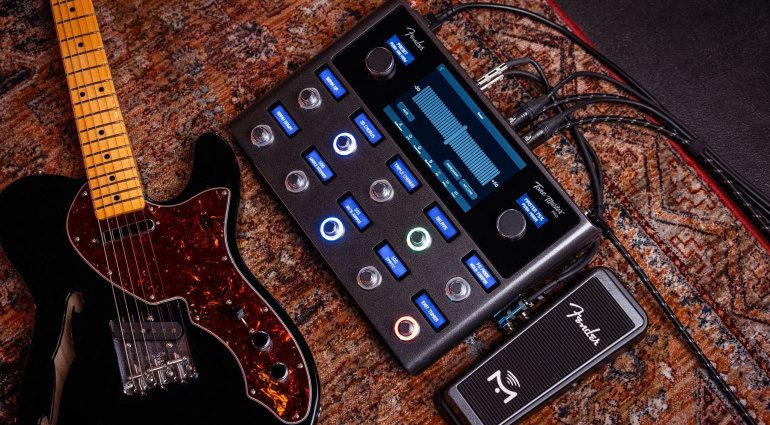
We at Noxal have seen a lot of floorboard modelers come and go, but the Fender Tone Master Pro has carved out a respectable niche since its 2024 launch. It’s an 8-core floor amp and effects modeler that builds on Fender’s Tone Master amplifier series, which started in 2019. The idea is simple: put over 100 virtual amps and effects into a rugged, stage-ready box with 10 footswitches, a 60-second stereo looper, and the ability to organize presets into songs and setlists. It’s not a cheap toy — it competes directly with the Fractal Axe-Fx, Line 6 Helix, and Neural DSP Quad Cortex.
The unit launched with an impressive library of Fender classics, but the real selling point was the promise of regular firmware updates. Fender has delivered on that promise with surprising consistency. Version 1.8 is the latest in a series that has transformed the TMP from a promising debut into a genuinely versatile tool. I’ve spent time with the TMP in the studio, and while it didn’t replace my analog pedalboard, it did make me reconsider what a digital rig can do — especially when the updates keep coming for free.
Firmware 1.8: The Main Attractions
The headline act here is the inclusion of three EVH 5150 amp models. These are officially licensed, which matters because the 5150 circuit is a high-gain monster that Fender’s own amp lineup doesn’t naturally cover. Alongside them, you get a Rumble 800 bass amp and a ’68 Custom Deluxe Reverb, which should delight players looking for classic Fender clean tones. Eight new cabinets accompany these amps, giving you more speaker options than you’ll probably ever need — but we appreciate the abundance.
Effects-wise, 15 new pedals including what appear to be emulations of the EarthQuaker Devices Plumes and the Rockman X100. The Plumes is a beloved overdrive, and the Rockman X100 is a cult classic from the ’80s that Boston fans will recognize. The update also adds a strobe tuner (finally), dual-function footswitches (hold for a second action), and improved preset browsing. The real game-changer, though, is the Fender Pro Control app, which lets you edit presets wirelessly via Bluetooth. No more crouching behind your amp with a USB cable — you can now tweak your reverb from the couch while your coffee gets cold.
A Quick History of Updates
Fender hasn’t been idle. Version 1.6, released just two weeks before 1.8, added 22 effects including six reverbs, three choruses, an Arctic Sustainer, and a Micro Shifter. That update turned the TMP into what I’d call an ambient machine — if you’re into washed-out, shoegaze textures, 1.6 alone was worth the price of admission. Four new guitar amps (’57 Deluxe, Blues Junior LTD, Brit Breaker, British 45) and two bass amps rounded out the package.
Before that, version 1.4 catered specifically to bass players with new bass amps and cab IRs. And the initial launch update brought four amps, eight cabs, and nine pedals, including the standout ’62 Princeton and the delightfully named Big Apple Fuzz. Each update has added meaningful content rather than just bug fixes, which is rare in this industry. I’ve reviewed firmware updates from other manufacturers that felt like homework; Fender’s feel like Christmas morning.
Who Is This For?
The Tone Master Pro is for the working musician who needs reliability, versatility, and constant improvement. It’s not for the purist who insists on tube amps and analog pedals — those folks are already happy with their vintage gear and probably aren’t reading this. It’s for the player who wants one board for everything: from jazz gigs to metal shows, from bedroom recording to festival stages. The 10 footswitches make it easy to build complex setlists, and the 60-second looper is surprisingly useful for soundchecks or writing on the fly.
If you’re a bass player, the 1.4 update made this a genuinely compelling option. If you’re a high-gain guitarist, 1.8 finally delivers the 5150 tones that were missing. And if you’re an ambient enthusiast, 1.6 gave you more reverbs than a cathedral. I appreciate that Fender is listening to the community — the “Scene Change Behavior” option in 1.6, which remembers whether you’ve activated an effect manually, was a direct response to user feedback. That kind of responsiveness is rare and valuable.
Frequently Asked Questions
Is the firmware update free?
Yes, firmware 1.8 is free for all Fender Tone Master Pro owners. Just download it from Fender’s website and install via USB. The Fender Pro Control app is also free on iOS and Android.
Does the Tone Master Pro now include Marshall-style amps?
Version 1.6 added the Brit Breaker and British 45, which are widely considered Marshall-style models. The initial launch also included some non-Fender emulations, so the library is expanding beyond Fender’s own catalog.
Can I use the Tone Master Pro as an audio interface?
Yes, the Tone Master Pro functions as a USB audio interface for recording and reamping. The new app also allows wireless control, but audio still requires a USB connection to your DAW.
I’ll be updating my TMP tonight, probably while burning my third cup of coffee and wondering if Fender will ever add a “make me sound like a broken Leslie speaker” mode. One can dream.