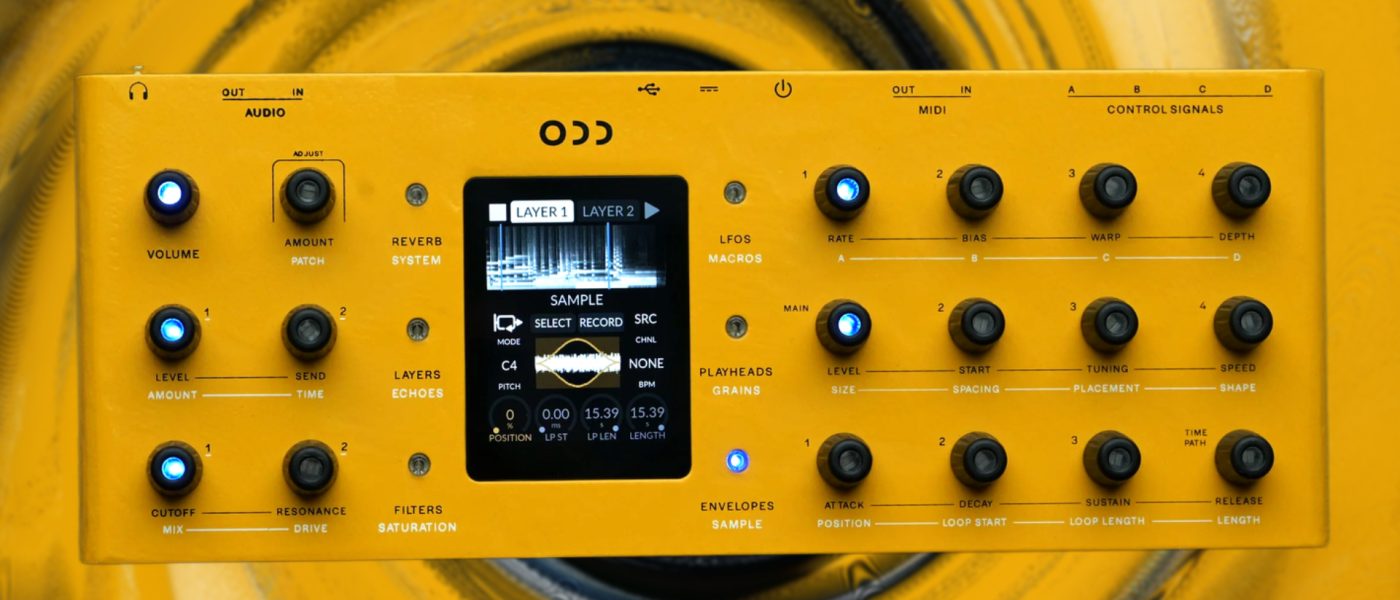
TL;DR: Oddment Audio’s ODD-1 desktop granular synthesizer has entered beta, with the first 100 units shipping in May 2026 for $795. This 8-voice stereo granular beast features four independent playheads per layer, CV connectivity, and a binaural spatializer—all wrapped in a hands-on interface that promises to outlast the granular hype cycle.
- 8-voice polyphonic, 2-layer multitimbral engine with up to 60-second stereo samples at 48kHz
- Four independent playheads per layer, each with separate pitch and time control
- Binaural spatializer and auditory-inspired bandpass filter on every grain
- Full CV connectivity with four control inputs, plus aftertouch and velocity modulation
- Beta units shipping May 2026 for $795 (limited to 100); final MSRP $995 in September 2026
Reading time: 4 min
Want more synth news before your next coffee break? Join the Noxal newsletter — no spam, just gear worth knowing about.
What Is the ODD-1?

Let’s be honest: when we first saw “Groc” as the working name for Oddment Audio’s debut synth back in early 2024, we assumed it was a typo or a particularly aggressive coffee order. But the ODD-1—as it’s now called—has matured into something far more serious than its original yellow prototype suggested. After two years of development, the desktop granular synthesizer has entered beta, and the first units are trickling out to brave early adopters.
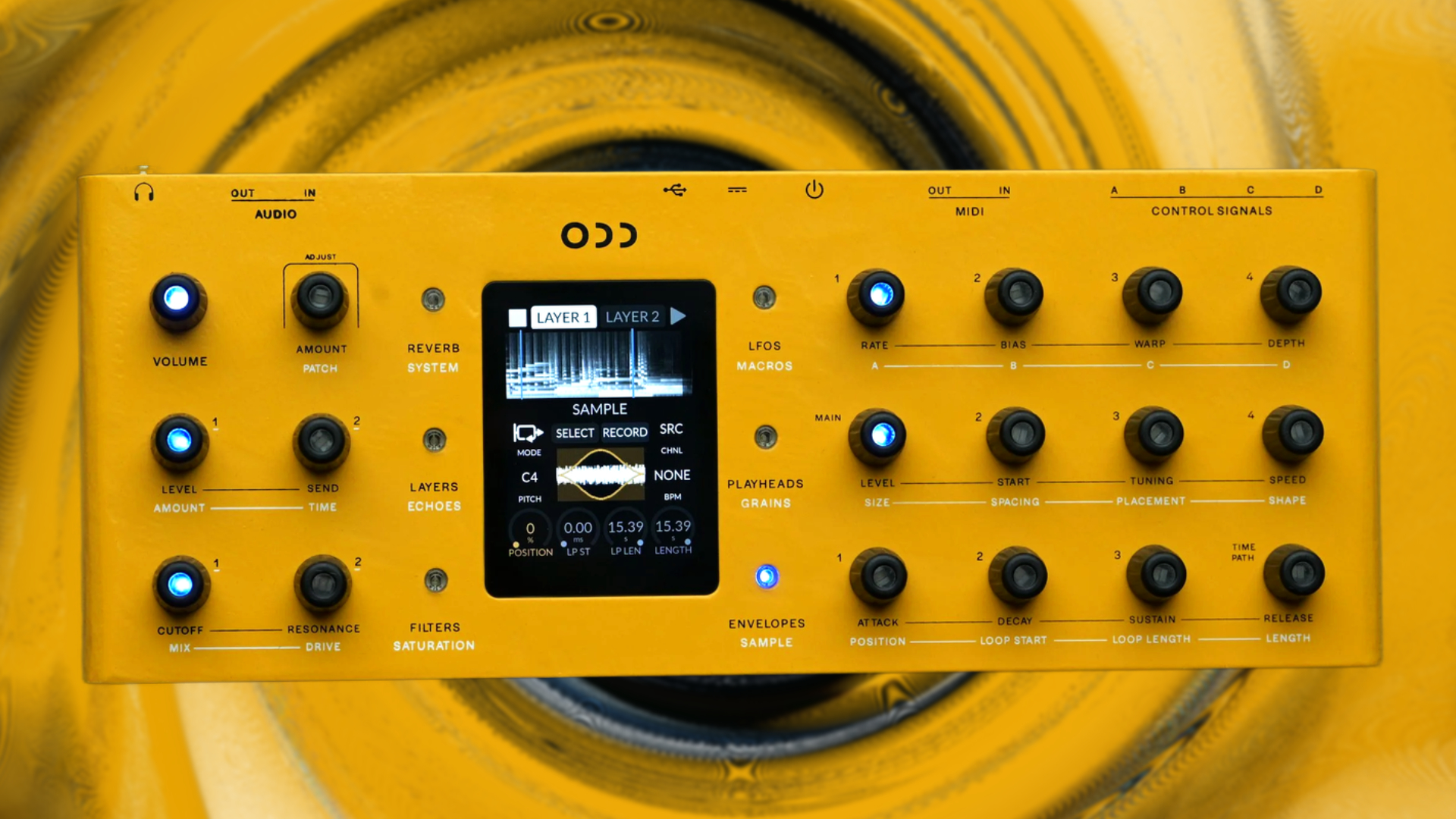
The ODD-1 is a stereo, 8-voice polyphonic granular synthesizer with two multitimbral layers. That means you can run two completely different granular patches simultaneously, each with its own sample set and modulation routing. It loads up to eight stereo samples at once, each up to 60 seconds at 48kHz. Four independent playheads per layer can be flexibly assigned across those samples, giving you a level of granular control that borders on the obsessive—and we mean that as a compliment.
The Granular Engine That Doesn’t Just Count Grains
Oddment Audio is refreshingly dismissive of grain-count bragging rights. In an inquiry, the developer said, “It’s not all about the grain number,” and we at Noxal can’t help but nod along, coffee mug in hand. Instead, the ODD-1 focuses on what you can do with those grains. The engine includes a variable-speed time path, independent pitch and time control per playhead, and granular parameters for size, spacing, shape, and stereo placement.
What caught our attention—and made us spill a bit of espresso on our test bench—is the binaural spatializer and auditory-inspired bandpass filter that processes each grain. This isn’t just a gimmick; it adds a psychoacoustic dimension that many desktop granular synths ignore. The developer describes the engine as a “modular system that is completely modulatable,” and the modulation sources back that up: three envelopes, four LFOs, four macros, four control inputs, aftertouch, velocity, and custom modulation curves. Plus a multi-FX processor with resonant filters, distortion, bit crush, compression, delay, and reverb.
Hands-On Hardware and CV Connectivity
The ODD-1’s front panel is a testament to the fact that some of us still prefer knobs over menus. Sixteen encoders control primary functions, with secondary functions accessible via a shift button. A touchscreen provides real-time feedback, which is handy when you’re deep in grain-hell. The hardware runs on a quad-core ARM Cortex A-72 with 1GB RAM and 4GB of user storage—enough for a respectable sample library without needing to offload to an SD card every five minutes.
For the modular crowd, the ODD-1 offers four control inputs (CV/gate), making it a natural fit for Eurorack systems. It can function as a multi-timbral synth, expressive sampler, multi-track looper, or even a real-time effects processor. That’s a lot of hats for one desktop box, but we’ve seen worse attempts at Swiss Army knife synths. The key question is whether it excels at any one of these roles or merely dabbles. Based on the beta videos, the granular engine sounds genuinely promising—gritty, wide, and responsive.
Market Context and Pricing
Here’s where I have to put down my mug and be honest: the granular synth market is getting crowded. We’ve seen the Tempera, Torso S-4, Sonicware Texture Lab, Qu-Bit Mojave, and the GR-Mega—all within the last two years. By the time the ODD-1 ships in September 2026, will anyone still care about granular synthesis? Or will we all be obsessed with the next microtonal FM box that costs as much as a used car?
The pricing strategy is smart: beta units for $795 (limited to 100, with a $100 refundable deposit) soften the blow, while the final MSRP of $995 keeps it competitive against the Torso S-4 ($899) and Tempera ($1,199). The ODD-1’s advantage lies in its CV connectivity and binaural processing—features that appeal to the modular-and-headphone crowd that often overlaps with Noxal’s readership. Still, I wonder if Oddment Audio can sustain momentum through a two-year development cycle. The beta units shipping in May 2026 will be the real test.
Who Should Care?
The ODD-1 is for the granular enthusiast who wants hardware control without a Eurorack module’s space constraints. It’s for the producer who likes the idea of binaural spatialization but doesn’t want to mix in Atmos. It’s for the person who has watched every granular tutorial on YouTube and still feels like their soft synth isn’t tactile enough.
If you’re the type who enjoys spending an afternoon dialing in grain shape and stereo placement while your coffee goes cold, the ODD-1 was designed for you. If you need a workhorse sampler for quick beat slicing, look elsewhere—this is a deep dive instrument, not a fast-food menu. The beta pricing is generous, but it’s also a commitment. We at Noxal will reserve judgment until we get a production unit on our bench, but the early signs are encouraging.
Frequently Asked Questions
When will the ODD-1 ship, and how much does it cost?
Beta units (limited to 100) ship in May 2026 for $795 + tax + shipping, with a $100 refundable deposit. The final MSRP is $995 + tax + shipping, with an estimated release in September 2026.
Does the ODD-1 work with Eurorack gear?
Yes, it includes four control inputs for CV/gate connectivity, making it compatible with modular systems. It also responds to MIDI, aftertouch, and velocity.
What makes the ODD-1 different from other granular synths like the Torso S-4 or Tempera?
The ODD-1 features a binaural spatializer and auditory-inspired bandpass filter on each grain, plus independent pitch and time control per playhead. Its CV connectivity and 8-voice polyphony with two multitimbral layers are also standout features at this price point.
I’m already planning a studio session where I’ll dial in grain settings until my espresso turns to sludge—and honestly, that sounds like a perfect Saturday.