TL;DR: Pierre Jean Tardiveau, the mad genius behind SynTesla, has built a one-of-a-kind hybrid polysynth for Jean-Michel Jarre. The JARRE Lab One is a steampunk-inspired, 4-voice beast built around a Korg Logue voice card, with custom controls, a Fatar keybed, and a sound palette that spans ethereal pads to aggressive leads. It’s not for sale — yet — but a consumer version is rumored for 2027/2028.
- Custom-built for Jean-Michel Jarre by SynTesla’s Pierre Jean Tardiveau, based on the 2022 SynTesla VII.
- 4-voice hybrid polysynth using a Korg Logue ARM architecture voice card, with two analog oscillators per voice, VCF, VCA, and SDK-based multi-FX.
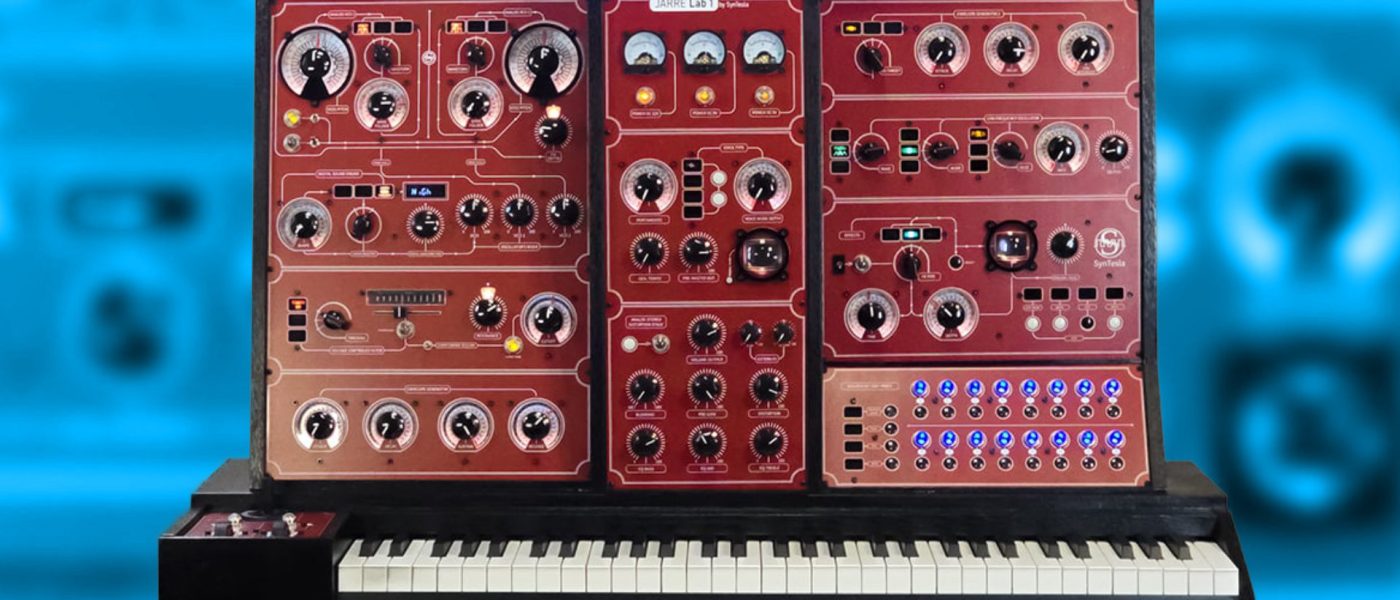
- Full-size 61-key Fatar keybed, dual VCF cutoff control (rotary and linear slider), and a joystick — all wrapped in a steampunk red tower.
- Not a clone: entirely new control unit and parameter layout, with added analog saturation, 3-band EQ, and external effects insert.
- Currently a one-off; discussions for a commercial release are underway, targeting 2027/2028.
Reading time: 4 min
Want more synth news before your next coffee break? Join the Noxal newsletter — no spam, just gear worth knowing about.

Meet the JARRE Lab One: A Steampunk Synth for an Electronic Pioneer

We at Noxal have a soft spot for synthesizers that look like they were pulled from a Jules Verne novel. Pierre Jean Tardiveau — the French artisan behind SynTesla — has been building these steampunk marvels for years, but his latest commission elevates the craft to a new level. Jean-Michel Jarre, the man who put a laser harp in our collective consciousness, wanted a custom polysynth. Not just any polysynth, mind you: he wanted one that matched the specs of SynTesla’s 2022 VII model, but with a few personal tweaks.
The result is the JARRE Lab One, a red tower of an instrument that looks like it could power a time machine. It’s a 4-voice hybrid polysynth that blends analog warmth with digital flexibility, all housed in a chassis that screams “look at me.” And we do. We look. Then we ask if we can touch it. (We can’t. It’s Jarre’s.)
Inside the Beast: What Makes It Tick
Under the hood, the JARRE Lab One uses a Korg Logue ARM architecture voice card — the same family that powers the minilogue xd and prologue. But please, don’t call it a “case flip.” Tardiveau built an entirely new control unit, meaning the parameter layout is fresh. There’s no lazy repackaging here. Each voice gets two analog oscillators, a VCF, VCA, LFOs, and an SDK-based multi-FX unit handling modulation, delay, and reverbs. On top of that, there’s a stereo analog saturation stage, a 3-band EQ, and a mixer with an insert for external effects.
Jarre also insisted on dual VCF cutoff control — you can adjust it via a rotary potentiometer or a linear slider. It’s a small detail, but it speaks to the level of customization here. The full-size 61-key Fatar keybed is a no-brainer for a player of his caliber, and the joystick is bigger than the ones on Korg’s Logue synths. Plus, you get the classic Logue 16-step digital sequencer and multimode arpeggiator. It’s a synth that’s built for performance, not just knob-twiddling.
Sound Palette: From Ethereal Pads to Aggressive Leads
Sonically, the JARRE Lab One occupies a familiar but expanded territory. The Logue voice card delivers those lush pads and analog synth sounds that Jarre is famous for, but the additional features push it further. Custom digital oscillators open up a more modern sound palette, while the distortion stage and EQ let you dial in aggression for brass and lead sounds. Tardiveau himself notes that the saturation adds a “delightfully analog touch” to pads and ethereal textures.
We haven’t heard a dedicated demo of the JARRE Lab One yet, but the SynTesla II demo gives a solid idea of its voice. And honestly, sometimes the best innovation isn’t a ground-up rebuild — it’s giving an existing architecture a new playing experience. The JARRE Lab One is a testament to that philosophy.
Market Context: One-Off or the Start of Something Bigger?
Here’s where we at Noxal raise an eyebrow. The JARRE Lab One is, for now, a one-of-a-kind instrument. You can’t buy it. You can’t even pre-order it. But Tardiveau and Jarre are in discussions for a consumer version, with a potential release in 2027 or 2028. That’s a long wait, but given the craftsmanship involved, we’re not surprised.
This isn’t SynTesla’s first high-profile commission. Hans Zimmer commissioned the Giorgio III modular synth after finding Tardiveau on Facebook. Yes, Facebook. So there’s precedent for these one-offs eventually influencing commercial products. The MegaHertz, shown at SynthFest France 2026, was the first commercial SynTesla instrument. If the JARRE Lab One follows suit, we could see a more affordable, mass-produced version in a few years. Until then, we’ll just have to watch Jarre’s live streams and weep softly into our coffee.
Who Is This For?
Right now? Jean-Michel Jarre. That’s it. But if a consumer version materializes, the JARRE Lab One will appeal to synth enthusiasts who crave the tactile, visual feedback of steampunk design but want modern hybrid synthesis under the hood. It’s for players who value a unique playing experience over spec-sheet bragging rights. If you’re the kind of person who names your synthesizers and gives them backstories, you’re the target audience.
And if you’re just a fan of beautiful, weird instruments — well, you’re in good company. We at Noxal raise a mug of cold brew in its general direction.
Frequently Asked Questions
Can I buy the SynTesla JARRE Lab One?
No. It is a one-of-a-kind custom instrument built exclusively for Jean-Michel Jarre. However, SynTesla and Jarre are discussing a potential consumer release in 2027/2028.
What is the sound engine of the JARRE Lab One based on?
It uses a Korg Logue ARM architecture voice card, similar to the minilogue xd and prologue series. But the control unit and parameter layout are entirely custom, making it more than a simple re-skin.
What makes the JARRE Lab One different from a standard Korg Logue synth?
Beyond the custom control layout, it features a full-size 61-key Fatar keybed, dual VCF cutoff control (rotary and linear slider), a joystick, stereo analog saturation, a 3-band EQ, and an external effects insert. It’s also, you know, a steampunk tower.
We’ll be in our studio, staring at our minilogue xd and wondering if it’s jealous. It probably is. Time for another espresso — the only way to handle gear envy.