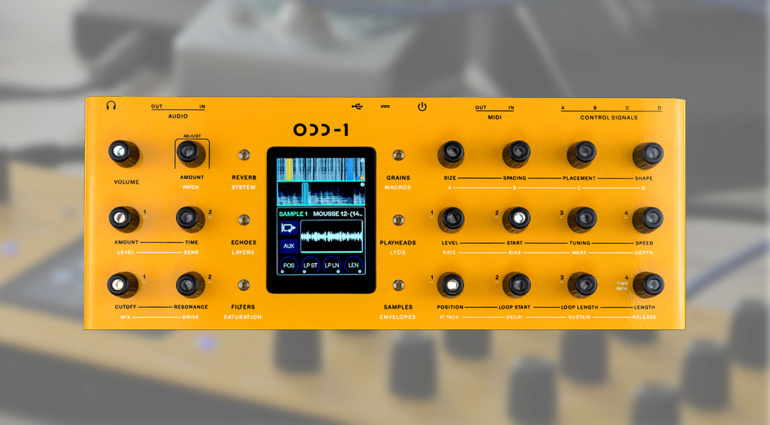
TL;DR: Oddment’s ODD-1 is a new hardware granular sampler and synthesizer that can juggle eight stereo samples simultaneously, each with its own playhead, grain controls, and per-layer effects. With a quad-core ARM processor, bi-timbral engine, and a companion VST plugin included, it’s aiming squarely at Tasty Chips’ GR-MEGA throne—but at $999, it’s also asking if you’re ready to go granular without a software safety net.
- Eight simultaneous stereo samples at 48kHz, each up to 60 seconds, with independent playheads for granular mayhem.
- Bi-timbral architecture with two layers, each with four voices, plus per-voice dual stereo filters and a full suite of modulatable effects.
- Quad-core ARM A72 CPU powers a custom “microsonic” granular engine; touchscreen and 18 endless encoders for hands-on control.
- Includes a free ODD-1V VST/AU plugin (retail $195) for seamless DAW integration—hardware optional, but we know you want the knobs.
- Preorders open now with a $300 deposit; shipping in August 2025. GR-MEGA owners, you’ve been warned.
Reading time: 4 min
Want more synth news before your next coffee break? Join the Noxal newsletter — no spam, just gear worth knowing about.
Meet the ODD-1: A Desktop Lab for Granular Synthesis

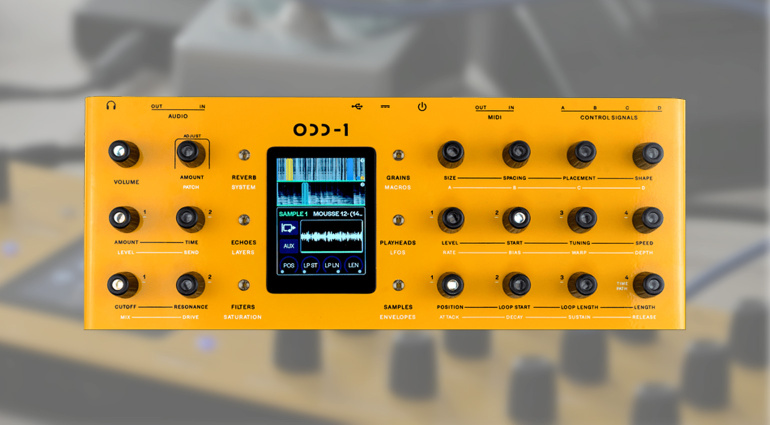
Let’s be honest: the phrase “granular synthesis hardware” usually conjures images of a rackmount behemoth or a boutique module that costs more than your rent. Oddment, a new outfit that apparently decided the synth world needed more acronyms and fewer compromises, has unveiled the ODD-1. It’s a desktop unit that looks like it was designed in a lab where coffee and oscilloscopes share equal billing—and we mean that as a compliment.
The ODD-1 is a granular sampler, synthesizer, looper, and real-time effects processor rolled into a slim metal box with 18 endless encoders and a capacitive 2.8-inch touchscreen. Oddment calls it “a laboratory for sound creation and a playground,” which is the sort of marketing copy that usually makes us roll our eyes. But after diving into the specs and demos, we’re willing to grant them the poetic license. This thing sounds like it has teeth.
At its heart is a custom “microsonic” granular engine—yes, that’s the official term—powered by a quad-core ARM A72 processor. That’s serious silicon for a hardware sampler, and it’s what allows the ODD-1 to handle eight stereo samples at once, each up to 60 seconds long at 48kHz. That’s not just a party trick; it’s the foundation for the kind of dense, evolving textures that granular synthesis is famous for.
What Makes It Tick: Granular Engine and Hardware Specs
Let’s get granular—pun intended. The ODD-1 is bi-timbral, meaning you can run two independent layers of sound simultaneously, each with four voices. Each layer can load up to four samples and assign them across independent playheads. You control grain size, spacing, placement, and shape via the endless encoders, and there’s a dedicated knob for playhead position and sample editing. The touchscreen handles the deeper menu diving, but the real magic is in the per-grain spatial audio and a unique variable-speed Time Path for sample stretching that Oddment claims is unlike anything else on the market.
For filtering, you get two stereo filters per voice with cutoff and resonance, plus a selection of resonant filter designs. That’s four filters total per voice if you’re counting—and we are. The filters can be routed in series or parallel, and they’re fully modulatable. It’s a level of per-voice control that’s rare in hardware granular synths, which often treat filtering as an afterthought.
Connectivity is generous for a desktop unit: USB-C audio in/out and MIDI, 3.5mm stereo audio in/out, a TRRS headphone output that doubles as a mic input, and four 3.5mm CV inputs (0-5V). It’s also MIDI 2.0 compatible and MPE-ready, so expressive controllers like the Roli Seaboard or LinnStrument will feel right at home. The 4GB of user storage is enough for hundreds of samples and patches, and you can record performances directly to the device—handy for those late-night sessions when the DAW is asleep.
Modulation, Effects, and the VST Companion
Granular synthesis without modulation is like coffee without caffeine—pointless. The ODD-1 offers four LFOs and four envelopes, all assignable via push-button modulation routing that also extends to macro controls, MIDI, and CV. The modulation matrix is deep enough to satisfy patch programmers but streamlined enough that you won’t need a PhD in signal flow to make something interesting happen.
Effects are where the ODD-1 really flexes. You get per-voice and per-layer saturation, distortion, bit crush, and compression. Then there are two echo units per layer, each with distortion and filtering in the feedback loop. On top of that, you get chorus, phaser, flanger, tremolo, and tape emulation—all modulatable. It’s a Swiss Army knife of sound design, and it all runs on that quad-core ARM without breaking a sweat.
Perhaps the smartest move Oddment made is including a companion VST/AU plugin called ODD-1V, which the company values at $195. It’s a software recreation of the hardware engine, meaning you can design patches on your laptop and load them onto the hardware via USB. Or, if you’re the sort of person who buys hardware and then never touches the knobs, you can just use the plugin. But we at Noxal know you bought the hardware for the tactile experience, so the plugin is a bonus, not a crutch.
Can It Really Dethrone the GR-MEGA?
The $999 question—literally—is whether the ODD-1 can unseat Tasty Chips’ GR-MEGA as the king of hardware granular. The GR-MEGA has been the benchmark for years, beloved for its deep granular engine, robust build, and dedicated following. But the ODD-1 brings some compelling advantages: eight simultaneous samples versus the GR-MEGA’s four, bi-timbral operation, dual filters per voice, and a more modern touchscreen interface.
That said, the GR-MEGA has a devoted user base and a proven track record in live performance and studio work. The ODD-1 is an unknown quantity from a brand-new company. Oddment has been teasing this since last year’s Synth Journal, and the demos sound promising, but we’ll reserve final judgment until we get our hands on a production unit. Preorders are open now with a $300 refundable deposit, and shipping is slated for August. If you’re on the fence, that deposit buys you time to hear more demos and read early reviews—including ours.
One thing is certain: the ODD-1 is not a me-too product. It’s a serious contender that brings features the GR-MEGA doesn’t offer, and at a similar price point. The granular synth wars are officially heating up, and we’re here for it.
Who Should Buy the ODD-1?
The ODD-1 is for the sound designer who wants to escape the laptop but refuses to compromise on depth. It’s for the ambient artist who needs layers of evolving texture, the experimental producer who wants to mangle field recordings into unrecognizable beauty, and the live performer who demands hands-on control without menu diving. If you’re the sort of person who owns a GR-MEGA and thinks, “I wish this had more voices and a touchscreen,” the ODD-1 is calling your name.
It’s also for the person who appreciates a thoughtful bundle—the included ODD-1V plugin sweetens the deal significantly, especially if you work in a DAW. And at $999, it’s priced competitively against other high-end hardware samplers. Is it a GR-MEGA killer? Not yet, but it’s certainly a worthy challenger. And in a world where hardware granular options are still rare, competition is a very good thing.
Frequently Asked Questions
Can the ODD-1 stream samples from an SD card or USB drive?
No. All samples must be loaded into the 4GB internal storage. There is no SD card slot or USB host port for storage expansion. Oddment recommends transferring samples via USB-C from your computer.
Does the ODD-1 have a built-in microphone?
Yes, the 3.5mm TRRS headphone output includes a microphone input, so you can record directly into the sampler without an external preamp. There’s also a dedicated analog audio input for line-level sources.
Can I use the ODD-1V plugin without buying the hardware?
Oddment has not confirmed a standalone release for the ODD-1V plugin, but the company lists it as having a retail value of $195 and a street date of June 2025. It’s possible it will be sold separately, but for now, it’s included with the hardware preorder.
We’ll be at Superbooth this week, probably spilling coffee on our notepads while trying to get hands-on with the ODD-1. If the demos are any indication, the only thing more granular than the synthesis will be our caffeine intake.