TL;DR: Albert Nyström is back with Hum 2, a 3-part multitimbral synth that swaps knobs for touch pads and adds a gyroscope, light sensor, and distance sensor for deeply expressive control. It’s a generative beast with per-part sequencers, multiple sound engines, and CV connectivity — all packed into a box that seems to have a sixth sense about your studio lighting.
- Three independent synth parts, each with its own sound engine selection (subtractive, FM, wavetables, organ, experimental) and a 64-step generative sequencer.
- Expressive control via a gyroscope for X/Y tilt modulation, plus light and distance sensors — assignable to any knob on the panel.
- 17 quantized scales, three send effects (reverb, delay, overdrive), and four assignable LFOs.
- Modular-friendly: three CV outputs, two CV inputs, sync I/O, plus USB for MIDI and audio.
- No price or release date yet, but “coming soon” with a newsletter sign-up on Nyström’s site.
Reading time: 4 min
Want more synth news before your next coffee break? Join the Noxal newsletter — no spam, just gear worth knowing about.
What Is the Nyström Hum 2?

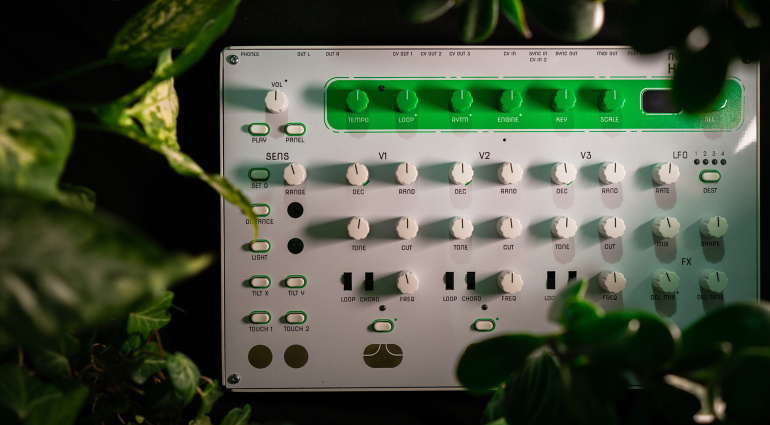
Swedish mad scientist Albert Nyström has done it again. After the Crum Hum and Crum Drum, and a collaborative stint with Love Hultén and Analog Sweden on the Crum 2, he’s unveiled the Hum 2 — a synth that feels less like a traditional instrument and more like a sentient black box that responds to your every twitch, tilt, and shadow. It’s a 3-part multitimbral synth, meaning you can layer three distinct voices simultaneously, each with its own sound engine and sequencer.
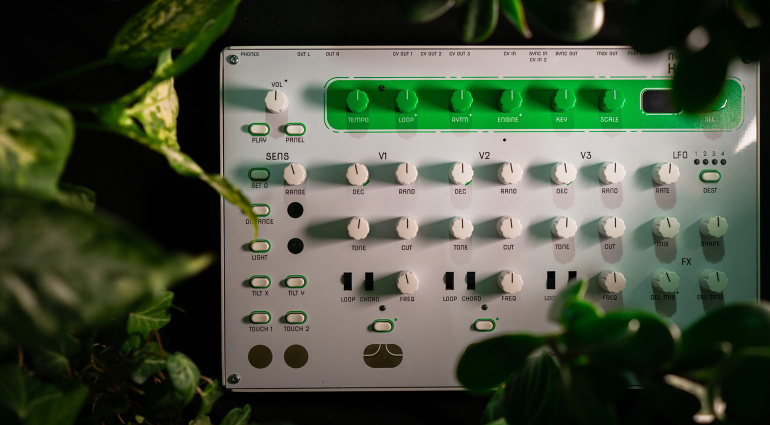
The interface is dominated by touch pads — no endless encoders or faders here — and a central panel that looks like it was designed by someone who thinks potentiometers are passé. Each of the three parts can be set to monophonic or chord mode via switches, and you choose from engines like subtractive, FM, wavetables, organ, and the intriguing “experimental engines” (which, as of now, remain a mystery even to us). It’s a modular approach to sound architecture, but all in one box.
The build quality? Nyström’s instruments are known for their rugged, almost industrial feel, often with a slight Scandinavian design flair. Hum 2 appears to continue that tradition, with a housing that invites you to pick it up and move it around — which, as we’ll see, is exactly what it wants you to do.
The Expressiveness of Sensors
Here’s where Hum 2 gets weird in the best way. Beyond the touch pads, it packs a distance sensor, a light sensor, and a gyroscope. Yes, a gyroscope — tilt the synth along the X and Y axes and you can modulate any parameter on the panel. Imagine bending a filter cutoff by tipping the whole machine left, or adjusting reverb depth by tilting it toward you. It’s like playing a Theremin, but with more accidental table spills.
The light sensor is equally bizarre: modulate sounds by shading the box with your hand or by changing the room’s ambient lighting. For studio rats who live in perpetual twilight, this might be less useful, but for live performers, it’s a goldmine of unpredictable expression. The distance sensor tracks proximity, so you can control parameters by waving your hand over the synth — a trick that feels gimmicky but, in practice, can unlock genuinely organic performance gestures.
These sensors are assignable to any knob on the panel, which means you can set up complex modulation routings without menus. Four assignable LFOs handle the rest, and three send effects (reverb, delay, overdrive) glue everything together. It’s a system that rewards hands-on exploration and punishes static setups — exactly what we want from an experimental instrument.
Generative Sequencing and Sound Engines
Each of the three parts has its own 64-step sequencer, which can run loops or generative patterns. And yes, these patterns are quantized to one of 17 selectable scales, so you won’t end up with atonal chaos unless you want to. The generative aspect is key: set a few parameters, let the sequencer evolve, and you’ve got a living, breathing soundscape that changes over time. It’s ideal for ambient, drone, or experimental electronic music — or just for staring at your gear while it plays itself.
The sound engines cover the essentials: subtractive for classic leads and basses, FM for metallic clangs and digital textures, wavetables for morphing timbres, organ for… well, organ sounds. The “experimental engines” are the wildcard. Knowing Nyström’s previous work, they could be anything from granular synthesis to chaotic noise generators. We’ll reserve judgment until we hear them, but the potential is mouthwatering.
Connectivity is surprisingly robust for a box this quirky. Stereo and headphone outputs are standard, but you also get a USB port for MIDI and audio, plus three CV outputs, two CV inputs, and sync I/O. That means it plays nice with modular systems, Eurorack cases, and even your old semi-modular synth. It’s not just a standalone instrument; it’s a control center for a larger setup.
Market Context and Who Is It For
Hum 2 enters a crowded field of experimental synths — think Soma Laboratory’s Pulsar-23, the Expressive E Osmose, or even the Make Noise 0-Coast. But its combination of multitimbrality, sensor-based expression, and generative sequencing sets it apart. It’s not trying to be a workhorse for classic pop production; it’s for those who want to push boundaries and make sounds that surprise even themselves.
Who is it for? Studio experimenters who crave tactile control. Live performers who want to interact with their instrument physically. Modular enthusiasts looking for a controller that brings more than just CV. And, frankly, anyone who wants to look like a mad scientist while making music. The lack of a price and release date is frustrating, but Nyström’s track record suggests it won’t be cheap — expect it to land somewhere in the $800–$1,200 range, given the complexity and niche appeal.
We at Noxal are cautiously optimistic. The sensor-based approach could be a gimmick, or it could be a genuine leap forward in expressive synth design. Given Nyström’s history — the Crum Hum was a cult hit for good reason — we’re leaning toward the latter. Sign up for the newsletter if you want to be first in line; we’ll be watching this one closely.
Frequently Asked Questions
What is the Nyström Hum 2?
The Hum 2 is a 3-part multitimbral synthesizer with individual sound engines (subtractive, FM, wavetables, organ, experimental), a 64-step generative sequencer per part, and expressive control via touch pads, a gyroscope, light sensor, and distance sensor.
Does it work with modular gear?
Yes. It has three CV outputs, two CV inputs, and sync I/O, making it compatible with Eurorack and other modular systems. It also has USB for MIDI and audio.
When can I buy it and how much will it cost?
No official release date or price has been announced yet, but it’s “coming soon.” You can sign up for the newsletter on Nyström’s website for updates. Expect a price in the $800–$1,200 range based on its complexity and niche appeal.
We’ll be tilting our coffee mugs in tribute to the Hum 2 while we wait for the release date — just don’t spill on the light sensor.