TL;DR: Behringer’s BMX, a hybrid sampling drum machine paying homage to the legendary Oberheim DMX from 1980, is now available for pre-order in Europe at €369 from Thomann. It blends the original’s 8-bit/12-bit sound samples with a built-in sampler, analog filters, and modern connectivity, making it more than just a clone.
- Based on the Oberheim DMX but upgraded with a hybrid sampling engine, allowing users to load custom sounds alongside the original 24 drum samples.
- Features analog filters with cutoff and resonance controls, plus per-track volume sliders and pan knobs for hands-on mixing.
- Available for pre-order at €369/£349/$459, with first shipments arriving in Europe now; US retailers like Sweetwater and Perfect Circuit will follow.
- Includes individual outs, three trigger outs, MIDI I/O, sync in/out, and USB, making it studio-ready for hybrid setups.
- Expected to ship in batches over weeks or months depending on retailer and shipping method (sea vs. air).
Reading time: 4 min
Want more synth news before your next coffee break? Join the Noxal newsletter — no spam, just gear worth knowing about.

What is the Behringer BMX?

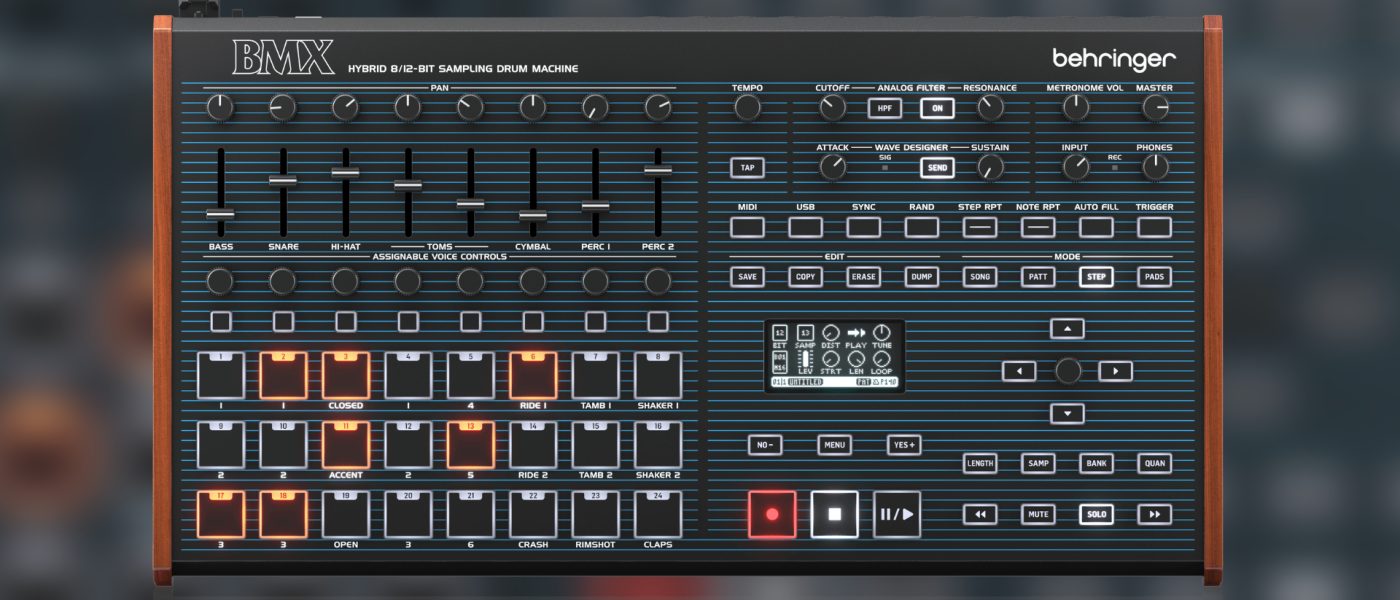
Behringer’s BMX is the latest in their ongoing quest to make vintage drum machines affordable for the masses. This time, they’ve taken aim at the Oberheim DMX from 1980 — a machine that graced countless early hip-hop, electro, and new wave records. The BMX is a near-exact visual replica, with that iconic white-and-blue striped panel, but housed in the same sturdy case format as the RD-8 and RD-9. At first glance, you’d be forgiven for mistaking it for the original at a fraction of the price.
Behringer promises the BMX will host all the original DMX sound samples — think punchy kicks, sizzling snares, and those unmistakable rimshots — across 24 drum sounds arranged in eight parts. But unlike a straight clone, they’ve added a crucial twist: this is a hybrid machine. You get the classic 8-bit/12-bit character of the original, but with modern sampling capabilities and analog filters baked in. It’s a smart move that turns a nostalgic replica into something genuinely useful for contemporary production.
More than a Clone: The Hybrid Angle
Here’s where things get interesting. We at Noxal have seen too many “clones” that simply repackage old sounds in a new box. The BMX sidesteps that trap with an internal sampling engine. You can load your own samples, layer them with the original DMX sounds, and run everything through an analog filter section with cutoff and resonance controls. It’s like having an Oberheim DMX and a basic sampler in one box, without the vintage price tag or maintenance headaches.
The sequencer is expected to be creative, possibly with parameter automation — a feature that would elevate this from a mere reproduction to a performance tool. Behringer’s sound designer Kurt Ader showcased a production unit at NAMM 2026, and the demos hint at a machine that can do more than just recreate history. The hybrid approach makes the BMX relevant for producers who want that vintage grit but also need flexibility for modern workflows. It’s a rare case where Behringer didn’t just copy; they improved.
Specs and Connectivity
On the front panel, each of the eight tracks gets its own volume slider and pan knob, alongside 24 drum pads for direct triggering. The analog filter section is front and center, with cutoff and resonance controls that shape the overall mix. It’s a tactile experience that rewards hands-on tweaking — something we appreciate here at Noxal, where we believe a studio should feel like an instrument, not a computer screen.
On the back, the BMX is surprisingly well-equipped for its price point. You get a main stereo output (L/R), headphones, a record input for sampling, individual outs for each sound, three trigger outs for syncing external gear, sync in/out, a full MIDI interface, and USB. This means it can sit at the heart of a hybrid setup, triggering modular gear, sequencing other synths, or integrating with a DAW. The individual outs alone are a godsend for mixers who want to process each sound separately — try doing that with a vintage DMX without a small fortune in cables and a mixer.
Market Context and Availability
For €369 at Thomann, the BMX undercuts virtually every other hybrid drum machine on the market. Compare that to the original Oberheim DMX, which can fetch upwards of €2,000 on the used market, or even modern alternatives like the Arturia DrumBrute Impact at around €350 — the BMX offers sampling and analog filtering that the competition lacks at this price. It’s a bold move that could shake up the budget drum machine segment.
Availability is a typical Behringer story: pre-orders are open now in Europe, with Thomann listing it as in stock for the first batch. US retailers like Sweetwater and Perfect Circuit will follow, but expect delays due to sea freight vs. air shipping. Behringer’s production capacity is always a wildcard, so if you want one, we’d recommend pre-ordering early. As always, first-come, first-served — and given the hype around this one, the initial batch might vanish faster than a fresh pour-over at a synth meetup.
Who Is It For?
The BMX is for producers who love the sound of vintage drum machines but don’t have the budget or the patience for maintenance. It’s also for sound designers who want to blend classic samples with their own recordings, all shaped by analog filters. If you’re building a hardware studio on a budget, this could be the heart of your rhythm section — especially if you’re into hip-hop, electro, or anything that thrives on that punchy, lo-fi character.
Purists might grumble about the hybrid additions, but we at Noxal think that’s missing the point. The BMX isn’t a museum piece; it’s a tool. It respects the original while adapting it for modern production. And at this price, it’s hard to argue with the value. If Behringer can keep up with demand, the BMX might become the go-to drum machine for a generation of producers who want the past without the baggage.
Frequently Asked Questions
Does the Behringer BMX include all original Oberheim DMX sounds?
Yes, Behringer states that the BMX will host all the original DMX sound samples. However, the exact fidelity and authenticity will depend on the sampling process — we’ll reserve judgment until we hear it in person, but the demos so far are promising.
Can I use the BMX without a computer?
Absolutely. The BMX is a standalone hardware drum machine with built-in sequencing, sampling, and analog filters. You can trigger it via MIDI, sync it with other gear, and record directly to a mixer or audio interface without ever touching a DAW.
How does the BMX compare to the Behringer RD-8 or RD-9?
The BMX is a different beast. While the RD-8 is a clone of the Roland TR-808 with analog synthesis, the BMX is sample-based with added sampling and analog filters. The RD-9 focuses on the TR-909, but the BMX offers more sound design flexibility thanks to its hybrid engine. If you want vintage drum machine character with modern sampling, the BMX wins.
We’ll be testing the BMX with a strong cup of Ethiopian Yirgacheffe and a vintage mixer — because some rituals deserve analog warmth, even in a digital world. Pre-order now, before the first batch sells out and we’re left with only the sound of our own impatience.