TL;DR: KORG has unveiled the NTS-4, a six-channel performance mixer for synths and drum machines that doubles as a USB audio/MIDI interface and includes built-in logueSDK effects. It offers two mono and four stereo inputs on mini jacks, cue/mute per channel, aux sends, and a headphone output—all in a compact, presumably affordable package aimed at portable desktop setups and volca enthusiasts.
- Six channels: two mono (accepting Eurorack levels) and four stereo, all on mini-jack inputs; main output via 1/4″ jacks.
- Built-in logueSDK effects engine with a send effect per channel and a total effect on the master mix, plus external send/return.
- USB audio and MIDI interface functionality for syncing drum machines and grooveboxes to a DAW.
- No level meters, only clipping LEDs; cue balance, mute, and aux send per channel with pan pots on mono channels.
- Pricing and release date not announced; positioned as a successor to the volca mix for portable synth rigs.
Reading time: 3 min
Want more synth news before your next coffee break? Join the Noxal newsletter — no spam, just gear worth knowing about.

The Nuts and Bolts
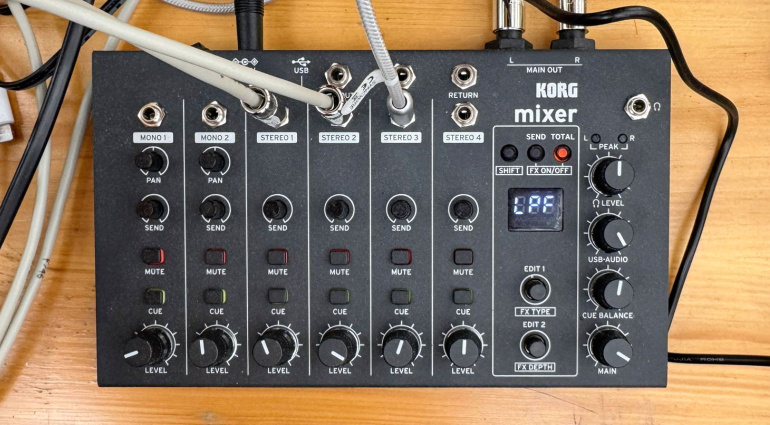
KORG didn’t bring any new synths to Superbooth this year—unless you count a mysterious prototype hidden beneath a thick layer of plastic wrap, which we at Noxal suspect is either a time machine or a coffee warmer. What they did bring is the NTS-4, the latest addition to the nu:tekt series, and it’s a six-channel performance mixer designed specifically for synths, drum machines, samplers, and grooveboxes. The layout is refreshingly straightforward: two mono channels with pan pots and four stereo channels, all with level knobs, cue and mute buttons, and an aux send. The mono inputs can also handle Eurorack-level signals, which is a nice touch for those of us with modular tendencies.
All inputs are on mini-jack connectors, which is great for portable desktop setups and modular systems but less ideal if your gear is full-size and you’re tired of hunting for adapters. The main output, thankfully, uses 1/4″ jacks—someone at KORG clearly owns a synth with actual jacks. There’s no level meter, just a pair of clipping LEDs, which is a bit like having a car with no speedometer but a bright “too fast” light. Still, for a compact mixer, it’s a compromise many will accept for portability.
logue Sorcery
The most exciting feature is the built-in logueSDK effects engine, borrowed from the NTS-1 mini synth and NTS-3 KAOSS Pad. This means you can tap into a growing library of effects created by third-party developers—or write your own if you’re the type who enjoys pain. There’s a send effect that can be applied to individual channels and a total effect that hits the main mix. If you prefer external hardware, the NTS-4 also offers send and return jacks for outboard effects.
This is where the NTS-4 shines. The logueSDK ecosystem has produced some genuinely excellent effects—reverbs, delays, modulation, and weird stuff that makes your synth sound like it’s having a nervous breakdown. For a mixer in this price range (presumably affordable, though KORG hasn’t confirmed), having that flexibility is a significant advantage. It turns a simple mixer into a creative tool, which is exactly what we at Noxal want from our gear—something that makes us sound smarter than we actually are.
USB Interface and Connectivity
The NTS-4 doubles as a USB audio and MIDI interface. There’s a MIDI output for syncing your drum machines and grooveboxes to your DAW, and the USB port carries audio. At this point, I’m not entirely sure whether USB serves as an audio input, output, or both—KORG’s documentation is about as clear as a muddied spring reverb—but we’ll find out soon enough. Either way, it’s a welcome addition for those who want to integrate hardware with software without needing a separate interface.
The master section includes a cue balance knob, a USB audio knob (presumably for blending USB audio with the main mix), and a separate headphone volume control. There’s also a pair of clipping LEDs, which I mentioned earlier, and which I will continue to mention because it’s really the only visual feedback you get. If you’re the type who likes to watch your levels dance, bring your own oscilloscope or just close your eyes and feel the music.
Market Context and Who It’s For
While the NTS-4 is pretty bare-bones compared to advanced mixers like the Allen & Heath Xone or even the Mackie VLZ series, it’s clearly aimed at a specific audience: volca fans who were left disappointed by the volca mix, and anyone building a compact, portable synth rig. The volca mix failed to meet expectations—it was noisy, limited, and felt like an afterthought. The NTS-4, with its logueSDK effects and USB interface, feels like the mixer KORG should have made years ago.
It’s also a solid option for modular users who need a quick way to mix a handful of voices without breaking the bank. The mini-jack inputs are actually a plus here, since many modules use 3.5mm jacks anyway. If you’re a touring musician or a desk-space minimalist, the NTS-4 could be your new best friend. Just don’t expect it to replace a full-featured console—it’s a tool for quick, creative mixing, not for mastering your next ambient album.
Pricing and Availability
As of now, KORG hasn’t said when the NTS-4 will become available or what it’ll cost. We’ll keep you posted, but in the meantime, you can find the rest of the NTS bunch at Thomann. Given the nu:tekt series’ pricing so far—the NTS-1 is around $150—we’re expecting the NTS-4 to land somewhere in the $200–$300 range. That would make it a compelling option for anyone who needs a small, effects-equipped mixer without selling a kidney.
Frequently Asked Questions
Can the NTS-4 be used as a standalone mixer without a computer?
Yes, the NTS-4 can function as a standalone mixer. The USB audio and MIDI features are optional, so you can just plug in your synths and drum machines and mix away without a DAW.
What kind of effects are available via logueSDK?
The logueSDK ecosystem includes hundreds of effects created by third-party developers, ranging from classic reverb and delay to more experimental modulation, distortion, and granular processors. You can also create your own effects using the SDK.
Is the NTS-4 compatible with Eurorack systems?
Yes, the mono inputs can accept Eurorack-level signals, making it a convenient option for integrating modular voices into a mix without additional attenuation. Just be mindful of the mini-jack format, which is standard in Eurorack.
We at Noxal will be testing the NTS-4 as soon as we can get our hands on one—preferably with a fresh pot of pour-over coffee on the desk and a volca drum running through a logueSDK reverb that sounds like a cathedral made of crystal. Until then, keep your levels in the green and your aux sends adventurous.