

TL;DR: Instruo has unveiled the Íre, a Eurorack interface module that brings external audio sources into your modular system with a hybrid FET preamp and transformer-based microphone input. After an eight-year development cycle, it offers a combo jack, phantom power, envelope follower, and comparator — essentially a Swiss Army knife for bridging the outside world with your patch cables.
- Hybrid preamp circuit: FET architecture for instruments/line-level sources, plus transformer input for microphones — no need for separate adapters.
- Built-in envelope follower with attack/release stages and a comparator, turning audio into dynamic control voltage for patching.
- Combo jack input with phantom power, -20dB pad, and high-pass filter for clean gain staging and rumble control.
- Eight-year development cycle suggests Instruo didn’t rush this — it’s a refined tool, not a weekend project.
- Designed for guitarists, vocalists, and synth heads who want to integrate external signals into Eurorack without sacrificing sound quality.
Reading time: 4 min
Want more synth news before your next coffee break? Join the Noxal newsletter — no spam, just gear worth knowing about.

Meet Íre: The Modular Gateway
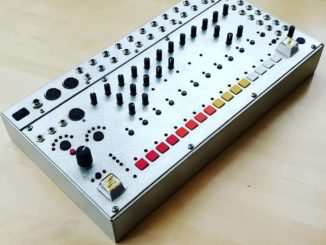
Let’s face it: modular synthesis can feel like a closed ecosystem. You spend hours patching oscillators, filters, and envelopes, but the outside world — your guitar, a microphone, that vintage synth you rescued from a pawn shop — remains locked out. Instruo’s new Íre module aims to change that. It’s a Eurorack interface module designed to bring external audio into your rack with the kind of fidelity that makes you forget you’re using a module at all.
At its heart, the Íre features a hybrid preamp circuit. For instruments and line-level sources, it uses a 6070-style FET architecture — think of it as a studio-grade preamp in 8HP. For microphones, there’s a transformer input design that handles balanced signals with grace. The combo jack input includes phantom power, a -20dB pad, and a high-pass filter to cut rumble. That’s not just spec-sheet padding; it means you can plug in a dynamic mic for field recordings or a guitar for direct processing without hunting for adapters.
The Eight-Year Odyssey
Instruo claims the Íre was part of an eight-year development cycle. We at Noxal have seen plenty of modules announced with “years in the making” puffery, but this one feels different. Eight years is enough time to design, scrap, redesign, and polish a circuit until it sings. The hybrid approach — FET for instruments, transformer for mics — isn’t a gimmick; it’s a solution to a real problem. Most interface modules either handle line-level signals well or microphones, but rarely both without compromise.
I remember my first interface module: a utilitarian box that did the job but added noise and colored the sound in ways I didn’t want. The Íre promises clarity and color where it matters — the FET preamp adds subtle warmth to electric guitars, while the transformer preserves the transient detail of a condenser mic. That’s the kind of thoughtfulness that comes from a long development cycle, not a rushed deadline.
Sound Design Meets Real-World Signals
Where the Íre really shines is in its envelope follower and comparator. The envelope follower converts incoming audio into a control voltage that tracks amplitude — perfect for using your voice to modulate a filter cutoff or a kick drum to trigger an envelope. The comparator adds a threshold-based trigger output, so you can turn a snare hit into a gate signal or a guitar strum into a rhythmic pulse.
This transforms the Íre from a simple preamp into a sound design tool. Imagine patching a field recording of rain through the envelope follower to control the speed of an LFO, then using the comparator to trigger a percussive element on every thunderclap. Or plugging in a bass guitar and using the envelope follower to open a filter on a drone oscillator, creating a hybrid instrument that blends acoustic and electronic textures. The possibilities are as vast as your patch cable collection.
Market Context and Who Should Buy
The Eurorack interface module market isn’t crowded, but it has heavy hitters: Make Noise’s Rosie, Intellijel’s Audio I/O, and the classic Doepfer A-119. Most of these focus on line-level signals or basic preamps. The Íre stands out by offering both a high-quality preamp for instruments and a dedicated transformer input for microphones, plus the envelope follower and comparator — features usually found in separate modules.
Who should buy this? If you’re a guitarist or vocalist looking to integrate your instrument into a modular setup, the Íre is a no-brainer. If you’re a sound designer who works with field recordings, the phantom power and high-pass filter make it a practical choice. And if you’re just tired of adapters and noisy preamps, the Íre offers a clean, versatile solution. It’s not cheap — Instruo modules rarely are — but for the quality and features, it’s a worthy investment.
Frequently Asked Questions
What sources can I connect to the Instruo Íre?
The Íre accepts microphones (with phantom power), electric instruments like guitars and basses, and line-level signals from synthesizers or audio interfaces. The combo jack input handles both XLR and 1/4″ TS/TRS connections.
Does the envelope follower work with all audio signals?
Yes, the envelope follower tracks the amplitude of any audio input, from a quiet vocal to a loud synth bass. The attack and release stages are adjustable, and the comparator adds a trigger output for gate signals.
How does the Íre compare to other interface modules like the Doepfer A-119?
The A-119 is a classic but lacks phantom power and the transformer input for microphones. The Íre offers a higher-quality preamp, more flexible gain staging, and the built-in envelope follower/comparator — making it a more complete solution for sound design.
Now if you’ll excuse me, I need to figure out how to patch my coffee maker into the Íre’s envelope follower. For science. And caffeine.