TL;DR: Erica Synths has bundled its entire EDU DIY drum module series into the Konstrukt-8, a modular, build-it-yourself analog drum machine. It combines four analog drum voices, a sequencer, a mixer, and effects into a single, educational instrument that can be used as a standalone unit or integrated into a larger Eurorack system.
- The Konstrukt-8 bundles all eight modules from the second Erica Synths/Moritz Klein EDU DIY series into a complete, modular analog drum machine.
- It’s a hands-on educational tool: each module includes a detailed build guide and can be prototyped on a breadboard to learn circuit design.
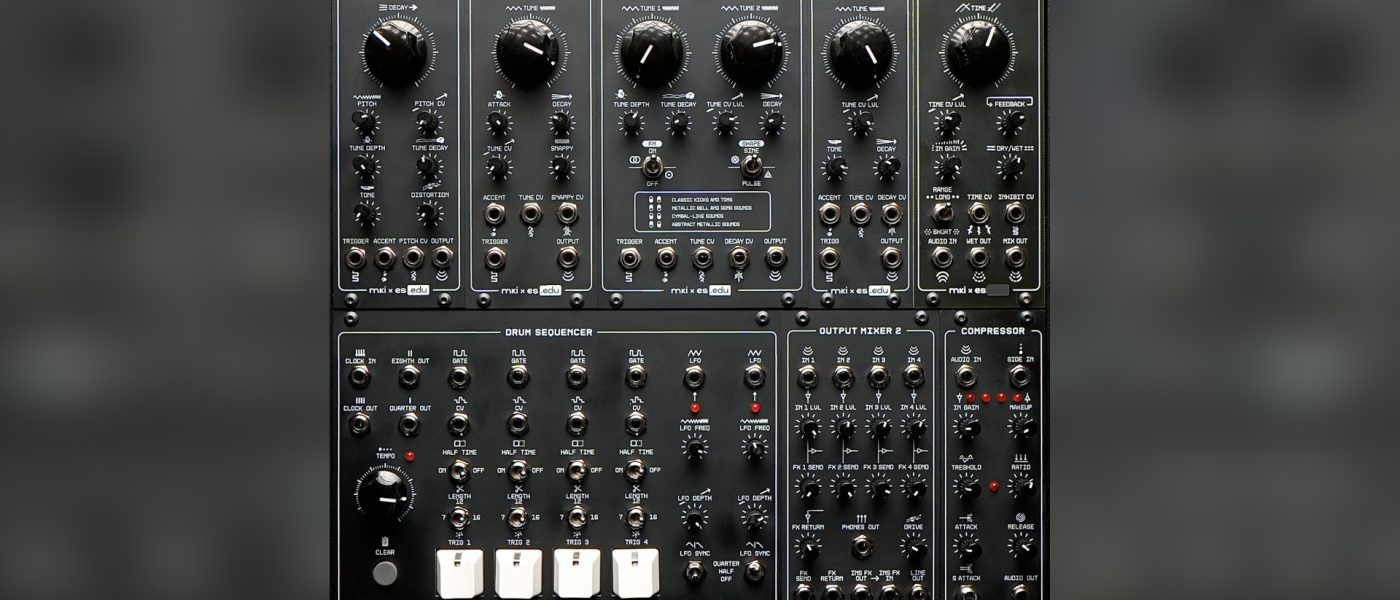
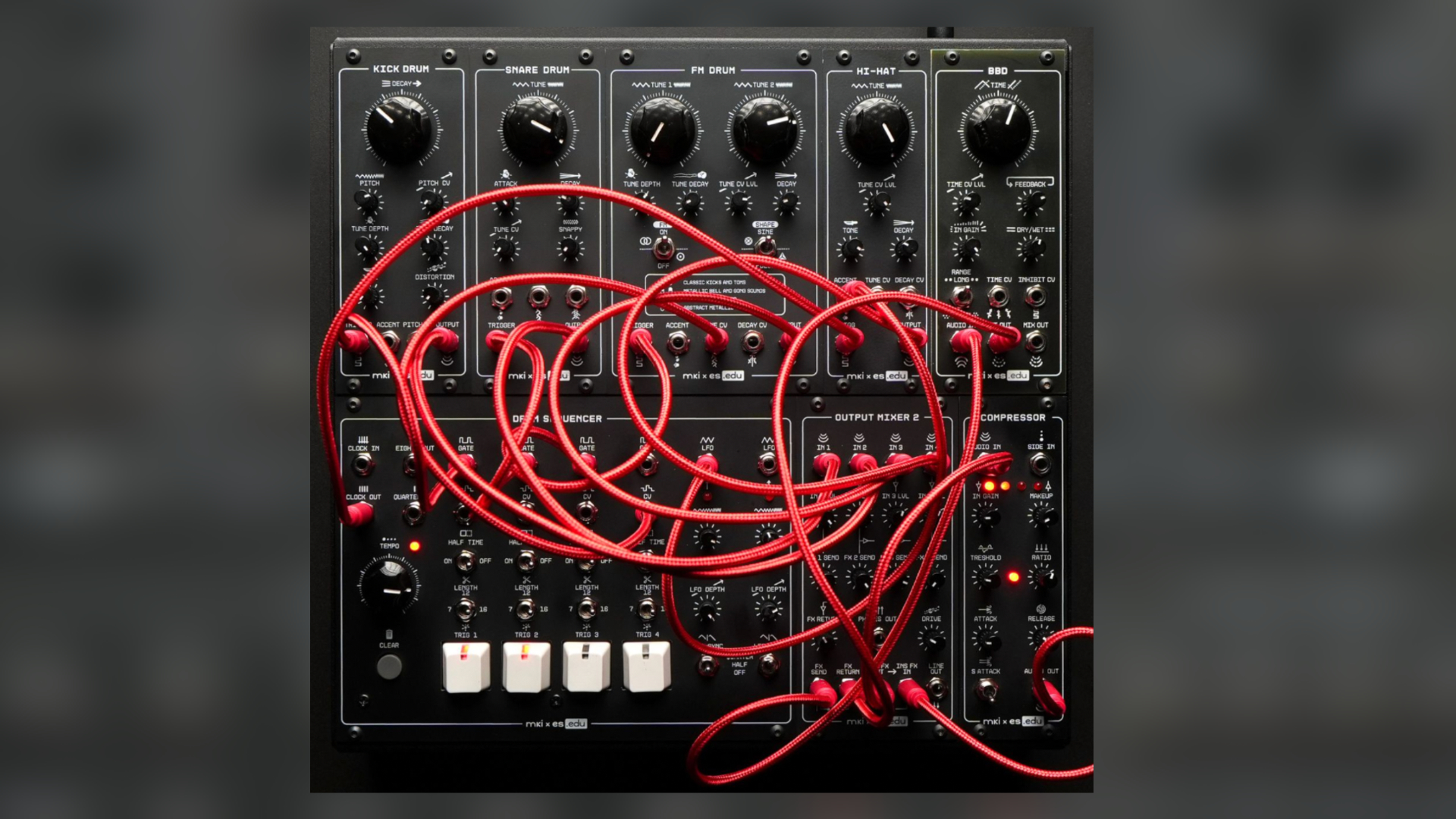
- The core features four analog drum voices, a 4-channel sequencer, a 4-channel mixer with drive, and both a BBD delay/flanger and a compressor module.
- It’s available as a module-only kit (€490) or as a complete system with a powered Eurorack case and cables (€615, excl. VAT).
- The fully modular design means the voices and effects can be patched creatively via CV and later removed to expand a larger Eurorack setup.
Reading time: 5 min
Want more synth news before your next coffee break? Join the Noxal newsletter — no spam, just gear worth knowing about.

The EDU DIY Drum Machine Manifesto
Here at Noxal, we see a lot of gear that promises to be “revolutionary,” but rarely does something come along that genuinely aims to change how you understand your instruments. The Erica Synths Konstrukt-8, born from the continued collaboration with educator and designer Moritz Klein, is one of those rare beasts. This isn’t just a product launch; it’s the culmination of a pedagogical project. The second EDU DIY series focused entirely on drum synthesis, and the Konstrukt-8 is the graduation ceremony—a box that contains every lesson, every resistor, and every “aha!” moment, ready for you to assemble into a functioning, fully modular analog drum machine.
The genius of the EDU DIY approach has always been its marriage of theory and immediate, tangible practice. You’re not just soldering mindlessly; you’re following a comprehensive manual that explains the “why” behind every capacitor and transistor. With the Konstrukt-8, Erica Synths has taken the logical next step. Instead of acquiring these eight drum-focused modules piecemeal, you can now get the entire curriculum in one go. It’s a complete instrument built from discrete, learnable parts. I have to respect a company that bets on users wanting to get their hands dirty with a soldering iron to earn their beats.
Deconstructing the Konstrukt-8
So, what exactly are you building? Let’s break down the eight modules that form the Konstrukt-8’s backbone. The heart is the quartet of fully analog drum voices. While four voices might seem modest compared to some digital workstations, the analog character and, more importantly, their modular nature are the key differentiators. You’re getting dedicated analog circuits for kicks, snares, hats, and percussion—the foundational elements.
These voices are driven by a four-channel drum sequencer based on shift registers, a classic and elegantly simple digital logic design for storing patterns. It’s a perfect teaching moment in itself. To mix them, you get a four-channel mixer with per-channel FX sends, a master insert, and a built-in diode distortion circuit for some grit. The final pieces are the effect modules: an analog bucket-brigade delay (BBD) that can operate as a flanger or delay, and a diode-based compressor with sidechain input. This isn’t just a drum machine; it’s a compact, self-contained drum studio with a clear, patchable signal path from sequence to final compression.
Why Modularity Matters Here
You could be forgiven for asking, “Why not just buy a pre-built TR-style box?” The answer lies in the patch cables. The Konstrukt-8’s modular design means every drum voice and processor is covered in CV inputs and outputs. This transforms it from a fixed-architecture groovebox into a sonic playground. Want to modulate the decay of your snare with a sequencer channel? Go ahead. Route the mixer’s drive circuit to be triggered by the kick? You can. Use the compressor’s sidechain on an external synth bass? Absolutely.
This modularity also future-proofs your investment and education. The included powered Eurorack case (if you opt for the system version) is a gateway drug. Once you’ve mastered the Konstrukt-8, you can unscrew these modules and slot them into a larger case, integrating your hand-built drum voices with any other Eurorack modules you own. Erica Synths isn’t selling you a closed ecosystem; they’re giving you the foundational blocks of a personalized instrument. It’s a philosophy I wish more manufacturers embraced.
Who Is This For, Really?
The Konstrukt-8 sits at a fascinating crossroads. It’s first and foremost for the curious tinkerer, the student of electronics, and the DIY enthusiast who values the journey as much as the destination. If the idea of spending evenings with a soldering iron, a magnifying lamp, and a detailed guide sounds like bliss rather than a chore, this is your holy grail. The ability to prototype each circuit on a breadboard before final assembly is a masterstroke, turning the build process into an interactive lab session.
But it’s also for the musician who wants a unique, hands-on instrument with a story. The sounds you’ll get are raw, analog, and full of character—shaped by circuits you built yourself. There’s an intangible connection there that you simply don’t get with a mass-produced unit. However, I must be clear: if you need 64-voice polyphony, sample streaming, and a color touchscreen to make music, look elsewhere. The Konstrukt-8 is for those who find magic in limitations and revelation in a well-documented circuit diagram.
The Price of Enlightenment
Let’s talk numbers. The Konstrukt-8 is available in two flavors. The “Set” version includes all eight DIY module kits for €490. This is for the existing Eurorack warrior who already has a case and power supply. The “EDU DIY System” bundles the modules with a matching powered case and 15 braided patch cables for €615 (excluding VAT). In the context of boutique analog gear and educational tools, these prices feel justified, even reasonable.
You’re not just paying for components and a manual; you’re paying for the years of design and educational expertise from Moritz Klein and the Erica Synths team. Compared to buying a pre-built, non-modular analog drum machine of similar voice count, the Konstrukt-8 offers unparalleled educational value and system flexibility. The investment is in your skillset as much as your studio. Just budget for a good soldering station and a lifetime supply of coffee—you’ll need both.
Frequently Asked Questions
Do I need prior electronics experience to build the Konstrukt-8?
The EDU DIY series is specifically designed for beginners. The included manuals are exceptionally detailed, walking you through both the theory and the practical assembly step-by-step. Starting with the breadboard prototyping for each module is highly recommended to build confidence and understanding before the final soldering.
Can I use the Konstrukt-8 modules in my existing Eurorack setup?
Absolutely. That’s a core feature. The modules are standard Eurorack format (3U). If you buy the module-only “Set,” you can install them directly into your own case. If you buy the full “System,” you can later remove the modules from the included case and integrate them into a larger system.
How does this compare to the original Erica Synths & Moritz Klein EDU DIY Synthesizer Voice?
The first series was a complete mono/paraphonic synthesizer voice (VCO, VCF, VCA, EG, LFO, etc.). The Konstrukt-8 is the second series, focused entirely on drum synthesis and processing. They are complementary. You could theoretically build both and have a fantastic, self-made hybrid studio. The educational approach and build process are consistent across both series.
Now, if you’ll excuse me, I need to check if my soldering iron is preheated. This kind of project demands a fresh pot of exceptionally strong coffee and the patience of a saint. Happy building.