TL;DR: UDO Audio has officially opened orders for the DMNO, its new eight-voice hybrid polyphonic synthesizer. Priced at $2866, it features a unique dual-layer architecture with eight play modes, FPGA digital oscillators, and new analog filters, all housed in a 44-key chassis with a striking VFD screen. The synth is available in both black and white finishes, with deliveries expected in early 2026.
- The DMNO is an eight-voice, bitimbral hybrid synth with two independent synthesizer sections, each with its own FPGA oscillators and analog filter.
- It introduces eight distinct Play Modes, including a ‘Series’ mode that routes one synth’s output into the other’s oscillator mixer for complex sound design.
- New ‘Dynamic Multi-Core Stereo’ analog filters can be configured in series, parallel, or stereo, with multiple modes for each configuration.
- The interface features a distinctive electroluminescent glass Vacuum Fluorescent Display (VFD) and a 44-key Fatar keybed with aftertouch.
- Connectivity is extensive, including a built-in USB audio interface, CV/gate, and traditional MIDI, making it a potential studio centerpiece.
Reading time: 5 min
Want more synth news before your next coffee break? Join the Noxal newsletter — no spam, just gear worth knowing about.
The Domino Effect

We at Noxal have been watching the tea leaves—or more accurately, the circuit boards—since UDO Audio first teased the DMNO. The announcement that it’s finally available to order feels less like a product launch and more like the culmination of a well-orchestrated campaign of desire. The core news is simple: you can now give Thomann your money for one of these black or white beauties, with a price tag of $2866 / £2599 / €2969 and an expected ship date in early 2026. The waiting list is now a purchase order.
What strikes me immediately is the aesthetic gamble. In a market saturated with dark panels and rainbow LEDs, UDO offers a stark, almost philosophical choice: black or white. It’s a synth that demands you consider its place in your studio not just sonically, but visually. The twin control panels are an undeniable nod to the Oberheim Two Voice, a classic bitimbral architecture. But to call it a clone would be to profoundly miss the point. This is UDO applying its distinct, forward-thinking hybrid philosophy to a new form factor and a slightly different mission statement: bass weight and intricate layering.
The timing is also notable. Landing just after its debut at Machina Bristronica, the DMNO enters a conversation currently dominated by monstrous polyphons and nostalgic reissues. It doesn’t try to be the biggest or the most vintage. Instead, it carves a niche as a sophisticated, modern instrument for producers and performers who think in layers, splits, and complex signal paths. The domino, it seems, has finally fallen.
Architecture and Play Modes: More Than a Pretty Face
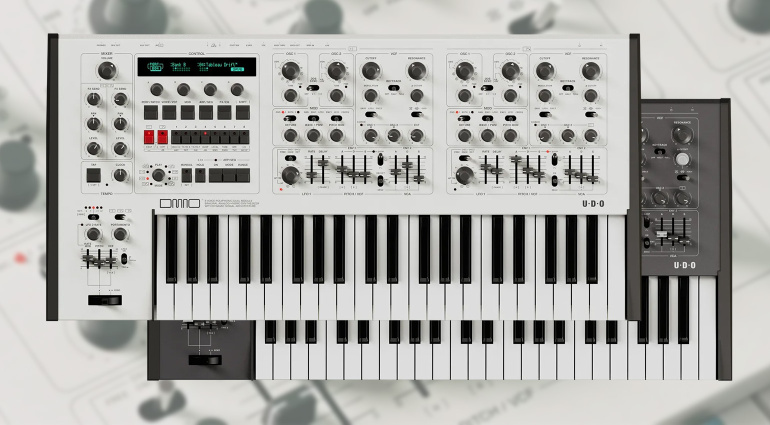
Let’s dissect the promise of “twin synthesizers.” The DMNO houses two complete, independent synth engines—call them DMNO 1 and DMNO 2. Each has its own set of controls, oscillators, filters, modulation, and effects. This bitimbral foundation is powerful, but UDO’s real innovation is in the “Play Modes.” This isn’t just a simple layer or split button; it’s a paradigm shift in how you interact with the two engines.
There are eight modes. You have your standards: Single, Layer, Split. Then it gets interesting. Cycle mode, reminiscent of the beloved Korg Mono/Poly, rotates voices between the two synth sections. There are “enticing random modes” for generative inspiration. But the crown jewel, in my opinion, is the Series mode. This allows you to route the audio output of DMNO 1 directly into the oscillator mixer of DMNO 2. Think about that. You can use one synth as a fantastically complex, modulated oscillator source for the other, feeding it through another set of filters and effects. The sound design possibilities are vertigo-inducing.
This play mode system fundamentally changes the instrument’s polyphony. In its standard bitimbral setup, you have eight voices to allocate (four per synth). Engage the slick Binaural mode for immersive stereo imaging, and that polyphony condenses to four “super” voices. The DMNO forces you to make conscious choices about voice allocation, texture, and structure. It’s an instrument that rewards planning as much as it does improvisation.
Sound Engine and Filters: The Hybrid Heart
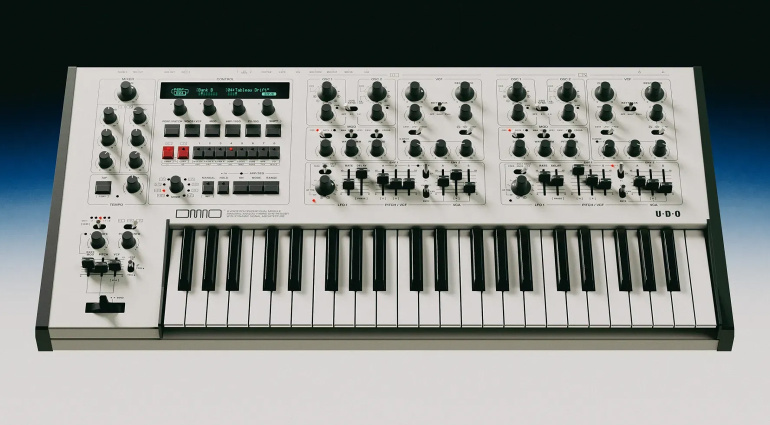
UDO’s signature is its hybrid engine, and the DMNO refines it. Each synth section gets two “ultra-high sample rate, high-resolution” digital oscillators powered by FPGA. This isn’t your grandfather’s digital; it’s about pristine, aliasing-free waveforms that serve as the perfect foil for what comes next: the analog filters.
The filters are a headline act. Dubbed “Dynamic Multi-Core Stereo” filters, each section contains a dual analog filter that can be reconfigured on the fly. You can run them in series for aggressive, resonant sweeps. You can set them in parallel for complex, blended timbres. Or you can engage them in a true stereo configuration, with each filter processing a different channel. Each connection type offers multiple filter modes (low-pass, high-pass, band-pass, etc.). The tactile control over filter topology is a sound designer’s dream and a significant point of differentiation in the hybrid market.
Rounding out the voice architecture are the expected (but no less vital) modulation sources: an LFO and two envelopes per synth (one for amplitude, one dedicated to pitch and filter). Then, UDO throws in 32-bit digital effects (reverb, delay, chorus, distortion), a 64-step sequencer, and a smart-hold arpeggiator. It’s a complete, self-contained sound factory. The inclusion of a full USB audio interface means the DMNO isn’t just an instrument; it’s a potential hub for your entire hardware setup.
Form Factor and Context: Who Is This For?
UDO Audio built its reputation on the large-format Super 6 and Super 8. The DMNO’s 44-key chassis is a deliberate and interesting departure. Some will lament the lack of 61 keys, but the choice of a Fatar keybed with aftertouch is a strong consolation prize. It signals an instrument designed for playability and expression, not just studio programming. It’s portable enough for the gigging musician but deep enough for the studio hermit.
Then there’s the screen. In an age of ubiquitous OLEDs, UDO opted for an electroluminescent glass Vacuum Fluorescent Display (VFD). It’s a brilliant piece of “future-retro” design. It will glow with a characteristic blue-green hue, offering a visual personality as distinct as its sound. This attention to detail—from the VFD to the robust connectivity (5-pin MIDI, CV/Gate, expression pedal inputs)—tells you this is a professional instrument meant to be the centerpiece of a rig, not a peripheral.
So, who is the DMNO for? It’s for the producer who thinks in layers and textures, the performer who needs instant access to complex splits and evolving sequences, and the sound designer who craves a hybrid engine with unparalleled routing flexibility. It’s for those who felt the Super 6 was sublime but wanted more bitimbral grit and a focus on low-end heft. At its price point, it sits in a competitive space, but its unique combination of architecture, play modes, and that stunning filter system makes a compelling argument. Your choice now isn’t just whether to buy it, but which color will look better under your studio’s mood lighting.
Frequently Asked Questions
Is the UDO Audio DMNO fully analog?
No, it is a true hybrid synthesizer. It uses FPGA-based digital oscillators for waveform generation, which are then processed through fully analog, voltage-controlled filter sections (the Dynamic Multi-Core Stereo filters). The effects and modulation routing also involve digital processing.
What is the difference between the black and white models?
Based on the available information, the difference is purely cosmetic. Both the black and white versions of the UDO Audio DMNO contain identical hardware, features, and specifications. The choice is entirely down to personal aesthetic preference for your studio setup.
Can I use the DMNO as an audio interface for my computer?
Yes. The DMNO includes a built-in, class-compliant USB audio interface with 2 inputs and 2 outputs at 24-bit resolution. This means you can send audio to and from your computer directly via USB, and it’s highly likely that MIDI data is also transmitted over the USB connection, making it a seamless hub for DAW integration.
Now, if you’ll excuse me, I need to stare at photos of the white model and my black Super 6 side-by-side while my coffee goes cold, contemplating a monochrome studio destiny I didn’t know I wanted.