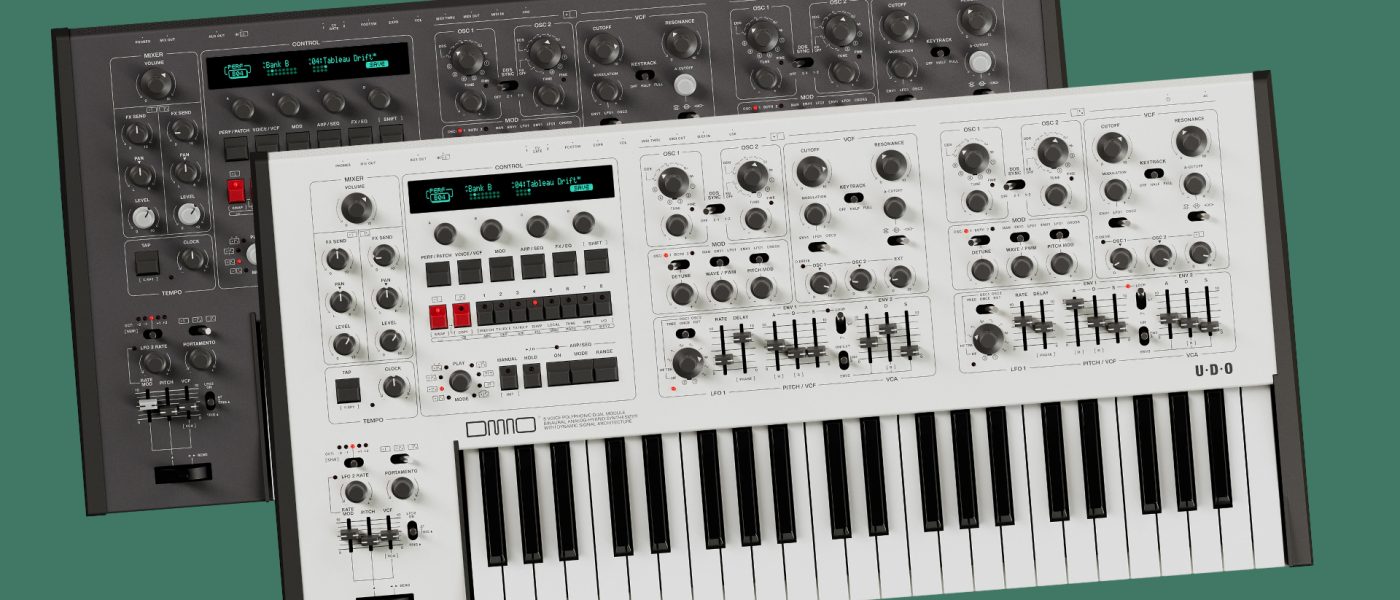
TL;DR: UDO Audio has begun shipping the DMNO, a $3500 hybrid polysynth that puts two independent 8-voice synthesizers in a single chassis with an Oberheim Two-Voice-inspired interface. It combines FPGA digital oscillators with reconfigurable stereo analog filters per layer, and its standout feature is a unique play mode system that redefines how the two synth engines interact. After a reveal at Machina Bristronica last October, units are now trickling out to retailers, though wait times may apply.
- The DMNO is a bi-timbral, 8-voice hybrid synth with two fully independent synth layers, each with its own dedicated front-panel controls.
- Its interface and dual-layer concept are a direct homage to the classic Oberheim Two-Voice, a significant departure from UDO’s previous Roland-inspired layouts.
- Each layer features two FPGA digital oscillators feeding into a versatile, reconfigurable stereo analog filter (series, parallel, or stereo modes).
- A unique “play mode” system offers eight configurations—beyond standard splits and layers—to creatively combine or juxtapose the two synth engines.
- Notable features include a VFD display, monophonic aftertouch, extensive CV/modulation I/O, and a built-in digital FX processor.
Reading time: 5 min
Want more synth news before your next coffee break? Join the Noxal newsletter — no spam, just gear worth knowing about.

The Oberheim Whisper

Let’s address the 800-pound modular gorilla in the room immediately. UDO Audio, a company that built its reputation on lush, Roland Jupiter-inspired interfaces with the Super series, has looked elsewhere for its latest muse. The DMNO’s front panel is a deliberate and unabashed nod to the Oberheim Two-Voice. We’re not talking about a vague aesthetic resemblance; this is a full-throated homage. Two identical control sections sit side-by-side, each governing a completely independent synth engine. It’s a layout that speaks of intentionality and focus, trading the sprawling, single-unified panel of the Super 6 for a disciplined, dual-instrument approach.
This shift is more than skin-deep. It represents a fundamental change in workflow philosophy. Where a Jupiter (or a Super 6) encourages you to sculpt one magnificent, evolving sound, the Oberheim paradigm—and now the DMNO—asks you to think in terms of relationship and counterpoint. You have two distinct voices at your fingertips, and the magic lies in how you choose to combine them. It’s a composer’s layout, favoring layered textures and split-keyboard performances. The first thing you notice isn’t a sea of sliders, but the clear demarcation between “Synth A” and “Synth B.” It’s a statement: this instrument is about dialogue.
Further breaking from UDO tradition is the inclusion of a display—a “high-quality, long-lasting electroluminescent glass vacuum fluorescent display (VFD)” to be precise, mounted on the left. For a company known for its almost purist, knob-per-function ethos, this is a significant concession to modern functionality, likely appeasing those who wanted more visual feedback for deeper parameters like the sequencer or FX settings. The physical interface is rounded out with a 44-key keybed with (monophonic) aftertouch and a Roland-style assignable joystick, making it clear this is an instrument designed for performance, not just studio contemplation.
Hybrid Heart, Dual Souls
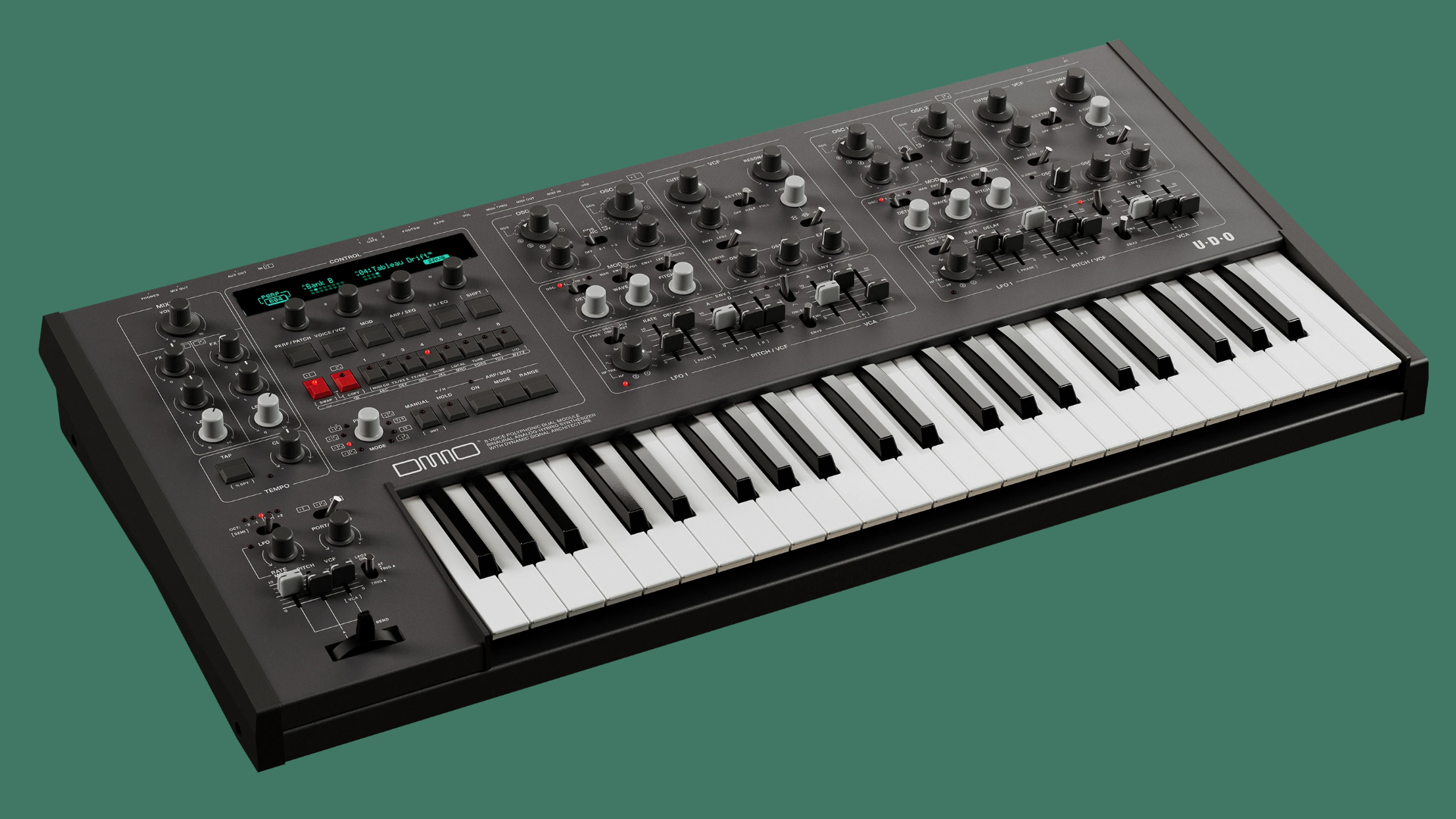
Underneath the Oberheim-esque exterior beats what UDO calls a “binaural hybrid” heart. Each of the two independent synth layers is an 8-voice powerhouse built on the company’s established hybrid architecture, but with notable refinements. The sound generation starts with two “ultra-high sample rate, high-resolution, FPGA-powered digital oscillators” per layer. This is UDO’s secret sauce: oscillators that offer the stability and waveform flexibility of digital tech (including user-importable DDS waves) with a sonic character that feels anything but sterile. They come with the expected suite of controls for tuning, PWM, and sync.
The signal then hits a mixer with a “Q-drive” for saturation before being handed off to the star of the analog show: a “novel, reconfigurable voltage-controlled” stereo filter per layer. This isn’t just a single filter mode; you can run it in series, parallel, or true stereo configurations, with a wealth of modes from classic low-pass to more experimental flavors. Having a dedicated, fully hands-on stereo filter for each layer is a luxury that underscores the DMNO’s bi-timbral seriousness. You can have a screaming resonant series filter on layer A while layer B uses a gentle parallel stereo high-pass, with zero compromise.
Modulation is handled per-layer with a multi-wave LFO and two loopable ADSR envelopes (with a potential third available), plus a global second LFO. A 32-bit DSP effects processor provides the polish with delay, reverb, chorus, and distortion. Crucially, the left panel provides dedicated level, pan, and FX send knobs for each layer, making live mixing and performance tweaking intuitive. This isn’t a synth where you menu-dive to balance your sounds; it’s all right there, reinforcing the two-synths-in-one philosophy.
The Architecture of Play

If the hardware layout is inspired by Oberheim, the DMNO’s most innovative feature—its Play Mode system—feels like a logical, 21st-century evolution of that concept. The original Two-Voice let you layer or split two sounds. The DMNO gives you eight distinct modes to reconfigure how its two internal synth engines interact at the touch of a button. Yes, standard Layer and Split modes are present, but then it gets interesting.
UDO hints at “creative and unexpected configurations, such as random and chaotic arrangements.” This suggests modes that could distribute voices between the layers in probabilistic ways, alternate between them per note, or create evolving, unpredictable textures. This system transforms the DMNO from a mere bi-timbral synth into a dynamic sound-design partner. It’s the feature that moves beyond homage into new territory, asking “what if a Two-Voice could radically reinvent its own voice architecture on the fly?”
The back panel reinforces this ethos of flexibility and integration. Beyond the standard MIDI and USB, you find three expression pedal inputs and, more excitingly, two user-assignable CV/gate/clock outputs. There’s also an analog audio input with a preamp, gate generator, and envelope follower, turning external signals into modulation sources. This, combined with the stereo mix and auxiliary outputs, paints the picture of a modern centerpiece synth designed to connect with both your studio’s modular ecosystem and your traditional outboard gear. It’s a hub, not an island.
Who Is The DMNO For?
With a price tag of $3500 / £2595, the DMNO sits in a competitive space between flagship polysynths and high-end bi-timbral workstations. It’s not for the beginner, nor is it for the musician seeking a simple, nostalgic analog clone. This instrument is for the synthesist who thinks in parts and textures. It’s for the performer who wants to switch from a split bass-and-pad setup to a complex, interleaved layered lead without touching a patch cable or loading a new project. The composer scoring for a single instrument but needing the depth of an ensemble will find a powerful ally here.
It’s also a compelling option for the UDO enthusiast who craved a different workflow from the Super series, or for the Oberheim admirer who loves the concept of the Two-Voice but desires modern stability, polyphony, and digital recall. The hybrid engine ensures pristine tuning and complex digital waveforms sit alongside the warmth and unpredictability of analog filters—a best-of-both-worlds proposition for the studio realist.
Shipping has begun, but as with any desirable new instrument from a boutique maker, supply will be tight initially. Retailers like Signal Sounds may have stock, while others like Thomann quote 5-7 week waits. The DMNO arrives just before Superbooth 26, a clever move to build momentum. It’s a bold, opinionated instrument that chooses a specific historical inspiration and then builds upon it with modern innovation. It doesn’t try to be everything to everyone; it tries to be two specific, brilliant things to a discerning someone.
Frequently Asked Questions
Does the UDO Audio DMNO have polyphonic aftertouch?
No. Unlike UDO’s flagship Super 6 and Super 8, the DMNO features a 44-key keybed with traditional monophonic aftertouch. This is likely a cost-saving measure to hit its $3500 price point while including other premium features like the dual analog filters and VFD display.
Can the two synth layers be processed through separate effects?
Yes, to a degree. The DMNO has a single, digital multi-FX processor (delay, reverb, chorus, etc.), but each layer has its own dedicated FX send control on the front panel. This allows you to send varying amounts of each layer to the shared effects bus, providing independent wet/dry balance for creative sound design.
What exactly are the “reconfigurable” analog filters?
Each layer’s stereo analog filter isn’t locked to one topology. You can reconfigure it to run in series (one filter feeding into the next), parallel (both filters processing the signal independently and blending), or true stereo modes. This, combined with multiple filter types (low-pass, high-pass, band-pass, etc.), offers immense tonal flexibility per layer.
Now, if you’ll excuse me, the DMNO’s dual-layer architecture has me wondering if I can justify brewing two separate pots of coffee for the left and right sides of my brain. For sound design accuracy, of course.