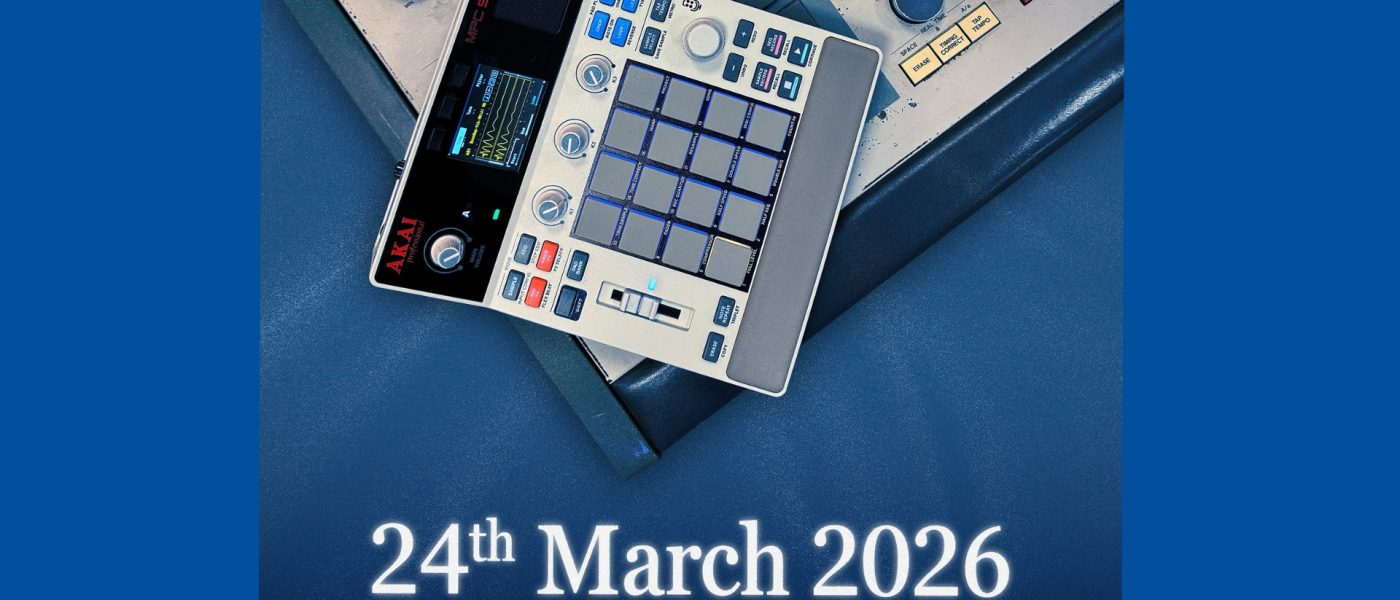
TL;DR: Akai has officially teased the MPC Sample, a portable hardware sampler inspired by the vintage MPC60 and MPC3000, after a retailer leak spilled the beans. Priced at $399, it strips away the DAW-like complexity of modern MPCs for a focused, standalone sampling experience. It’s slated for release on March 24, 2026.
- Inspired by the legendary MPC60/3000, but in a compact, portable format with a built-in speaker, mic, and battery.
- A focused sampler/sequencer/effects box, deliberately avoiding the “DAW-in-a-box” workflow of larger modern MPCs.
- Packed with effects including a granulator, ring mod, Lo-Fi, and beat repeat for on-device sound mangling.
- Connectivity includes stereo I/O, MIDI (TRS), USB-C, microSD, and promises no computer required.
- Directly enters the competitive arena of the Roland SP-404MK2 and Teenage Engineering EP-133 K.O. II.
Reading time: 5 min
Want more synth news before your next coffee break? Join the Noxal newsletter — no spam, just gear worth knowing about.

The Leak, The Tease, The Confirmation

In the world of gear, a “leak” usually means a blurry photo from a factory floor or a prematurely published manual. This time, it was a full-blown eBay listing from retailer Alto Music, complete with price ($399) and product description. The cat, as they say, was not just out of the bag—it was doing a full product demonstration on the internet. The leak revealed the Akai MPC Sample: a portable hardware sampler drawing direct inspiration from the hallowed MPC60 and MPC3000.
Akai’s response? A masterclass in graceful pivot. Rather than ignore the digital elephant in the room, they’ve now released an official teaser confirming the name and pinning a release date: March 24, 2026. It seems the marketing campaign got a swift, unplanned rewrite. We at Noxal appreciate the honesty; it’s refreshing when a company acknowledges the rumor mill with a wink and a nod, rather than pretending we all live in a vacuum. This confirmation solidifies what the leak suggested: Akai is making a sharp, deliberate turn.
This move doesn’t exist in a vacuum. We’re in the midst of a hardware sampler renaissance, driven by the runaway success of devices like the Roland SP-404MK2 and the Teenage Engineering EP-133 K.O. II. Even Casio threw its hat in the ring at NAMM. For the legendary name behind the MPC to re-enter this specific, portable fray is a significant moment. It’s not just a new product; it’s a strategic acknowledgment of a vibrant, grassroots market it helped create decades ago.
Honey, I Shrunk The MPC

Let’s address the aesthetic first. The design language, as one astute commenter put it, is essentially “Honey, I shrunk down my vintage MPC.” It looks like a classic MPC pad section was carefully excised, given a modern color screen, and packaged as a standalone unit. Others have cheekily compared it to a Teenage Engineering device dressed in MPC livery. However you see it, the intent is clear: immediate, nostalgic recognition. This isn’t the angular, workstation-esque MPC One or the imposing Live II. This is a pocket-sized monument to the 12-bit grit that built hip-hop.
More importantly, Akai appears to be performing a philosophical shrink as well. The leak explicitly states the MPC Sample is “entirely focused on sampling, without the DAW-like workflow and plugins.” This is the most critical distinction. Modern MPCs are marvels of integration, but they can feel like wrestling a computer without a keyboard. The MPC Sample, by contrast, promises a return to a singular purpose. It’s the antithesis of feature creep—a deliberate, focused tool for the core MPC arts: sampling, chopping, sequencing, and effecting.
I have a soft spot for this approach. My own journey with an MPC One was a constant battle with my own expectations. I’d sit down to chop a break, and an hour later I’d be deep in a plugin synth or arranging a full song in the arranger view. The power was intoxicating, but it often distracted from the raw, tactile joy of sampling. The MPC Sample seems engineered for those of us who just want to get our hands dirty with audio, without the digital world’s siren song of infinite possibilities.
Specs for the Sample-Obsessed
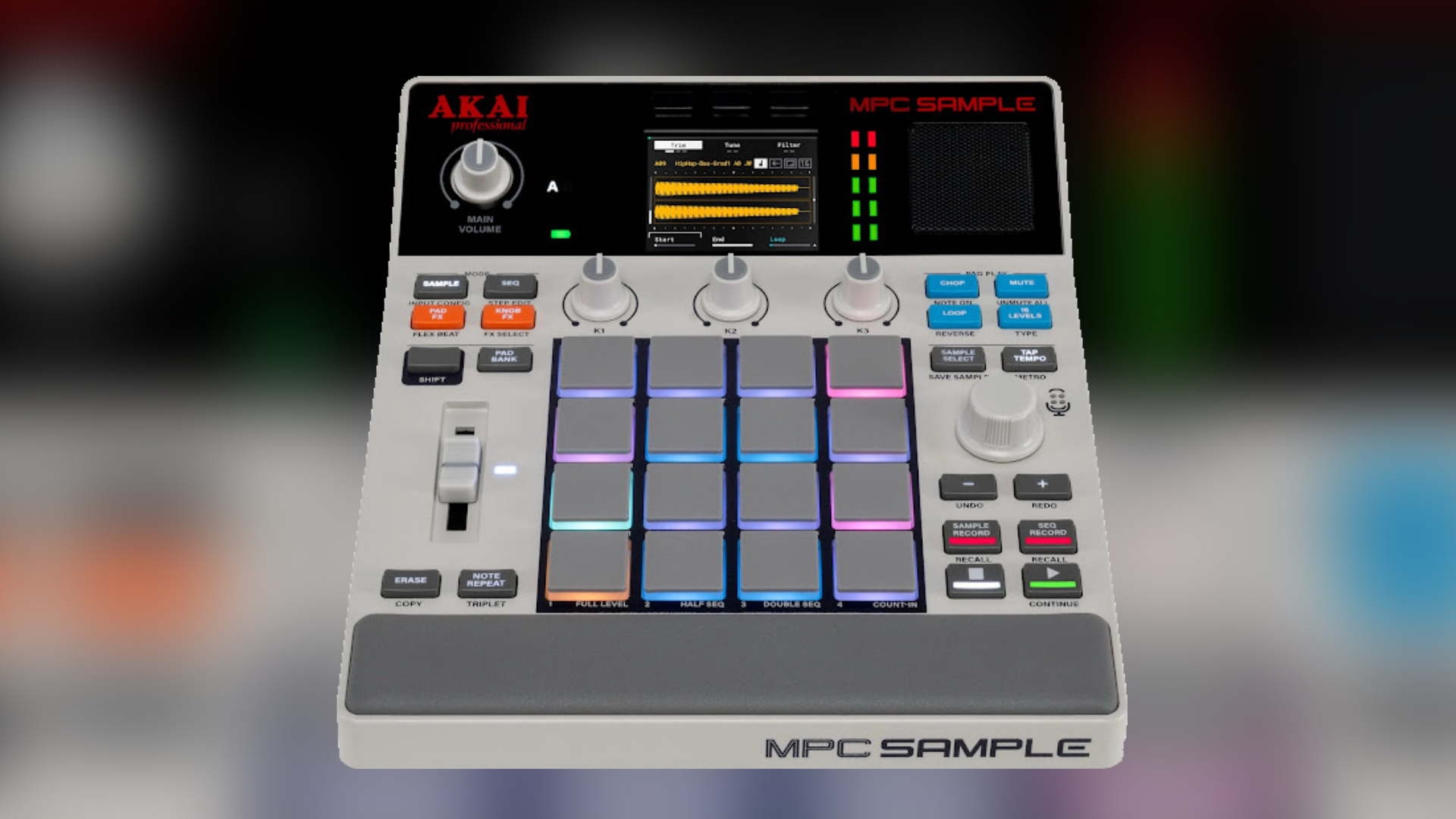
So, what’s actually in the box? The leaked details paint a picture of a remarkably complete portable studio. The heart is a sampler engine, sequencer, and effects processor designed to emulate that iconic vintage workflow. The effects list is particularly juicy, going beyond the standard delay and reverb to include sound-design weapons like a granulator, ring mod, Lo-Fi processor, and beat repeat. This suggests Akai wants you to mangle and transform sounds on the device itself, not just play them back.
Connectivity is robust for a device of this size. On the back, you’ll find stereo 1/4″ ins and outs, a headphone jack, MIDI in/out via TRS, a USB-C port (for data and power), a sync out, and a power button. Crucially, it includes a rechargeable lithium-ion battery, a built-in speaker, and even an internal microphone. The inclusion of a microSD card slot for storage rounds out a package that truly promises “no computer or DAW is required.” It’s a self-contained sketchpad.
The interface, from what we can see, prioritizes immediacy. Key functions like FX, chopping, muting, and looping are promised to be at your fingertips. It comes loaded with over 100 kits to get you started. In essence, Akai has taken the spiritual core of the vintage MPC—the immediacy, the grit, the focus—and packaged it with the modern conveniences (color screen, USB-C, battery) that today’s producers expect. At $399, it’s positioned as a premium but accessible entry into the MPC legacy.
Who Is This Tiny Titan For?
The MPC Sample isn’t for everyone, and that’s its strength. It’s not designed to be your main production hub. It’s for the beatmaker who misses the constraints of an MPC2000 but craves portability. It’s for the SP-404 user curious about the MPC chopping workflow in a similarly portable format. It’s for the modern producer overwhelmed by the “DAW-in-a-box” nature of the current MPC lineup, who just wants a dedicated, inspiring sampler to capture ideas away from the desk.
The comment section of the leak is telling. One user perfectly encapsulated the target demographic: “I often miss my MPC2000, and the modern ‘DAW-in-a-box’ models aren’t up my alley. The MPC One had me constantly thinking ‘this thing can do way too much… I just want the straightforward sampling aspect’.” That’s a powerful sentiment. This device answers that plea directly. It’s for the purist, the minimalist, and the nostalgic—or the newcomer who wants to learn sampling fundamentals without a steep software learning curve.
Of course, it will face stiff competition. The Roland SP-404MK2 is a powerhouse with a legendary effects suite and a fiercely loyal community. The Teenage Engineering EP-133 K.O. II offers astounding value and a unique workflow. The MPC Sample’s battle will be fought on the grounds of legacy and focused workflow. Does the iconic MPC feel, that specific swing and chop, translated into this tiny box, provide enough of a unique draw? On March 24, 2026, we’ll start to find out. I, for one, am intrigued enough to seriously consider making space for it on my already-crowded desk, right next the coffee grinder.
Frequently Asked Questions
Is the Akai MPC Sample just a dumbed-down MPC One?
Not at all. “Dumbed-down” implies a lesser version of the same thing. The MPC Sample is a different thing entirely. It’s a focused, purpose-built portable sampler that deliberately omits the DAW-like features, plugin synths, and extensive song modes of the MPC One. Think of it as a distillation of the core MPC sampling ethos into a dedicated device, not a stripped-back workstation.
How does it compare to the Roland SP-404MK2?
They are direct competitors in the portable sampler market. The SP-404MK2 is renowned for its instantaneous live sampling, massive and quirky effects bank, and a workflow geared towards live performance and resampling. The MPC Sample will likely compete by offering the classic MPC sequencing and chopping workflow, a different palette of effects (including a granulator), and that specific Akai “feel” in a similarly portable package. It’s a battle of legendary workflows.
Can the MPC Sample really replace a computer for sampling?
For the specific tasks of recording samples, chopping them, sequencing them into beats, and processing them with onboard effects, yes, it appears to be a fully standalone device. You can sample via the internal mic, line inputs, or presumably USB audio. You store projects on a microSD card. However, for deeper editing, detailed mixing, or integration with large sample libraries, you’d still likely want to transfer stems to a computer. It’s designed as an idea generator and sketchpad that doesn’t require a computer, not necessarily as a full computer replacement.
Now, if you’ll excuse me, I need to clear off a corner of the studio for this potential new arrival. The ritual begins with measuring space, which is always a sobering reminder that my GAS exceeds my square footage. Time for a coffee to fuel the rationalization.