
TL;DR: Berlin-based developer Robert Heel (aka scaepe) has unleashed the Noisferatu, a pocket-sized, open-source generative noisescape synthesizer that runs on 45 original algorithms across five banks. It’s a portable chaos machine built for evolving harmonic drones and digital mayhem, with DIY kits starting at £69 from Thonk. No Mutable Instruments recycling here — this is pure, uncut noise.
- Open-source firmware and schematics: the synth can be expanded by third-party developers or modded into a larger noise machine.
- 45 original algorithms across five banks, each with its own generative logic — wavetables, BitBend address manipulation, probability gates, bitwise operations.
- Four real-time knobs (A, B, crush, reduce) for shaping constantly evolving, unpredictable textures.
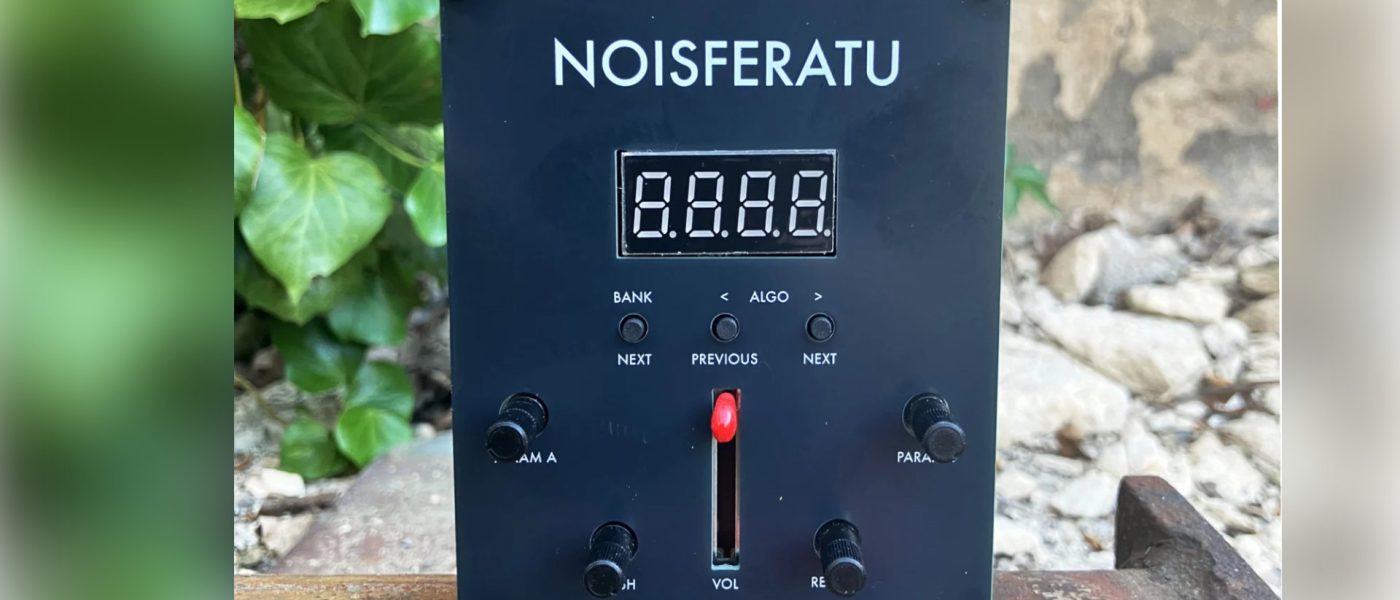
- Hardware features a flippable front/back panel, volume slider, algorithm selection buttons, simple display, audio output, and USB-C power.
- DIY kits available now at Thonk for £69; full open-source project is on GitHub.
Reading time: 4 min
Want more synth news before your next coffee break? Join the Noxal newsletter — no spam, just gear worth knowing about.

What Is the Noisferatu?

We at Noxal have a soft spot for gear that embraces the ugly, the unpredictable, and the genuinely strange. The Scaepe Noisferatu is exactly that — a pocket-sized synthesizer that dives headfirst into noise as a musical element, not just a background hiss. Developed by Berlin-based Robert Heel, it’s an open-source generative noisescape machine that feels like a dedicated instrument for experimentalists who find beauty in digital wreckage.
The core idea is simple: instead of fighting noise, let it lead. The Noisferatu offers five banks of algorithms — nine per bank — that produce everything from crackling textures to evolving drones, harmonic blips, and what the developer calls “crushed mayhem.” It’s not a synth you program; it’s a synth you coax. Each algorithm has its own life, constantly evolving in ways that minimize repetition. This is not a tool for predictable sound design. It’s a generator of surprises.
I’ve spent enough time with noise boxes to know that many of them are one-trick ponies — white noise through a filter, maybe a bit of random voltage. The Noisferatu promises more depth, with algorithms that use generative wavetables, BitBend address manipulation, probability gates, and bitwise logic operations. That’s a lot of jargon for “it sounds like a haunted radio in a data center,” and I mean that as a compliment.
The Algorithms Behind the Chaos
The 45 algorithms are the heart of this machine. Each bank follows its own conceptual thread, and crucially, scaepe has not recycled popular open-source code from Mutable Instruments or other common synth platforms. This is new, original work. The first nine algorithms, for example, share a 4000-sample wavetable, but each one manipulates it differently — through generative processes, address scrambling, or both.
The four control knobs — A, B, crush, and reduce — allow you to shape the sound in real-time, but don’t expect full control. The algorithms are designed to have a mind of their own. That’s the point. You’re steering a ship through a storm, not piloting a drone. The “crush” and “reduce” knobs are particularly intriguing: they suggest bit-crushing and sample-rate reduction, but applied not just to audio but to the algorithm’s internal logic. The result is textures that feel alive, unpredictable, and often beautiful in their abrasiveness.
We at Noxal appreciate when a synth has a strong personality. The Noisferatu comes with a flippable front and back panel — a neat touch that hints at modularity or just the joy of flipping your gear upside down. On the back, you’ll find a standard audio output and USB-C for power. No MIDI, no CV — this is a standalone noise generator. You plug it in, turn it on, and let it do its thing.
Hardware and DIY Details
The hardware itself is compact, with a volume slider, algorithm selection buttons, and a simple display that shows you which algorithm you’re currently torturing. The flippable panel is a nice aesthetic choice, but it also hints at the open-source nature: you can customize the layout or build your own enclosure if you’re so inclined.
Full DIY kits are available at Thonk for £69 — a price that feels reasonable for what you’re getting. The firmware and schematics are on GitHub, so if you’re the type who enjoys soldering and debugging, you can build your own or even contribute new algorithms. This is a growing ecosystem, not a locked-down product. For the non-DIY crowd, pre-built units might appear later, but for now, the kit is the primary way in.
I’ve built enough Eurorack modules to know that £69 is a steal for a fully open-source generative synth. That said, the DIY route isn’t for everyone. If you’ve never held a soldering iron, you might want to find a friend who has. But for those willing to learn, this is a fantastic entry point into open-source hardware.
Market Context and Who It’s For
The Noisferatu enters a niche but passionate market. We’ve seen a resurgence of interest in noise-based and generative instruments — from the ubiquitous Bastl Kastle to the more esoteric offerings from companies like Error Instruments and Plinky. What sets the Noisferatu apart is its focus on algorithmic depth and open-source ethos. It’s not just a noise box; it’s a platform for exploration.
Who is this for? Fans of harsh noise, experimental electronic music, and generative soundscapes will find a lot to love. It’s also a great tool for sound designers looking for textures that are impossible to replicate with traditional synthesis. If you’re the kind of person who spends hours tweaking a single parameter on a modular system, the Noisferatu will feel familiar. If you just want to press a button and hear something interesting, it delivers that too.
We at Noxal believe this synth fills a gap. There are plenty of DIY noise boxes, but few offer this level of algorithmic variety without relying on recycled code. The open-source nature means the community can expand its capabilities, and the price point makes it accessible. It’s a fun, weird, and genuinely inspiring instrument that deserves a spot on any experimentalist’s desk.
Frequently Asked Questions
Is the Noisferatu suitable for beginners?
It depends on your tolerance for chaos. If you’re new to synths and want predictable sounds, this might be frustrating. But if you’re open to generative, unpredictable results, it’s a great way to learn how noise can be musical. The DIY build requires soldering skills, so factor that in.
Can I use the Noisferatu with other gear?
It has a standard audio output, so you can run it into a mixer, audio interface, or effects pedals. There’s no MIDI or CV, so synchronization with other gear is limited. It’s best used as a standalone noise source or layered with other instruments.
How does the open-source nature work?
The firmware and schematics are on GitHub, meaning you can modify the algorithms, add new ones, or even redesign the hardware. This also allows third-party developers to create their own banks. Future updates and community contributions are likely, making the Noisferatu a living project.
Now if you’ll excuse me, I need to pour another cup of coffee and figure out which algorithm sounds most like a dial-up modem having a nervous breakdown. The Noisferatu is going on my list — right next to the soldering iron and a fresh batch of caffeine.