TL;DR: Beetlecrab Audio has dropped firmware version 2.3 for their Tempera granular sampler, adding Grain Skip Probability, Grain Shape Tilt, Per-Emitter Grain Pitch, an envelope follower, cross-modulation, macros, and a handy Grain Sparkles visualization. It’s a free update that turns a already interesting instrument into a genuinely deep sound design tool.
- Grain Skip Probability lets you randomly omit grains for stutter and glitch textures.
- Grain Shape Tilt bends the amplitude envelope of grains for more organic or aggressive shapes.
- Per-Emitter Grain Pitch enables tuning on the emitter level, adding polyphonic granular control.
- New modulation includes an envelope follower, cross-modulation between modulators, and macros for up to four parameters.
- Workflow improvements include spread waveforms across all four displays, Cell Marker Nudging, and Grain Sparkles for visual grain emission feedback.
Reading time: 4 min
Want more synth news before your next coffee break? Join the Noxal newsletter — no spam, just gear worth knowing about.

What Is Beetlecrab Tempera?
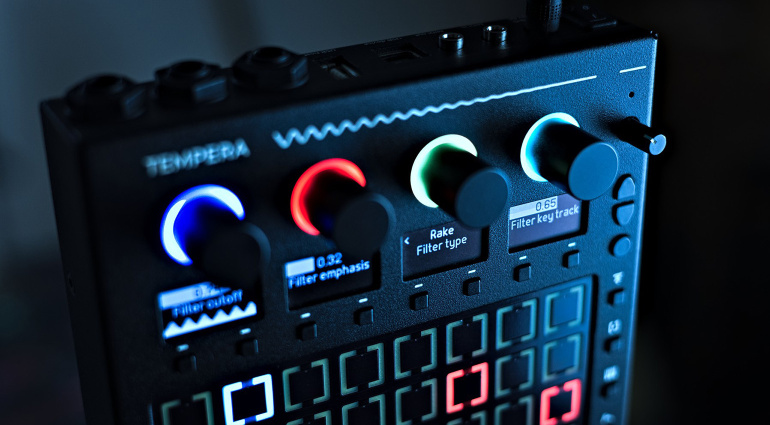
If you’ve been living under a rock (or, more likely, under a pile of patch cables), the Beetlecrab Tempera is a granular sampler with a touch matrix interface. It’s a desktop unit that looks like a cross between a futuristic control panel and something a mad scientist would use to manipulate time. Each column of its 8×8 matrix represents an “emitter,” essentially a track that can play back grains of audio. The touch pad lets you scrub, modulate, and mangle samples in real time. It’s been a favorite among experimental musicians and sound designers since its release, and Beetlecrab has been steadily updating the firmware to keep it competitive.
Version 2.3 is the latest in this lineage, and it’s a doozy. While previous updates added live grains, a rake filter, and improved reverb, this one focuses on granular manipulation and modulation depth. It’s the kind of update that makes you want to re-explore every sample you own.
Probability and Shape: The Grain Gets Weird
The headline feature here is Grain Skip Probability. This parameter randomly omits grains as they’re scheduled to play. The result? Stutters, gaps, and rhythmic glitches that feel organic rather than programmed. It’s not a new concept in granular synthesis — many software tools have had this for years — but having it in a hardware unit with tactile control is something else. You can dial in subtle stutter effects or go full-on broken CD player.
Then there’s Grain Shape Tilt. This bends the amplitude envelope of each grain, letting you skew the attack and decay. It’s a simple idea with huge implications: you can make grains punchier, softer, or more percussive without touching the source material. Combine it with the new Per-Emitter Grain Pitch, which lets you tune grains individually per emitter, and you’ve got a granular engine that can do polyphonic, pitch-shifted textures with ease. It’s like having a modular granular system in a box, minus the mess of flying wires.
Modulation Expanded: Followers, Cross-Mod, and Macros
Tempera already had a reputation for flexible modulation, but version 2.3 takes it further. A new envelope follower can turn internal or external audio signals into modulation sources. Want to control grain density with a drum loop? Done. Want to modulate pitch with your voice? Go for it. This opens up a world of reactive sound design that feels alive.
Even more interesting is cross-modulation: modulators can now modulate each other. This creates complex, evolving modulation patterns that would be a pain to program manually. And for those who want quick control, macros let you assign up to four parameters to a single knob. It’s a practical addition for live performance, where you need to wrangle multiple parameters at once without looking like a frantic octopus.
Workflow Improvements: Visuals and Precision
Not all updates need to be about sound. Sometimes it’s about making the instrument easier to use. Version 2.3 includes spread waveforms across all four displays, which makes editing longer samples far more precise. No more squinting at tiny waveform representations. Cell Marker Nudging allows for fine adjustment of markers, so you can hit transients exactly where you want them.
The Grain Sparkles feature is a visual treat: it shows the emission of grains as little animated dots on the display. It’s not strictly necessary, but it adds a layer of feedback that helps you understand what the granular engine is doing. It’s the kind of thoughtful addition that makes hardware feel intuitive rather than opaque.
Who Is This For?
If you already own a Tempera, you should have downloaded this update yesterday. It’s free, it adds meaningful features, and it doesn’t break anything. For those on the fence, version 2.3 makes the Tempera a more compelling purchase, especially if you’re into experimental sound design, ambient textures, or glitchy rhythms. It’s not a beginner’s synth — the learning curve is real — but for those willing to invest time, it rewards with sounds you won’t get from a traditional sampler or synth.
At €698 plus tax, it’s a premium instrument, but the continued firmware support from Beetlecrab suggests they’re committed to keeping it relevant. If you’ve been eyeing granular hardware, this update might be the nudge you need.
Frequently Asked Questions
Is the firmware update free?
Yes, version 2.3 is a free download for all existing Tempera owners. You can grab it from the Beetlecrab Audio website.
Does the update change the hardware interface?
No new hardware is required. The update is purely firmware-based, so all features are accessible via the existing touch matrix and encoders.
Can I use the envelope follower with external audio?
Yes. The envelope follower can accept internal audio signals or external audio via the input, making it great for reactive modulation with live sources.
I’m going to need a second mug of coffee to wrap my head around all these new modulation options. But that’s fine — some discoveries are best made with a warm cup in hand and a cold sample waiting to be mangled.