TL;DR: AKAI Professional has announced the MPC One G2 and MPC Key 37 G2, both receiving a significant internal overhaul with an 8-core processor, 4 GB RAM, and 64 GB storage. The new models also feature USB-C connectivity and run the latest MPC3 OS, though they miss out on the expressive 3D pads of their higher-end siblings.
- The MPC One G2 and MPC Key 37 G2 both get a new 8-core processor, 4 GB RAM (double the previous generation), and 64 GB internal storage (four times the previous generation).
- USB-C replaces USB-B, supporting 24×24-channel audio streaming and direct sampling from phones or tablets.
- Both run MPC3 OS with linear arranger, Ableton Live import/export, and optional Pro Pack for stem separation and Clip Matrix.
- The MPC One G2 is priced at €829, while the MPC Key 37 G2 costs €979 — both available for pre-order now.
- The expressive 3D MPC pads remain exclusive to the MPC Live III and MPC XL, a notable omission for the entry-level models.
Reading time: 3 min
Want more synth news before your next coffee break? Join the Noxal newsletter — no spam, just gear worth knowing about.

The Power Beneath the Paint
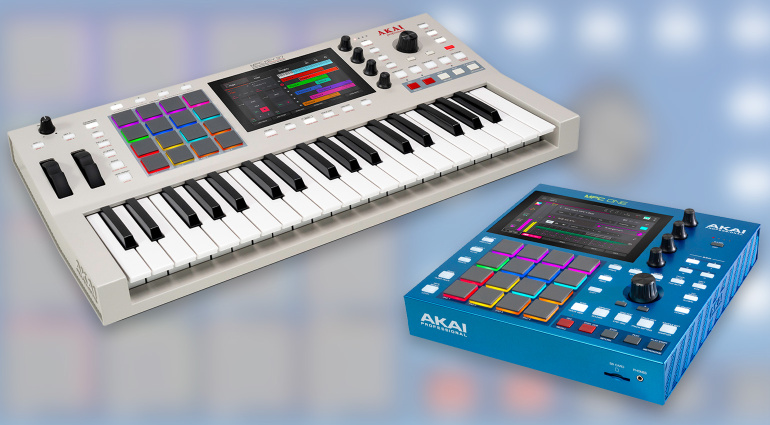
Let’s be honest: when we first saw the press images of the AKAI MPC One G2 in that striking shade of blue, we assumed it was just a colour refresh. A bit like when your favourite barista decides to repaint the espresso machine — looks nice, but the coffee’s still the same. But as we dug into the specs, we realised AKAI has actually done something meaningful here. They’ve taken the entry-level MPC and given it a proper internal overhaul, while keeping the exterior almost identical to the MPC One+.
The new model retains the same 7-inch multi-touch screen, encoders, pads, and buttons. That’s fine — the original MPC One’s form factor was already well-received. But the elephant in the room is the absence of the expressive three-dimensional MPCe pads found on the MPC Live III and MPC XL. We at Noxal understand the need for product segmentation, but it still feels like a missed opportunity to truly elevate the entry-level experience. The pads are perfectly functional, don’t get us wrong, but they’re not going to inspire the same kind of nuanced finger drumming as their pricier siblings.
What’s New Under the Hood
Here’s where the story gets interesting. The MPC One G2 now features an 8-core processor — a significant upgrade from the previous generation’s quad-core. Combined with 4 GB of RAM (double the predecessor) and 64 GB of internal storage (four times the predecessor), this machine is now capable of running up to 32 simultaneous plugin instruments and up to 16 stereo audio tracks. That’s a lot of synth layers before you hit the wall. According to AKAI, load times have also been dramatically improved, which is something we’re eager to test in our studio.
The USB connectivity has been modernised too. The old USB-B port is gone, replaced by a USB-C port that supports 24×24-channel audio streaming over a single cable. This also means you can sample directly from your phone or tablet via USB-C — a feature that’s genuinely useful for producers who find inspiration in random audio clips from the internet. Both models run MPC3 OS out of the box, which includes a linear arranger and seamless Ableton Live import and export. An optional Pro Pack adds stem separation, real-time time-stretching, and a Clip Matrix — features that might tempt power users but are unlikely to be essential for beginners.
MPC Key 37 G2: The Cream-Coloured Keys
While the MPC One G2 gets the blue treatment, the MPC Key 37 G2 goes in a different aesthetic direction. AKAI describes it as “inspired by the iconic cream colorway” of the late ’80s, and we have to admit — it looks rather handsome. The off-white chassis with black accents evokes that classic retro studio vibe, a welcome departure from the usual black boxes. It’s the first time this colour scheme has appeared on a keyboard MPC, and it’s a nice touch that gives the Key 37 G2 its own identity.
Under the hood, it’s the same story: 8-core processor, 4 GB RAM, 64 GB storage, and USB-C. The key count remains 37 — a compromise between portability and playability that works well for synth leads, basslines, and chord work. Content-wise, the Key 37 G2 comes with 13 plugins and 6 expansions, while the One G2 gets 11 plugins and 9 expansions. Both machines ship with over 20 GB of content, so you’re not left staring at an empty screen on day one. The pricing is competitive: €829 for the One G2 and €979 for the Key 37 G2.
Market Context and Verdict
So, should you sell your MPC Live III for one of these? Probably not. The Live III still offers those expressive 3D pads, more I/O, and a larger screen. But if you’re looking for an entry point into the MPC ecosystem — or upgrading from an original MPC One or MPC One+ — these G2 models represent a compelling value proposition. The internal upgrades are substantial enough to make a real difference in workflow, especially if you’re running multiple plugins and audio tracks.
We at Noxal see these as smart incremental updates rather than revolutionary leaps. The omission of the 3D pads is the most obvious corner cut, and it’s a shame because those pads genuinely change how you interact with the machine. But for the price, you’re getting a standalone production workstation that can handle serious projects without breaking a sweat. The USB-C addition is also a welcome modernisation, even if it’s long overdue. If AKAI continues this trajectory, the next generation might just be the one that makes us truly excited again.
Frequently Asked Questions
What are the main differences between the MPC One G2 and the MPC Key 37 G2?
The core specs are identical: both have an 8-core processor, 4 GB RAM, 64 GB storage, USB-C, and run MPC3 OS. The main differences are form factor — the MPC One G2 has no keyboard, while the MPC Key 37 G2 has a 37-key keyboard — and aesthetics. The One G2 comes in blue, while the Key 37 G2 uses a cream colour scheme inspired by late ’80s MPCs. Content also differs slightly: the One G2 has 11 plugins and 9 expansions, while the Key 37 G2 has 13 plugins and 6 expansions.
Does the MPC One G2 have the 3D expressive pads from the MPC Live III?
No. The 3D MPCe pads remain exclusive to the MPC Live III and the flagship MPC XL. The MPC One G2 uses the same pad design as its predecessor, which is perfectly functional but lacks the nuanced velocity and pressure sensitivity of the higher-end models. This is a deliberate product segmentation decision by AKAI.
Can I use the MPC One G2 as an audio interface?
Yes, the USB-C port supports 24×24-channel audio streaming, effectively allowing the MPC One G2 to function as a USB audio interface. This is a significant upgrade over the previous generation’s USB-B port, which was limited to 2-channel audio. You can also sample directly from a phone or tablet via USB-C.
We’ll be testing these new MPCs as soon as they arrive, ideally with a fresh pour-over in hand and the studio lights dimmed low. If the load times are truly improved, we might even finish a track before our third cup. No promises, though.