TL;DR: Vermona’s long-teased DrumDing, a hybrid analog drum machine with a unique voice-sampling workflow, is nearing completion. Beta tester footage reveals a 6-track sequencer that captures and manipulates samples from an onboard analog drum voice, offering a refreshingly different approach to rhythm programming. Availability and price are still to be announced.
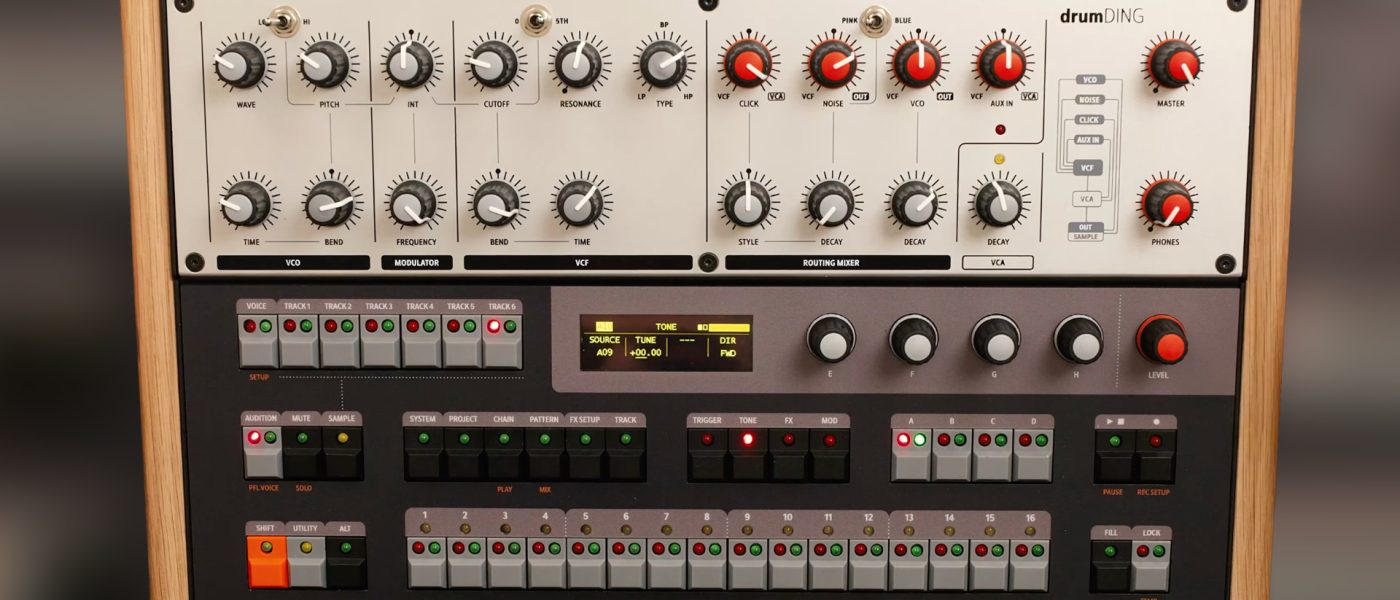
- The DrumDing’s core is an analog drum voice, partly based on the DRM1 MKIV, which you must sample into the machine to use in a sequence.
- Each of the six sequencer tracks can store up to 32 samples per project, with per-sample controls for tuning, envelope, playback direction, and modulation.
- It features two pages of simultaneous digital effects: Overdrive, Bit Reduction, and Amplitude Modulation on page one; two Delays, Reverb, and a Panner on page two.
- The sequencer offers modern features like probability, micro-timing, polyrhythms, parameter locks, and an “Alternative Step” function for creating variation lanes.
- This is a deliberate, “re-sampling” workflow that will polarize users; you can’t tweak the analog sound post-capture without sampling it again.
Reading time: 4 min
Want more synth news before your next coffee break? Join the Noxal newsletter — no spam, just gear worth knowing about.

The Vermona Way: A Hybrid Conundrum

In a landscape where new drum machines often feel like iterations on a well-worn theme—another 808 clone, another sample slicer—Vermona has a habit of throwing a wrench into the gears. A delightful, beautifully engineered, East German wrench. The DrumDing, first teased at Superbooth 2025, is their latest curveball. It’s not an analog drum machine with sample playback. It’s not a sampler with analog filters. It’s something more peculiar: an analog drum synthesizer that you must sample into itself to use. The core sound engine is a dedicated analog voice, reportedly drawing DNA from their beloved DRM1 MKIV, complete with VCO, FM, multimode VCF, and mixer sections. But you don’t sequence this voice directly.
Instead, you treat it like a sculptor’s clay. You tweak knobs, shape a kick, a snare, a metallic ping, or something utterly abstract. Once you have a sound you like, you commit. You sample it into one of the DrumDing’s six tracks, where it becomes a digital asset. This is the central, brilliant, and potentially frustrating premise. It divorces sound creation from sequence programming, forcing a deliberate, almost ritualistic workflow. For those of us who can get lost for hours tweaking a snare decay instead of writing a beat, this could be a blessing. For others, it might feel like an unnecessary hurdle.
Vermona is betting that the constraint breeds creativity. By making the analog voice a “one-at-a-time” sound design lab, they focus your attention. You’re not layering eight evolving analog sounds; you’re crafting them individually, capturing their essence, and then moving them into the digital realm where they can be arranged, effected, and manipulated with modern sequencer tricks. It’s a hybrid concept not just in signal path, but in philosophy.
From Analog Voice to Digital Sample: The Workflow
So, you’ve crafted the perfect analog tom. You hit “sample,” and it’s captured into the machine. What now? According to beta tester OoraMusic’s detailed demo, each project can store up to 32 samples—a welcome increase from the 16 shown in the prototype. Each sample on a track isn’t just a static recording. It comes with a suite of digital manipulation tools: tuning, an AHD envelope, and the ability to play the sample forward or backward. This is where the hybrid nature starts to pay dividends. You can take that single analog tom sample, pitch it down for a kick, reverse it for a swell, and apply a tight envelope for a click.
The modulation section currently features a single, multi-wave LFO that can be routed to these digital parameters. While functional, one LFO feels a bit sparse for a machine asking for such focused sound design. The hope, as with many things in the beta stage, is that this might expand. More crucially, if you decide you want to change the core analog character of the sound—more FM, a different filter sweep—you must return to the analog voice, redesign it, and re-sample. This is the DrumDing’s defining loop. It rewards planning and punishes indecision in equal measure.
The “Alternative Step” function attempts to inject some flexibility into this committed workflow. By holding an ALT button, you can create a second lane of parameters for any step—a different sample, a different tuning. It’s not a per-step parameter lock (all ALT steps share the same alternate settings), but it’s a clever way to create fills and variations without doubling your sample count. It lights up green, a little visual cue in your sequence that something different is happening here.
Sequencing and Sculpting: The Modern Tools
Once your sounds are in the box, the DrumDing reveals its modern sequencer heart. The 6-track sequencer supports up to 64 steps per pattern, with all the contemporary features we’ve come to expect: probability, micro-timing, polyrhythmic capabilities, parameter locks, and independent track lengths. This is where the machine transitions from a quirky sound design tool to a potent rhythm composer. You can build complex, evolving patterns with the samples you’ve painstakingly crafted.
The effects section is another highlight, and it’s notably generous. Spread across two pages, all effects can be used simultaneously. Page one offers sound-shaping tools: Overdrive, Bit Reduction, and Amplitude Modulation. Page two provides space: two independent Delays, a Reverb, and a Panner. These aren’t just tacked-on afterthoughts; they’re integral to the post-sampling sound-sculpting process and, importantly, can be automated within the sequencer. This means your captured analog stab can evolve through a bit-crushed delay wash over the course of a phrase, adding movement that the original static sample lacked.
With space for 64 projects, each holding 16 samples and 6 full sequencer tracks, the DrumDing is built for song construction. It feels like Vermona looked at the “jam box” market and decided to build a “composition box” instead. The workflow—design, capture, sequence, effect—mirrors a more traditional studio process, just condensed into a single, purpose-built device.
Who Is This For (And What’s Missing)?
The DrumDing is not for everyone. It will frustrate the player who wants to twist knobs in real-time while a sequence runs. It will baffle the musician who just wants to load a folder of classic drum machine samples and get going. This machine is for the process-oriented artist. It’s for the person who finds joy in the ritual, who views sound design as a separate, sacred act from arrangement. It’s for the Vermona devotee who craves that raw, robust analog tone but desires more sequencing power than the DRM1 offers.
Notable questions remain. The I/O is still a mystery—will there be individual outputs? A USB port for sample transfer or just MIDI? An SD card slot, as many hope, would be a game-changer for archiving loops and samples. The single modulation source feels like a limitation in an otherwise deep engine. And of course, there’s the price. Vermona builds like a tank, and this unique architecture won’t come cheap. We’re expecting a premium tag.
Yet, the promise is immense. The DrumDing offers a singular voice: the unmistakable character of Vermona’s analog circuits, frozen and mutated through a capable digital lens. It forces a workflow that could unlock new patterns and sounds precisely because it breaks the standard real-time paradigm. As one commenter on the news aptly put it: “Oh my, this is an inspired idea.” It is. It’s stubborn, opinionated, and utterly compelling. We can’t wait to get our hands on it, if only to see if our patience survives the first sampling session.
Frequently Asked Questions
Can you load your own samples into the Vermona DrumDing?
Based on all available information, no. The DrumDing’s sampling function appears dedicated solely to capturing its own internal analog drum voice. This is a key part of its designed workflow and philosophy. It’s a closed ecosystem: you create sounds with its analog engine, sample them in, and then manipulate those recordings.
How does the “Alternative Step” function differ from parameter locks?
It’s more limited but serves a similar purpose. A parameter lock (per-step automation) lets you change a parameter (like filter cutoff) on a single step. The DrumDing’s ALT step creates a second, global alternate setting for a track (e.g., a different sample or tuning). Any step you set to use this alternate setting will light up green and use that same alternate setup. You can’t have unique alternate parameters for each step; they all share the one ALT configuration.
When will the Vermona DrumDing be released and how much will it cost?
As of now, both availability and price are “TBA” (To Be Announced). The original Superbooth 2025 preview suggested a potential release by the end of 2025, but the recent “almost ready” update doesn’t provide a firm date. Given Vermona’s build quality and the unique nature of the hardware, expect a premium price point when it does arrive.
I’m already mentally preparing my studio for the DrumDing’s arrival: clearing a prime spot on the desk and stockpiling enough coffee to sustain me through the inevitable, glorious frustration of its first sampling session.