
🎛️ Enjoying this? Subscribe to the Noxal Newsletter and get it every Sunday straight to your inbox.
Gear News
So, a 1975 live clip of Kraftwerk playing “Autobahn” on The Midnight Special has surfaced, and honestly, it’s like finding a perfectly preserved time capsule. Watching Ralf and Florian coax those iconic lines from their early analog rig is a masterclass in restraint and vibe. It’s a stark, beautiful reminder of how revolutionary a simple sequence and some sine waves could feel. Essential viewing for anyone who thinks they need 20 oscillators to make a point.
Speaking of making a point with less, ALM is on a tear. First, they drop the FMco, a delightfully compact 2-operator FM voice for Eurorack. Think of it as FM synthesis with the training wheels off, but the heavy textbook left at home. It’s immediate, it’s crunchy, and it doesn’t require a PhD in algorithm programming. Then, as if one clever modulation source wasn’t enough, they also unveiled the Quaid Gigaslope. This 52HP beast is a quad multi-stage modulator that feels like they bottled the complex envelope logic from a synth like Zebra and let it run wild in your rack. For those who live for movement and morphing textures, this is your new best friend.
Not to be outdone in the analog domain, Erica Synths has neatly packaged all of Moritz Klein’s brilliant EDU DIY drum modules into a single, sleek unit: the Konstrukt-8. This isn’t just a drum machine; it’s a modular, build-it-yourself laboratory for rhythm. It brilliantly bridges the gap between educational fun and seriously powerful sound design, letting you patch your kick drum’s decay into your hi-hat’s noise source because… why not?
In plugin land, Wavea Flite just got a major power-up with its 1.3 update, adding granular synthesis to its already formidable hybrid workstation arsenal. Now you can smatter, stretch, and glitch your samples into entirely new dimensions right inside the same plugin. Meanwhile, in the “wonderful and free” department, Tiagolr Sirial has arrived. This open-source rhythmic delay plugin, inspired by the likes of EchoBoy, is a fantastic, cross-platform tool for adding syncopated echoes to your tracks without spending a dime.
The big hardware news this week is that UDO Audio’s DMNO is officially shipping. This hybrid polysynth, with its clear Oberheim-inspired heart and unique dual-synth architecture, is now a reality you can order in either sleek black or pristine white. It looks like an instant classic.
On the more niche but fascinating front, Music Thing is back with the Workshop Computer, a fully programmable 8HP module that puts a tiny, hands-on coding environment right in your rack. And for the vintage software heads, Sojus Records has released an open-source, MAME-based emulator of the enigmatic 1990 Ensoniq SD-1 Transewave™ synth, bringing its unique character to your DAW for free.
Finally, news that sent a ripple of concern through the community: Native Instruments GmbH has filed for preliminary insolvency and is now in a merger and acquisition process. The future of staples like Komplete and Maschine is now under a cloud of uncertainty. It’s a sobering reminder of the volatile landscape behind the tools we often take for granted.
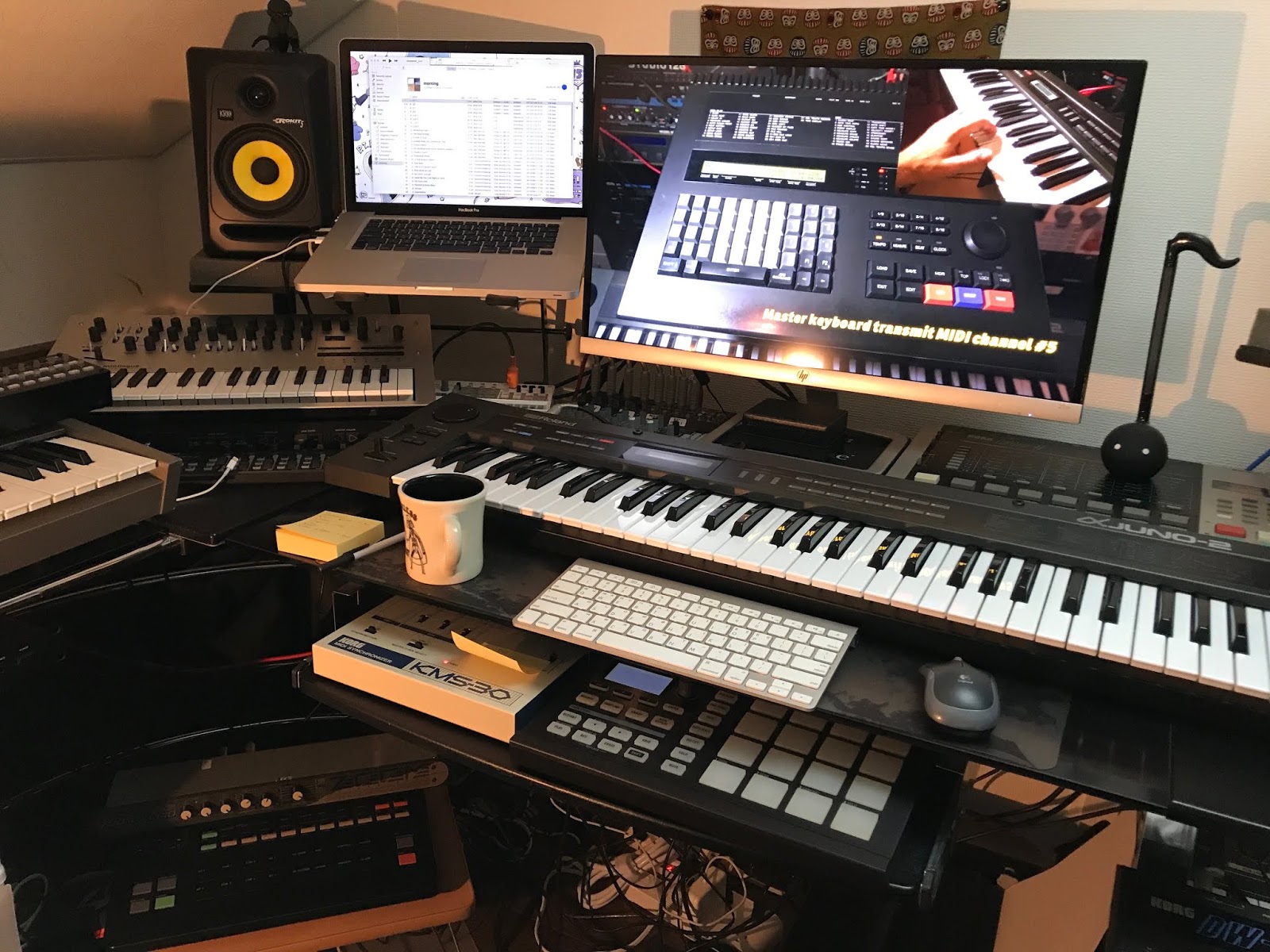
And as a palate cleanser from that heavy note, let’s tip our hats to the Roland Alpha Juno. A recent deep dive rightly celebrates it as the secret architect of the mighty ‘hoover’ sound. It’s a classic that proves sometimes the most iconic sounds come from the most underrated synths. Never underestimate the underdog.
Music Production
Alright, let’s talk shop. You know that feeling when you’re deep in a session and your DAW decides to have a little existential crisis? A plugin freezes, the CPU meter spikes for no reason, and suddenly you’re not a producer—you’re a reluctant IT technician. We’ve all been there, staring at the spinning wheel of doom, wondering if we should have just taken up acoustic guitar. But then, you get it working, that one synth patch finally sings, and all is forgiven. Until next time.
Speaking of synths, there’s a beautiful madness in chasing a sound. You start with a simple idea, maybe just a bassline, and three hours later you’re knee-deep in modulation matrices, questioning every life choice that led you to this moment. The rabbit hole is real. But sometimes, in that chaos, you stumble on something magical—a texture, a movement—that you never would have found if you’d played it safe. That’s the hook. That’s what keeps us coming back.
And let’s be honest about the mix. We spend days, weeks, moving faders by microscopic amounts, convinced that this next adjustment will be the one that makes it all “click.” We reference it on the car stereo, the earbuds, the phone speaker… only to realize it sounded fine three versions ago. The pursuit of the perfect balance is a noble, if slightly absurd, quest. The real victory is learning to step away, to call it done, and to let the track live. The imperfections are often what give it its soul. Now, if you’ll excuse me, I have a compressor that needs a stern talking-to.
Synth Spotlight
Think of the most iconic cinematic soundscapes—the oppressive, breathing dread of the Blade Runner 2049 soundtrack, or the shimmering, alien beauty of Annihilation. These aren’t the work of a single, perfect instrument. They are sonic collages, built layer by layer in the digital realm. This is where the modern composer’s true alchemy happens: not in hunting for a mythical “one-shot” sound, but in the deliberate, often chaotic, art of layering within our digital audio workstations (DAWs). We’ve moved from the cathedral of the analog studio to the infinite laboratory of the screen, and the possibilities for innovation are as vast as they are intimidating.
The Modern Sound-Sculptor’s Toolkit
Gone are the days of being limited by eight-track tape. Your DAW is a universe of parallel realities. Layering is no longer just stacking strings for richness; it’s about creating hybrid organisms. Imagine grafting the transient snap of a Roland TR-808 kick with the sub-bass weight of a sine wave and the textured grit of a distorted Moog filter sweep. This isn’t just a kick drum; it’s a designed event, a tiny piece of architecture. Cinematic sound design thrives on this principle. The roar of a spaceship isn’t a recording of an engine—it’s a lion’s roar layered with metallic shearing, industrial hum, and pitch-shifted thunder, all manipulated and fused into a new, believable fiction.
Embracing the Happy Accident
The true power of digital layering lies in its invitation to experiment. The process is less about rigid planning and more about curated discovery. Try this: load three completely disparate synth patches—a glassy Korg M1 pad, a buzzing Eurorack noise loop, and a plucky, FM electric piano. Play a chord, render the stack, and then start muting elements. You’ll find moments where the combination creates a phase-y, chorusing ghost that exists only in the sum of the parts. These “happy accidents” are the seeds of a unique sonic identity. The cinematic greats use this method constantly, building textures that feel familiar yet utterly unknown.
This boundless digital frontier is exhilarating, yet it can lead to a curious nostalgia. In striving to create the never-before-heard, we often rediscover the magic of limitations. So, after you’ve constructed your tenth layered monster of a synth lead, chasing that elusive cinematic grandeur, turn off the screen. Go explore a vintage synth, a real one with knobs that only turn so far and a voice architecture that can’t be infinitely duplicated. There’s a profound inspiration in wrestling with a machine that says “no”—it reminds you why you started building infinite layers in the first place.
Random Noise
🌀 Random Noise Your unfinished projects are not a graveyard — they’re a garden of wild ideas. So water them when you can, but don’t forget to actually pick a flower now and then. Until next time — keep the signal messy and the coffee strong. — Santi / Noxal 🎛️