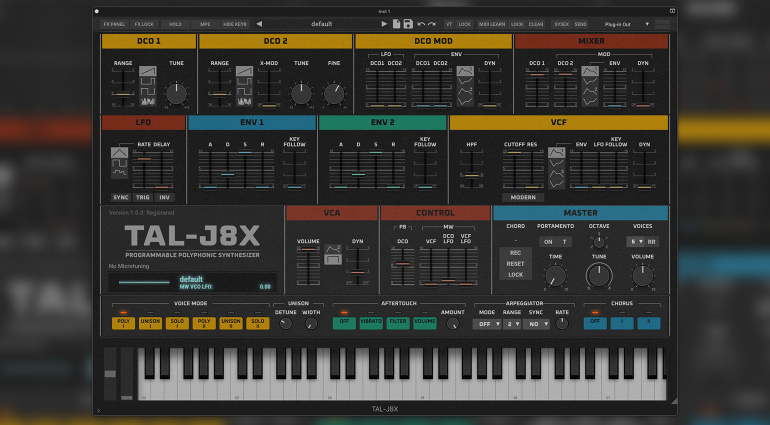
TL;DR: TAL Software has released the TAL-J8X, a software emulation of the classic 1985 Roland JX-8P synthesizer. It aims to capture the character of the original analog hardware, including its signature chorus and PG-800 programmer workflow, for a modern digital environment. The question remains whether a plugin can truly stand in for the tactile experience of the vintage gear.
- TAL-J8X is a new software synthesizer plugin emulating the Roland JX-8P from 1985.
- It models the original analog signal path, including the coveted on-board chorus circuit.
- The plugin incorporates a virtual version of the rare PG-800 hardware programmer for deeper editing.
- It includes modern features like polyphonic portamento and expanded polyphony beyond the original’s 6 voices.
- Available now for macOS and Windows in VST3, AU, and CLAP formats at an introductory price of €59.
Reading time: 4 min
Want more synth news before your next coffee break? Join the Noxal newsletter — no spam, just gear worth knowing about.
The Ghost in the Machine

Here at Noxal, we have a complicated relationship with software emulations. We love the smell of hot transistors and the satisfying clunk of a slider hitting its stop. Yet, we can’t deny the convenience and sonic fidelity that modern coding wizards like Patrick Kunz of TAL Software consistently deliver. His latest offering, the TAL-J8X, sets its sights on a pivotal moment in synth history: the Roland JX-8P from 1985. This was Roland’s last gasp of pure, pre-D50 analog polyphony, a 6-voice workhorse known for its lush, if sometimes politely reserved, pad and string sounds.
The JX-8P itself was a bit of a paradox. It housed a genuinely powerful analog engine—two DCOs per voice, a 24dB/octave filter, and that legendary analog chorus that could make a dentist’s drill sound cinematic. However, accessing that power required either a painstaking menu-diving session on a paltry two-digit LED display or the purchase of the optional, expensive, and now highly collectible PG-800 hardware programmer. TAL’s approach with the JX-8X is to give you the synth and the programmer in one virtual box, effectively completing the instrument that many original owners could only dream of fully exploiting.
So, what’s the core appeal? It’s the promise of that specific, late-80s analog character. We’re not talking about the aggressive punch of a Jupiter-8 or the raw sawtooths of a Juno-60. The JX-8P had a smoother, more polished, and inherently “produced” sound. It sat beautifully in mixes, which is why its presets ended up on countless records. The TAL-J8X seeks to bottle that specific essence—the precise stereo width of the chorus, the gentle roll-off of the filter, the particular way the envelopes shaped a brass stab.
Beyond the Basic Interface
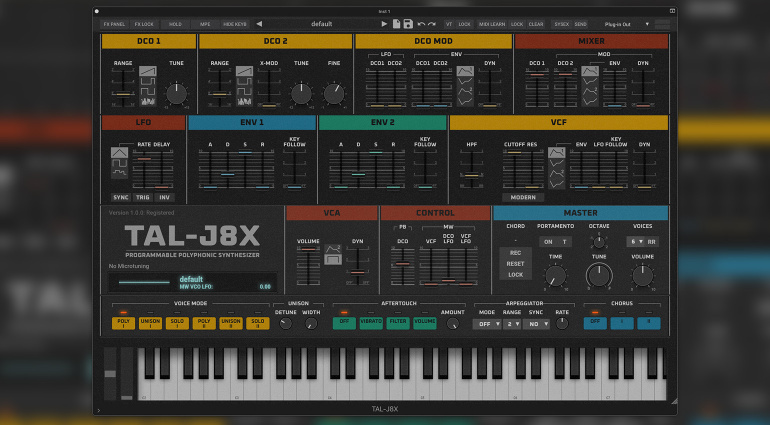
Faithfully recreating the original’s limitations is one thing, but a modern plugin needs to offer more. TAL understands this. The plugin interface presents the main synth panel, which replicates the somewhat sparse front panel of the JX-8P. This is your gateway to the basic sound-shaping and the excellent presets. But the real magic happens when you click over to the integrated PG-800 emulation. Suddenly, every parameter is laid bare with its own dedicated slider. It transforms the experience from one of archaeology to one of immediate, tactile creation.
They haven’t stopped there. TAL has added thoughtful modern enhancements. The original was limited to 6-voice polyphony, a constraint that feels archaic today. The J8X removes that ceiling. It also introduces polyphonic portamento, a feature the original lacked, opening up new melodic and textural possibilities. Furthermore, they’ve modeled the entire analog signal path, from oscillator to output, aiming for that elusive “analog feel” in the interaction and sound drift. I’ve spent hours with TAL’s previous emulations, and if the J8X is on par with their stellar J-8 (Juno-60/106) plugin, then the attention to detail in the filter feedback and chorus hiss will be exquisite.
However, the most critical test for any emulation claiming the JX-8P name is the chorus. That circuit wasn’t just an effect; it was the soul of the instrument. It added dimension, warmth, and a shimmering high-end that defined its sound. A poor emulation here would be an instant deal-breaker. From the demos and TAL’s track record, they’ve likely nailed it, modeling the BBD (Bucket Brigade Device) delays and noise to capture that specific, creamy modulation. It’s the feature that will make or break the nostalgia trip for veterans and convince newcomers of its authenticity.
Specs, Context, and Audience
Let’s talk brass tacks. The TAL-J8X is available now as a VST3, AU, and CLAP plugin for macOS and Windows. The introductory price is set at €59, which is squarely in the “impulse buy” territory for serious plugin collectors and a very fair ask for this level of emulation. It requires a decently modern computer, but nothing outrageous. This places it in direct competition with other classic Roland emulations from the likes of Arturia (in their V Collection) and Cherry Audio, but TAL has carved a niche by focusing on ultra-accurate, single-instrument recreations with a superb feel.
So, who is this for? Primarily, it’s for three groups. First, the nostalgia-driven producer who remembers the JX-8P from studio sessions or records and wants that specific sonic fingerprint without hunting down fragile, 40-year-old hardware. Second, the modern sound designer looking for a polished, mix-ready analog poly sound that isn’t another Juno or Prophet clone. The JX-8P’s architecture, especially with the PG-800 unlocked, offers a unique palette. Third, it’s for the TAL completist who already swears by their U-NO-LX or J-8 and trusts the brand’s quality.
In the broader market context, this release continues the trend of mining the final era of mainstream analog synths. After the JX-8P, the industry plunged headlong into digital with the D-50 and M1. The JX-8P represents the end of an era, and there’s a palpable longing for that sound. TAL isn’t just selling a synth; they’re selling a moment in time, conveniently packaged and recallable in your DAW. For the hardware purist, it’s a compromise. For the working musician, it might be a revelation.
The Verdict Is In The Vibe
We at Noxal must always ask the hard question: does it feel like the real thing? Having not laid hands on the plugin yet, we must judge by TAL’s impeccable reputation. Their emulations are renowned for their musicality and low CPU hit. The key will be in the intangible “vibe.” Does the filter have that slight, pleasing distortion when driven? Do the envelopes have the correct logarithmic curve that gives the JX-8P its distinctive pluck? Does the chorus add noise in that musically pleasing, analog way?
If the answer to these questions is yes, then the TAL-J8X accomplishes something wonderful. It preserves and democratizes a classic. It allows a new generation to program a JX-8P with an ease that was impossible in 1985, all while (theoretically) retaining the sonic character that made it desirable. It turns a historically cumbersome instrument into an immediate creative tool. That is the true value of a great emulation.
Ultimately, the TAL-J8X stands as a loving and detailed tribute. It won’t give you the pride of ownership that comes with restoring a vintage unit, nor the tactile feedback of real sliders. But for the cost of a few boutique pedal cables, it will give you the sound, integrated into your modern workflow. In an era where the original hardware prices continue to climb, that’s a compelling proposition. The final judgment on its authenticity will be passed in a million studios, one chord at a time.
Frequently Asked Questions
Does the TAL-J8X require the PG-800 to work?
No, absolutely not. The PG-800 programmer’s functionality is fully integrated into the plugin as a separate tab/window within the interface. The TAL-J8X gives you complete access to all the synth’s parameters digitally, effectively including the PG-800 for free.
How does this compare to the original hardware’s 6-voice limit?
The TAL-J8X offers expanded polyphony, limited only by your computer’s CPU. This is a key modern enhancement, allowing for large, sustained chords that would have caused voice-stealing on the original 1985 hardware.
Is the famous Roland “chorus” effect accurately modeled?
According to TAL, the entire analog signal path, including the iconic on-board chorus circuit, has been meticulously modeled. This chorus is a central feature of the JX-8P sound, and TAL’s history with emulating classic Roland chorus effects (like in their J-8 plugin) suggests they have likely captured its characteristic lush, modulating texture very well.
Now, if you’ll excuse me, I need to pour a fresh cup and A/B this with some dusty JX-8P samples. For science, of course. The science of vibe.