.nox-summary, .nox-reading-time, .nox-cta, .nox-closing { font-style: italic; margin: 1.5em 0; padding: 1em; background-color: #f5f5f5; border-left: 4px solid #e8a020; }
.nox-summary strong { color: #333; }
.nox-takeaways { margin: 1.5em 0; padding-left: 2em; }
.nox-toc { margin: 2em 0; padding: 1.5em; background-color: #f9f9f9; border: 1px solid #ddd; }
.nox-toc h2 { margin-top: 0; }
.nox-toc ol { margin-bottom: 0; }
.nox-faq { margin: 2em 0; padding: 1.5em; background-color: #f0f0f0; border-radius: 5px; }
.nox-faq h3 { margin-top: 1em; }
a { color: #2a5d8a; text-decoration: none; }
a:hover { text-decoration: underline; }
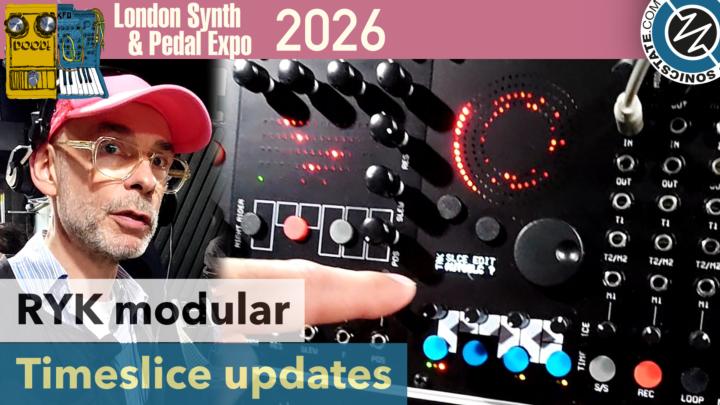
TL;DR: At LSPXPO 2026, RYK Modular unveiled a significant beta firmware update for its Timeslice module. The headline features are a powerful auto-slice function for multi-sampling and a new polyphonic sample playback mode. This transforms the module from a quirky sampler into a far more versatile and immediate sound design tool.
- New Auto-Slice feature detects transients to automatically chop samples for beats or create keyboard-mapped multi-samples.
- Introduction of a Polyphonic Sample Playback mode for real-time layering and recording of sounds across the four tracks.
- Enhanced input routing, with each of the four tracks now supporting both line-level and Eurorack-level inputs independently.
- The firmware is in public beta now, available for download, with a final release expected in about a month.
- Firmware is free for existing Timeslice owners, significantly boosting the module’s capabilities without hardware cost.
Reading time: 4 min
Want more synth news before your next coffee break? Join the Noxal newsletter — no spam, just gear worth knowing about.
What Is The Timeslice, Anyway?

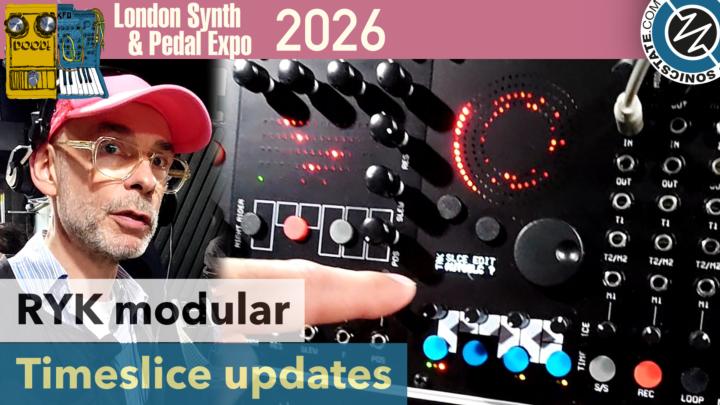
For the uninitiated, the RYK Modular Timeslice is a 16-voice algorithmic synthesizer module with analog filters that also happens to be a rather clever four-track sampler. It’s always been a bit of a dark horse in the Eurorack ecosystem—powerful but perhaps requiring a specific mindset to fully exploit. Its core premise involves slicing audio across four independent tracks that can be manipulated with algorithmic functions and run through those lovely analog filters. It’s a sound designer’s module, not a straightforward sample-playback box.
We at Noxal have had our eye on it, appreciating its unique approach but sometimes wishing for a dash more immediacy. Sampling in a modular environment is often a ritual of precision and patience. You record, you trim, you assign, you curse slightly when your timing is off. The Timeslice, in its previous incarnations, was very much a part of that world—deep, rewarding, but demanding your full attention.
This new beta firmware, showcased at LSPXPO 2026, seems directly aimed at bridging that gap between deep capability and hands-on, creative flow. It’s not a new module, but it might as well be. This is the kind of substantial, feature-rich update that makes you look at a piece of your rack in a whole new light.
The Auto-Slice Revolution
Let’s cut to the chase: the auto-slice feature is a game-changer. In the demo, the ability to feed a drum loop or a series of piano notes into the Timeslice and have it automatically place slice markers at transients is nothing short of magical for workflow. This isn’t just about making beat-slicing easier (though it absolutely does that); it’s about unlocking multi-sampling in a modular context with shocking simplicity.
Imagine recording a chromatic run from another synth or a physical instrument. Previously, turning that into a playable multi-sample across your rack would be a session-long project involving multiple modules and careful note-taking. Now, the Timeslice can theoretically analyze that recording, slice each note, and spread those slices across your keyboard or sequencer CV. This transforms the module from a granular/algorithmic oddity into a legitimate, rapid-prototyping sample engine. It brings a slice of that “Simpler” or “Slicex” DAW workflow right into the voltage-controlled world, which is a rare and welcome treat.
I have to admit, watching the demo, I immediately thought of all the field recordings and weird percussive sounds languishing on my hard drive that just became infinitely more useful. This feature alone justifies the download.
Polyphonic Playback and Input Flexibility
The second major pillar of this update is the new polyphonic sample playback mode. The original Timeslice operated with a more monophonic or voice-allocated mindset per track. This new mode allows for layering sounds in real-time, recording and stacking them across the four tracks. This opens the door for building dense, evolving pads, complex rhythmic layers, or simply jamming with stacked loops without the immediate need for a mixer or additional utility modules.
Complementing this is the expanded input versatility. Each of the four tracks can now handle either line-level or Eurorack-level signals independently. This is a small spec note with massive practical implications. It means you can have your guitar plugged into one track, a synth line into another, and a noisy Eurorack sequence into a third, all simultaneously, without worrying about gain staging or external attenuators. It makes the Timeslice a more central and forgiving hub for audio in a complex system.
Together, these updates signal a shift in philosophy. The Timeslice is becoming less of a niche processor and more of a central sampling workstation within the rack. It’s gaining the kind of flexible I/O and layering capability that makes it a first-choice destination for audio, rather than a final-stop special effect.
Who Is This Update For?
First and foremost, this is a gift for existing Timeslice owners. A free firmware update that adds this level of functionality is the kind of support that builds legendary brand loyalty. If you have one sitting in your rack feeling a bit underutilized, this beta is your call to action. Plug it in, download the file, and rediscover your module.
For those considering a Timeslice, the calculus has fundamentally changed. The barrier to entry—the “workflow tax” of manual slicing—has been dramatically lowered. The module now presents a much more compelling argument against other samplers in the format. It offers a unique blend of algorithmic synthesis, analog filtering, and now, genuinely accessible sampling and multi-sampling. It’s for the sound designer who wants serendipity and control in equal measure, and for the performer who needs to build complex, playable instruments directly in their case.
We at Noxal appreciate when a company doesn’t just release a new product, but actively evolves an existing one into something greater. In a market obsessed with the next new thing, a substantial firmware refresh like this feels like a quiet, confident statement. It says the instrument you already own still has chapters left to write. Now, it’s in beta, so expect the potential for bugs, but the final release is reportedly just a month away. The future of the Timeslice looks significantly less fragmented, and much more playable.
Frequently Asked Questions
Is the beta firmware stable for use in a live set?
As with any beta software, caution is advised for mission-critical applications. While the features appear robust in demos, there’s always a risk of unexpected behavior. For studio experimentation and sound design, dive right in. For an important live performance, you might want to wait for the final release, expected in about a month, or thoroughly test every function you plan to use.
Does the auto-slice feature allow for manual editing of slice points?
Based on the current information from LSPXPO, the demo focused on the automatic detection functionality. The core workflow of the Timeslice still involves manual trimming and editing of samples and slices, so it’s highly likely you can fine-tune the auto-slice results. For precise control, you would probably adjust the slices manually after the initial auto-detection, blending the new convenience with the module’s existing detailed editing.
Will this firmware update cost money for Timeslice owners?
No. RYK Modular has made this significant beta firmware available as a free download from their website. This is a feature update for existing hardware, not a paid upgrade. It’s a fantastic way to add value and extend the life of the module for current users.
Now, if you’ll excuse me, I need to see if my espresso machine has a firmware update for auto-froth. A musician can dream. Until then, happy slicing.