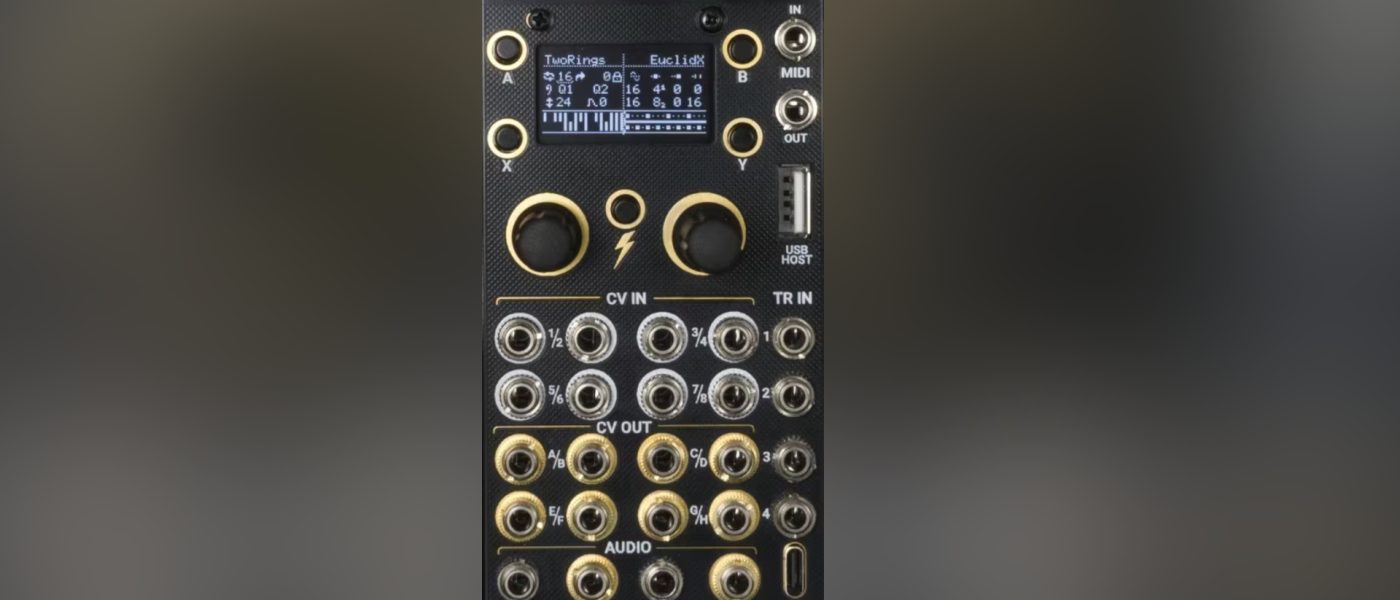
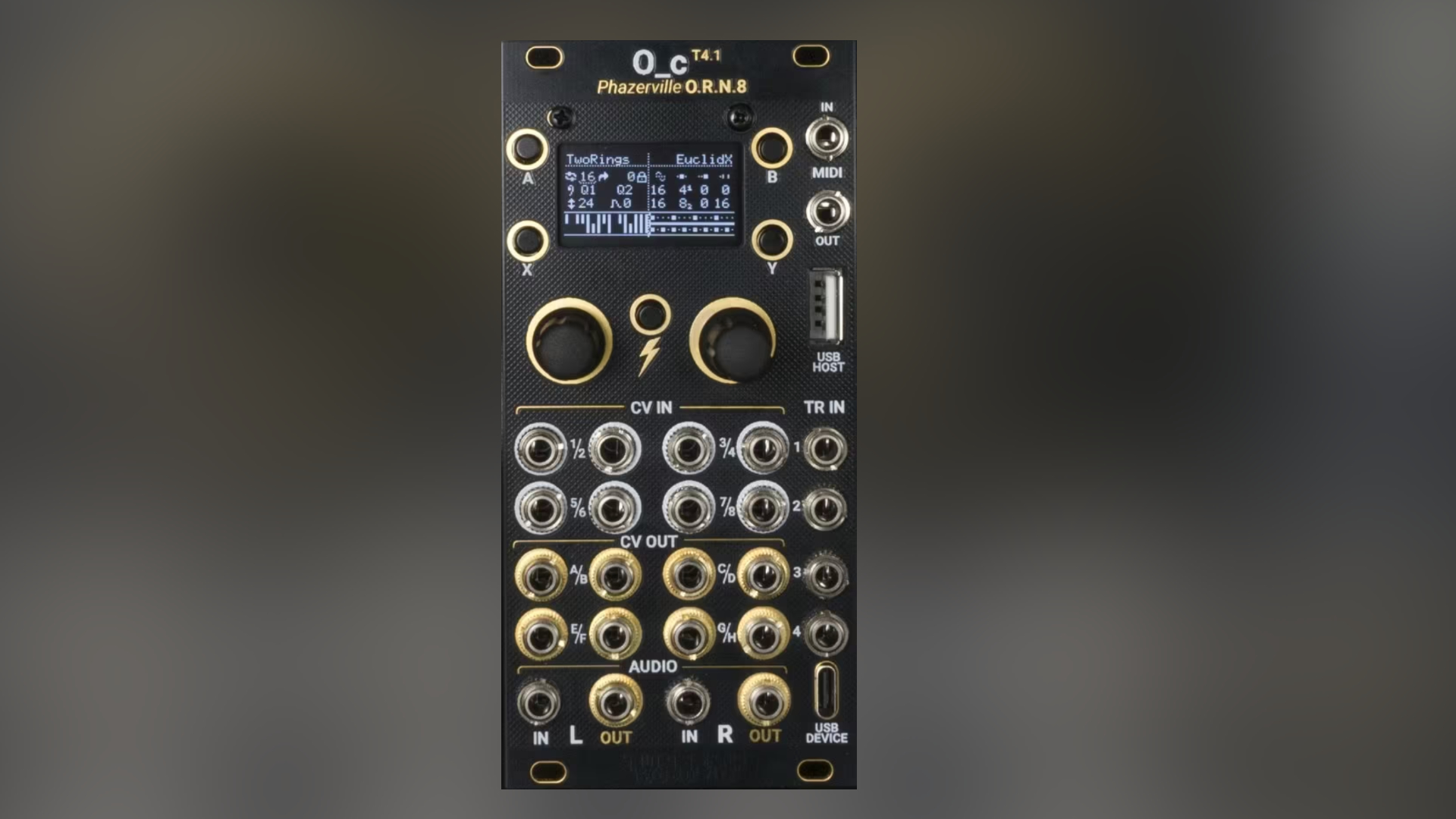
TL;DR: The Ornament & Crime, a legendary open-source multi-function Eurorack module, has received a substantial hardware and firmware update. The new T4.1 O.R.N.8 revision brings native USB MIDI support, a more powerful processor, and enhanced audio processing capabilities, solidifying its position as a Swiss Army knife for the modern modular rig.
- Native USB MIDI host/device support for direct connection to computers, controllers, and other USB MIDI gear.
- Upgraded to a Teensy 4.1 microcontroller, offering significantly more processing power for complex algorithms.
- Enhanced audio processing capabilities, moving beyond CV/gate to handle actual audio signals.
- Remains fully open-source, with schematics and firmware available for DIY builders and modifiers.
- Retains the core philosophy: a single module housing a rotating cast of powerful, niche utilities.
Reading time: 5 min
Want more synth news before your next coffee break? Join the Noxal newsletter — no spam, just gear worth knowing about.
The Cult of Utility
In a world obsessed with monolithic analog voices and shimmering digital reverbs, the Ornament & Crime has always been the quiet, brilliant librarian in the corner of the synth library. It doesn’t make a sound on its own. Instead, it makes every other module in your rack behave in ways you didn’t think possible. Since its inception, the O&C has been a chameleon: a quantizer, a sequencer, a Turing machine, a Lorenz attractor, a precision adder, a chord generator—its identity is defined by which of its many firmware “apps” you load. It’s the ultimate utility infielder, and its cult following among modular enthusiasts is built on a foundation of deep, sometimes esoteric, functionality.
The original hardware, often built around the Teensy 3.2, was a testament to the power of open-source collaboration. A community of developers and users constantly pushed its boundaries, finding new algorithmic niches to fill. But even the best ideas can be constrained by their hardware. The new T4.1 O.R.N.8 revision isn’t a reinvention; it’s an unshackling. By moving to a significantly more powerful platform, the developers aren’t just fixing limitations; they’re opening doors to entirely new classes of module behavior, most notably by finally inviting audio to the party.
What’s in the T4.1 Box?
Let’s talk specs, because this is where the upgrade gets tangible. The heart of the new O&C is the Teensy 4.1 microcontroller. Compared to the previous generation, it’s a beast: clock speeds are massively increased, and it has more memory and far greater computational headroom. This translates directly to smoother, more complex real-time calculations for its existing apps and the potential for new, more processor-intensive algorithms. The most user-facing upgrade, however, is the native USB MIDI support. This is a game-changer for integration. You can now plug the module directly into your computer, a USB MIDI keyboard, or a host of other controllers without needing a separate MIDI-to-CV interface. It can act as a host or a device, making it a seamless bridge between the DAW and the modular world.
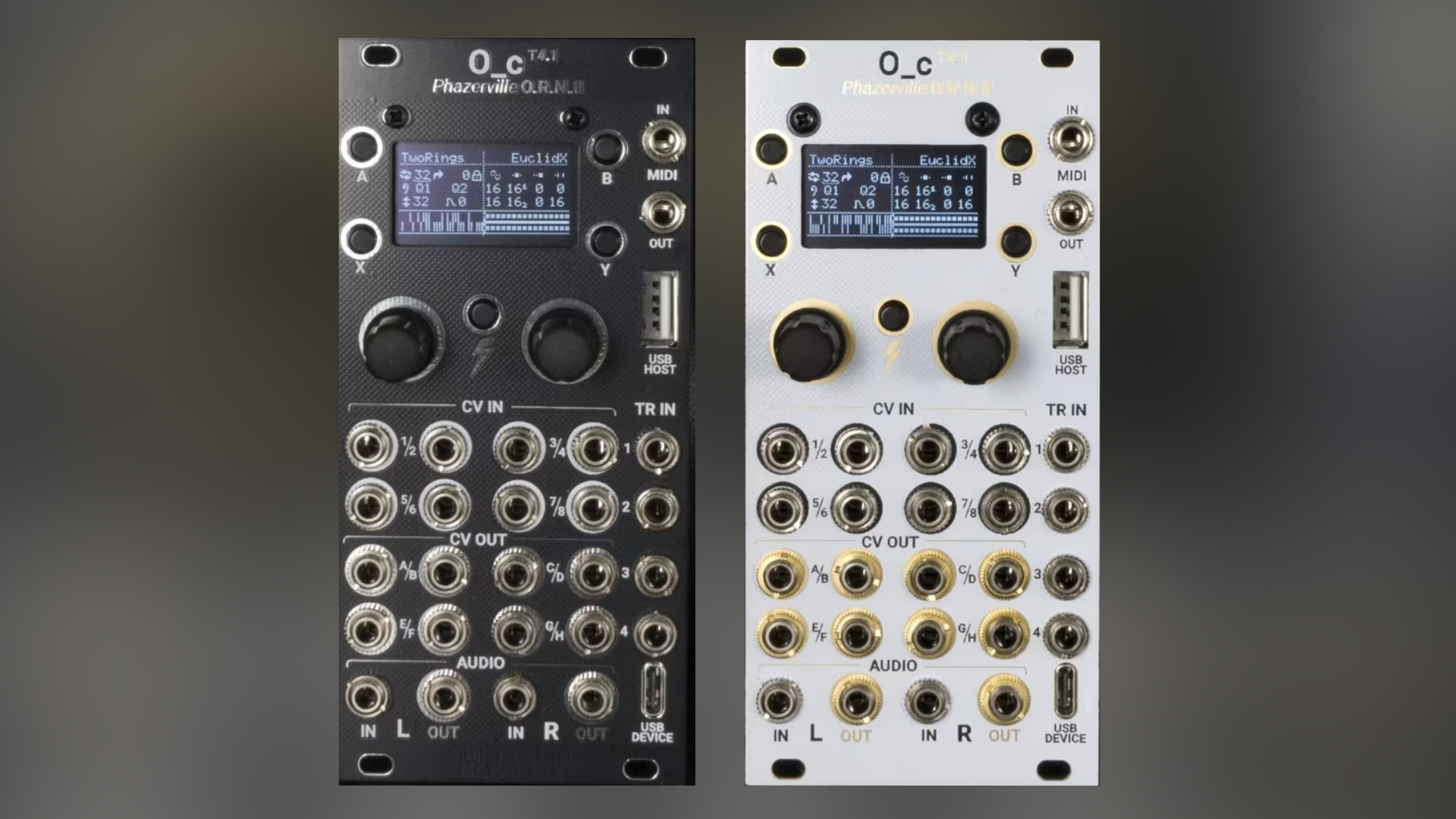
The hardware around the brain has also seen attention. Expect improved build quality, better components, and a design that leverages the Teensy 4.1’s expanded pinouts. Crucially, the module remains steadfastly open-source. The schematics, board files, and firmware are out in the wild. This means the usual ecosystem of DIY kit builders, pre-built module sellers, and custom panel makers will quickly adopt this new standard. Your favorite builder’s version of the O&C will almost certainly be based on this T4.1 platform moving forward.
Beyond CV: Audio Comes to the Crime Scene
Traditionally, the Ornament & Crime lived strictly in the realm of control voltage and gates. It shaped melodies, generated random voltages, and orchestrated sequences. The T4.1’s extra muscle changes that. The new firmware branches, particularly the “O.R.N.8” lineage hinted at in the name, introduce genuine audio-rate processing. We’re talking about using the O&C as a waveshaper, a bitcrusher, a simple oscillator, or an audio-rate modulator.
This is a philosophical expansion as much as a technical one. It transforms the module from a pure control center into a hybrid utility that can also directly color your sound. Imagine using one of its chaotic modulation sources not just to wiggle a filter cutoff, but to directly process an oscillator’s waveform at audio rates. This blurring of the line between CV and audio is where modular synthesis gets truly exciting and unique, and the O&C is now poised to be a key player in that space. It’s no longer just about what you play; it’s about how you warp the very signal that creates the note.
For Whom the Module Tolls
So, who is this for? If you’re new to modular and think you need another VCO, the O&C might seem intimidating and abstract. You’d be wrong, but I understand the hesitation. This module is for the synthesist who has a few sound sources and is now asking, “But how do I *control* all this in an interesting way?” It’s for the generative musician who wants complex, ever-evolving sequences that still remain musical. It’s for the chord-head who needs sophisticated quantization and harmony generation. It’s for the DIYer who loves supporting and tinkering with open-source projects.
With the T4.1 update, its audience expands further. It’s now also for the musician who wants tight DAW integration via USB MIDI without eating up more rack space. It’s for the sound designer looking for unique digital degradation and waveshaping right next to their analog filters. In short, it’s for anyone who values maximum functionality per HP and enjoys the process of deep, menu-dive-adjacent exploration. It rewards patience and study with capabilities you won’t find in any single commercial module.
Frequently Asked Questions
Is the Ornament & Crime T4.1 a DIY kit or a finished module?
It’s primarily an open-source design. You will most commonly encounter it as a DIY kit from suppliers like SynthCube or Modular Addict, or as a fully assembled and tested module from various boutique builders. The “T4.1 O.R.N.8” refers to the new hardware standard and firmware branch that these builders will be using.
Do I need to know how to code to use the new audio apps?
Not at all. Using the audio processing functions will be just like using any of the other apps: you select it from the menu, and the module’s controls are re-contextualized for that function. The complexity is in the algorithms, not the user interface. You will, however, need to load the specific firmware branch (like O.R.N.8) that contains these audio apps.
If I have an older O&C, can I upgrade it to the T4.1?
Generally, no. The upgrade involves a completely different microcontroller (Teensy 4.1 vs. 3.2) with a different pin layout and physical footprint. It requires a new main circuit board. Your best path is to either build/buy a new T4.1 version or see if your module’s builder offers a core replacement service, which is essentially a new board.
Now, if you’ll excuse me, the promise of using a Lorenz attractor to bitcrush my coffee machine’s boiler hum is calling. For science.