TL;DR: This week’s synth news is a delightful fever dream. We have not one, but two Nintendo-inspired synthesizers: a bespoke NES console from Love Hultén and a glitchy Game Boy instrument from Melted Electronics. Elsewhere, Jean-Michel Jarre announces a history of electronic music book, and a legendary synth auction prepares for its final curtain call.
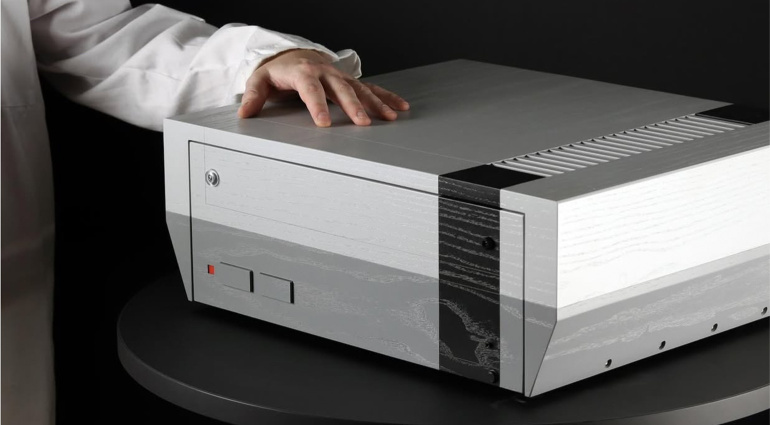
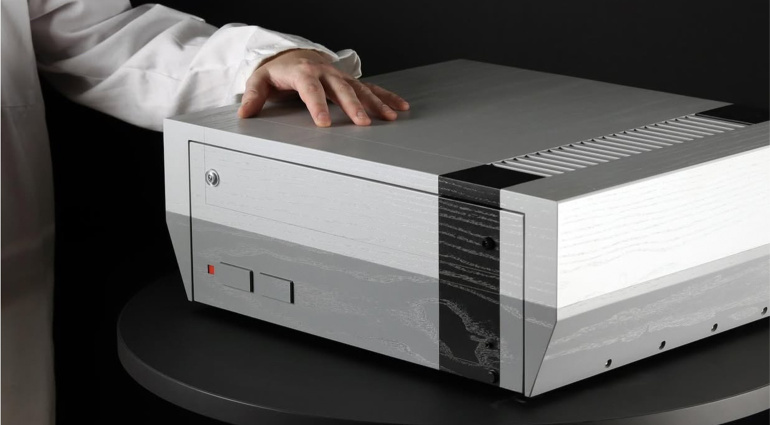
- Love Hultén’s NES-SY2.0 is a custom art piece housing an Arcano NES synth, Keystep, and effects in a giant, cartridge-ready NES enclosure.
- Melted Electronics’ Glitch Boy is an 8-bit video instrument/chip synth that loads NES ROMs, offers real-time manipulation, and comes in handheld or Eurorack formats for ~€170.
- Jean-Michel Jarre’s book, Machines, is an illustrated history of electronic music from 1913 to the present, featuring over 80 instruments and anecdotes, out October 8.
- The 62nd VEMIA auction (April 4-11) may be the last run by founder Peter Forrest, featuring rare gear like an E-mu Modular system and a KORG PS-3100.
- A rare 1975 live clip of Kraftwerk on *The Midnight Special* surfaced briefly, reminding us of the band’s pioneering live electronic setup.
Reading time: 5 min
Want more synth news before your next coffee break? Join the Noxal newsletter — no spam, just gear worth knowing about.
The Nintendo Synth Double Feature

Some weeks, the synth news cycle feels like a predictable rotation of firmware updates and minor module announcements. And then, some weeks, it feels like we’ve all collectively slipped into an alternate dimension where the rules are written by a caffeinated game developer with a soldering iron. This is one of those weeks. The headline act is a double bill of Nintendo-inspired synthesizers, proving that the 8-bit aesthetic is not just nostalgia fodder but a vibrant, ongoing language for sonic exploration. It’s not often you get one hardware piece that blurs the line between gaming console and instrument, let alone two arriving in the same news cycle. For those of us who spent our formative years with blistered thumbs and a head full of bleeps and bloops, this feels like a strangely personal form of technological convergence.
The cultural resonance is undeniable. The NES and Game Boy are not merely old electronics; they are foundational pieces of sensory memory for millions. Translating that tactile, visual, and auditory language into a modern musical instrument is an act of alchemy. It’s about capturing the feel of the plastic, the click of the D-pad, and the distinct square-wave buzz and using them as a palette for new creation. This isn’t just about chiptune covers of pop songs; it’s about leveraging a deeply embedded iconography as a framework for experimentation. Both devices on offer take radically different approaches to this concept, which makes their simultaneous appearance all the more fascinating.
Love Hultén’s NES-SY 2.0: Art Meets 8-Bit
First, we have the maestro of bespoke synth enclosures, Love Hultén. His work has always existed at the intersection of functional instrument and gallery-ready sculpture, and the NES-SY2.0 is a quintessential example. This isn’t a mass-produced product; it’s a singular art piece. The core sound engine is an Arcano Systems NES Poly Chiptune Synthesizer, controlled via an Arturia Keystep, with a Flamma FS22 Ekoverb handling effects duties. The magic, as always with Hultén, is in the presentation: a giant, meticulously crafted Nintendo Entertainment System enclosure that, wonderfully, still accepts cartridges.
The inclusion of a custom MIDI visualizer by artist p1xelfool completes the package, making it a performative audiovisual instrument. This is synth as totem. You’re not just buying a noisemaker; you’re acquiring a conversation piece that embodies a specific slice of technological history. It’s for the collector, the patron of synth art, or the studio owner who wants a centerpiece that sparks curiosity before a single note is played. The demo video shows it in action, and the sound is precisely the crunchy, melodic 8-bit polyphony you’d hope for, now rendered in a physical form that matches its iconic source material. It’s less an instrument you gig with and more one you build a shrine around.
Melted Electronics’ Glitch Boy: Circuit-Bent Dream
On the other, more chaotic end of the spectrum sits the Glitch Boy from Melted Electronics. Described as a “weird hybrid between a retro gaming console, a video synthesizer and a chiptune musical instrument,” this device leans hard into the experimental. Its party trick is the ability to load NES-compatible ROMs from a microSD card, allowing you to manipulate the game’s visuals and audio in real time via the Game Boy-style controls, MIDI, audio input, or CV. This is the spirit of circuit bending, made official and packaged into a product.
Critically, it also contains a dedicated four-voice chiptune synth, and it will be available in both a handheld version and a Eurorack module. This duality is key. The handheld version promises immediate, tactile glitching, while the Eurorack format invites it into a modular ecosystem for more complex patching and processing. With a Kickstarter launching April 14 and an expected price around €170 (€150 early bird), the Glitch Boy is positioned as an accessible tool for visual artists, noise musicians, and anyone interested in the gritty, unpredictable intersection of gaming and synthesis. It’s raw, it’s digital, and it promises beautiful accidents.
Jarre Writes The Book On Our Obsession
Shifting from new hardware to historical documentation, we have news from synth pioneer Jean-Michel Jarre. He’s authored a book. Not a memoir, but an illustrated history of electronic music titled Machines. Slated for an October 8 release, the book promises to be “the definitive illustrated story of electronic sound,” tracing a path from the 1913 Futurist manifesto The Art of Noises to our current AI-infused present. For a community that often debates the lineage and importance of various instruments, this feels like required reading from a primary source.
Jarre frames the book as a journey through the machines that shaped his—and by extension, our—musical language. He mentions over 80 instruments, from the iconic ARP 2500 to rare one-offs, alongside biographical anecdotes. The list of contributors, including Pete Townshend, Gary Numan, and Armin van Buuren, suggests a wide-ranging perspective. At £50 for the hardcover, it’s a premium object, but for many of us, a well-curated history of the tools we fetishize is worth the price of a few patch cables. It’s a chance to see the forest for the trees, or perhaps the studio for the synths.
VEMIA’s Potential Final Bow
In a more bittersweet note, the 62nd VEMIA auction runs from April 4 to 11, and it may be the final one orchestrated by its founder, Peter Forrest—the man behind the essential A-Z of Analogue Synthesizers books. After 27 years, this legendary auction house for rare and vintage gear might be changing hands. Forrest is reportedly in talks with a successor, and we can only hope the tradition continues, as VEMIA has been a thrilling, if often vicarious, marketplace for synth archaeologists.
This final(?) auction under his stewardship features some stunning lots. While it may not have the headline-grabbing power of last year’s Aphex Twin Yamaha GX-1, the catalog includes an enviable E-mu Modular system with keyboard, a coveted KORG PS-3100, and a Jenny Ondioline. For most of us, it’s a window-shopping event of the highest order, a chance to gaze at museum pieces and dream. If you do happen to win a lot, we at Noxal insist you tell us all about it. We need to live through you.
Kraftwerk’s Brief Resurfacing
Finally, a brief but poignant archival moment: the official YouTube channel for the 1970s music program The Midnight Special briefly posted a clip of Kraftwerk performing “Autobahn” live on July 12, 1975. The clip, which showed the band in their early, less robotic but no less pioneering phase, was a stark reminder of the sheer ambition of their live electronic setup in that era. It has since been made private, leaving only unofficial copies in its wake.
These fleeting glimpses into the past are crucial. They ground our current excitement for 8-bit Nintendo synths and Eurorack glitch machines in a longer lineage of electronic experimentation. Seeing Kraftwerk, surrounded by their custom-built gear, making such expansive music live on 1970s television, contextualizes everything that follows. It’s all part of the same endless conversation between human and machine, a conversation that this week’s news continues with delightful weirdness and scholarly reflection.
Frequently Asked Questions
Can I actually buy the Love Hultén NES-SY2.0?
Love Hultén’s creations are typically one-off or extremely limited custom art pieces. The NES-SY2.0 was showcased as his latest work, but it is not a mass-market product. Acquisition would likely involve direct commission, significant funds, and patience. It’s more an object of inspiration than a purchasable SKU.
Is the Glitch Boy a real Game Boy or an emulator?
It’s neither. The Glitch Boy is a new, purpose-built hardware instrument designed by Melted Electronics. It can load and run NES-compatible ROM files from a microSD card, manipulating their audio and video output in real time. It also has its own built-in four-voice chiptune synth. Think of it as a dedicated instrument inspired by the Game Boy’s form and software, not a modified console.
Will Jean-Michel Jarre’s book ‘Machines’ be a technical manual?
No, it is billed as an illustrated history and personal journey. While it will describe over 80 instruments, the focus appears to be on their historical context, cultural impact, and Jarre’s personal experiences with them, rather than providing schematics or technical specifications. It’s a narrative history, not a service manual.
Now, if you’ll excuse me, I need to see if my Keystep fits into my old Super Nintendo. For science. And another coffee.