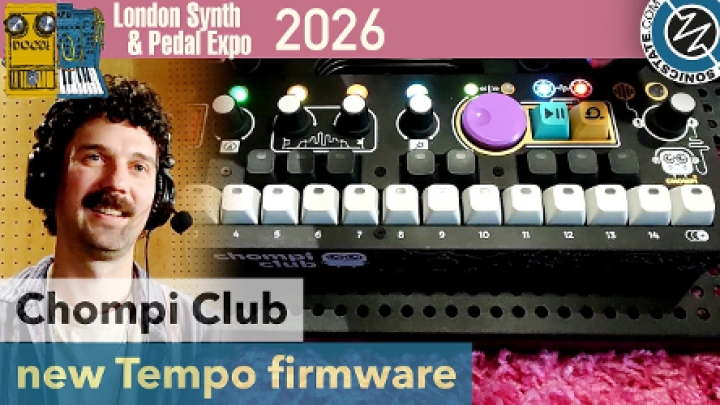
TL;DR: Chase Bliss has dropped the “Tempo” firmware for the Chompi sampler, fundamentally reworking its looper into an arpeggiator-style step sequencer. The update adds chromatic and slice playback modes, deepens effect blending, and allows for MIDI-synced, rhythmic performance. It’s a free, card-swappable overhaul that shifts the Chompi from a quirky looper to a potent compositional tool.
- The core looper section is now a 16-step arpeggiator/sequencer, enabling rhythmic, synced playback instead of just linear looping.
- New Chromatic and Slice sample modes expand melodic and rhythmic manipulation far beyond the original pitch-shifted playback.
- Enhanced effect section allows for blending delay and reverb with randomization, all synced to the new sequencer tempo.
- The firmware is a standalone system; swap the SD card to toggle between the new “Tempo” workflow and the classic Chompi experience.
- This update positions the Chompi as a significantly more powerful performance and integration device within a MIDI-driven setup.
Reading time: 4 min
Want more synth news before your next coffee break? Join the Noxal newsletter — no spam, just gear worth knowing about.
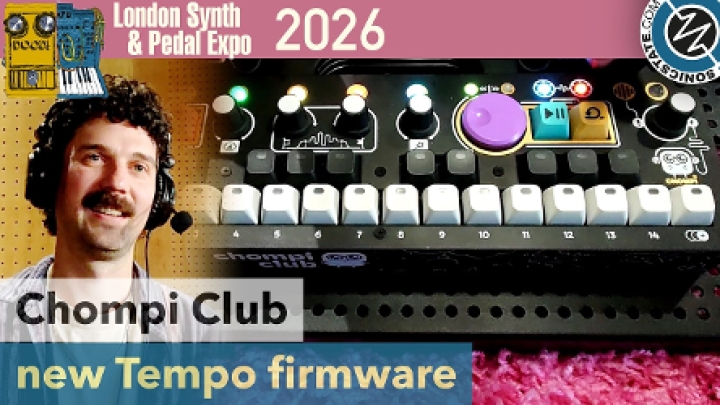
From Looper to Sequencer: The Big Rewire

Let’s be honest: when the Chompi first chomped its way onto our desks, we adored its immediacy and tactile weirdness, but secretly wondered about its place in a rig beyond the coffee table. Its charm was its linear, almost cassette-like looping. Its limitation was also its linear, almost cassette-like looping. Enter the “Tempo” firmware. This isn’t a tweak; it’s a spinal transplant. Chase Bliss has taken the core looper section and reconfigured it into a 16-step arpeggiator and sequencer.
This changes everything. Instead of your sample just playing back end-to-end, you can now program rhythmic patterns, rests, and accents across those 16 steps. It means the Chompi can finally lock to a master clock via MIDI, syncing its playback perfectly with your drum machine or DAW. The performative potential here is massive. What was once a charmingly erratic sound-mangler can now be a precise, rhythmic element in a track. It’s the difference between a curious pet and a trained member of the band.
The dual-engine architecture remains, so you can still layer and crossfade between two samples, but now each engine is driven by this new sequencer brain. This transforms the Chompi from a device for creating ambient beds or glitchy textures into a tool for crafting melodic hooks, complex rhythmic patterns, and evolving sequences. It’s a fundamental shift from a “set-and-forget” looper to an interactive, clockable instrument.
Chromatic, Slice, and Beyond: New Playback Engines
If the new sequencer is the brain, the new playback modes are the brawn. The original Chompi let you scrub and pitch-shift a sample with its magnetic tape wheel—a brilliant interface, but melodically limited. Tempo firmware introduces two major new modes: Chromatic and Slice. Chromatic mode is the big one for melody makers. It maps your sample across a keyboard layout, allowing you to play it melodically across its 16 steps. Suddenly, that recorded guitar pluck or vocal sigh can become a full chord progression or a bassline.
Slice mode, on the other hand, is for the rhythm section. It automatically detects transients in your sample and chops it into individual hits, which you can then trigger across the sequencer steps. Imagine recording a drum break, loading it in, and instantly having it re-sequenced into a new pattern. This turns the Chompi into a potent, hands-on groovebox. Combined with the step sequencer, these modes unlock compositional possibilities that simply didn’t exist in the original firmware.
It’s a masterclass in expanding a device’s personality without changing its physical form. The charming, tactile interface—the wheel, the buttons, the faders—now controls a vastly more powerful and flexible sound engine. Chase Bliss hasn’t just added features; they’ve added new instruments *inside* the existing one.
Synced Effects and the Joy of Randomization

Chase Bliss never met a parameter they didn’t think could use a little… uncertainty. The Tempo update brings their signature love of modulation and randomization to the Chompi’s effects section in a more integrated way. The delay and reverb effects can now be blended together, creating lush, washed-out soundscapes. More importantly, these effects can be synced to the internal tempo set by the new sequencer.
This means your delay repeats can lock to sixteenth notes, or your reverb decay can pulse in time with your pattern. It brings a cohesive, musical glue to the entire signal chain. But the real magic, as Tyler from Chase Bliss highlighted, is in the randomization. You can introduce controlled chaos to various parameters, letting the Chompi generate variations on your sequence. It’s a feature that encourages happy accidents and can break you out of a creative loop—transforming the device from a precise sequencer into a collaborative idea generator.
This philosophy—deep control married with inspired randomness—is pure Chase Bliss. It ensures that while you can program something intricate and precise, you’re always one button press away from the machine suggesting something you’d never have thought of. It maintains the playful, exploratory soul of the original Chompi, even as it gains serious studio chops.
Who Is Tempo For, and Is It a New Machine?
So, who is this for? First, it’s a free gift for every existing Chompi owner, which is frankly incredible. For those who felt the original was a bit too niche or “toy-like” for their main setup, this is the update that demands a second look. It’s now a compelling option for producers wanting a unique, performative sampler in a hardware workflow, especially those who value immediacy and character over menu-diving.
Secondly, the genius of the SD card swap system means this isn’t an irreversible update. You can keep the original firmware on one card and Tempo on another, effectively owning two different instruments. Want a chill, linear looper for soundscape sessions? Pop in the old card. Need a synced, step-sequenced melodic engine for your next track? Swap to Tempo. It respects the original design intent while offering a radical alternative.
Ultimately, the Tempo firmware feels less like an update and more like a sequel. It addresses the core integration limitations of the original while exponentially expanding its creative scope. The Chompi was always lovable; now, with a sequencer brain, chromatic melodies, sliced rhythms, and synced effects, it’s also formidable. Chase Bliss hasn’t just updated a product; they’ve fulfilled a promise, showing that the weird little box we all chomped on has a much bigger bite than we ever imagined.
Frequently Asked Questions
Is the Tempo firmware a free update?
Yes. For existing Chompi owners, the Tempo firmware is a free download. You load it onto an SD card. The update system is card-based, so you can switch between the original firmware and Tempo by physically swapping cards, giving you two instruments in one.
Do I lose the original looping functionality?
Not exactly, but it’s recontextualized. The linear “tape-style” looping is replaced by the step sequencer/arpeggiator. However, by programming all 16 steps to trigger consecutively, you can approximate a loop. The workflow is now pattern-based rather than linear record/playback. To get the old workflow back, you simply swap to the SD card with the original firmware.
Can the Chompi now sync to other gear with Tempo?
Absolutely. A core feature of the Tempo firmware is full MIDI clock synchronization. The Chompi’s internal sequencer and tempo-locked effects (delay, reverb) can sync to an external MIDI clock, allowing it to integrate seamlessly with drum machines, sequencers, and DAWs.
Now, if you’ll excuse me, I need to finish this cold brew and see if my Chompi can sequence a convincing coffee machine sound. The quest for the perfect percolation arpeggio continues.