
TL;DR: Behringer has cloned another obscure classic, this time targeting the Lovestone flanger pedal. Dubbed “The Flange With No Name,” this €99 analog modulation box promises to be more than just a flanger, offering chorus, phase, and vibrato effects. It’s available for pre-order now, though shipping times may vary.
- Behringer’s latest is a clone of the rare Lovestone “with no name” flanger pedal.
- It’s an analog circuit built around delay and LFOs, capable of flanging, chorus, phasing, vibrato, and tremolo.
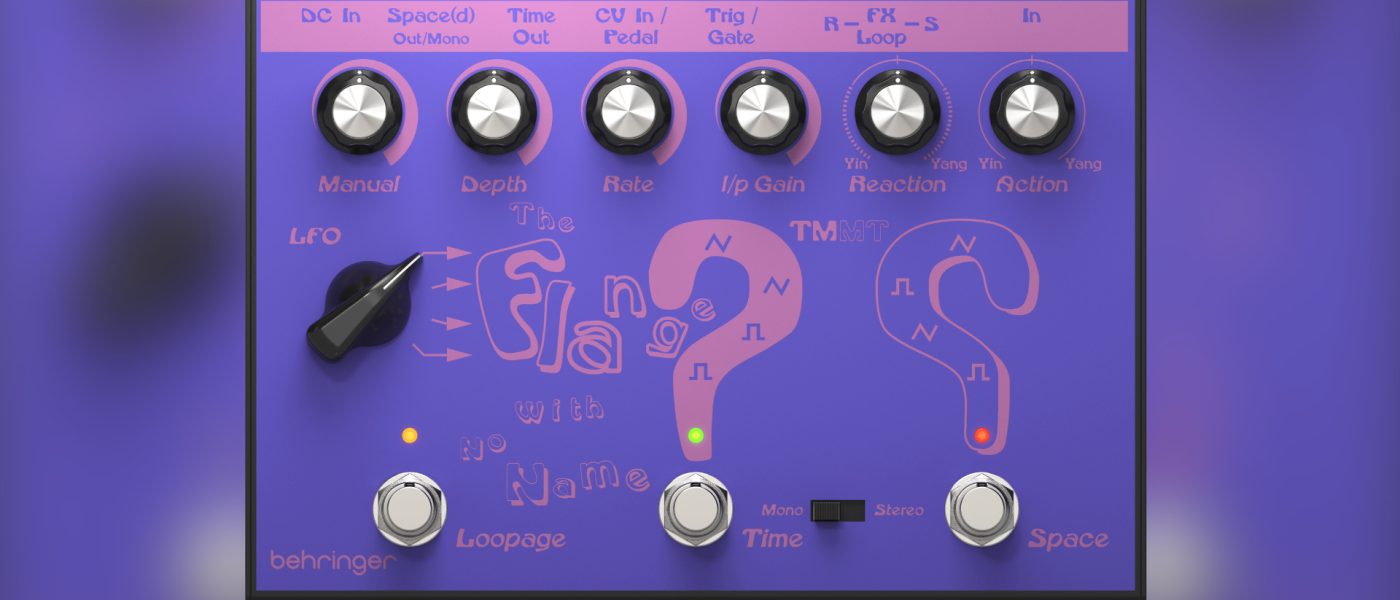
- Key controls include Rate, Depth, Manual, Reaction (feedback), and Action (delay mix).
- Features include three footswitches, a mono/stereo switch, and extensive I/O including CV/Trigger inputs and an effects loop.
- Priced at €98/$119, it’s a fraction of the cost of the original or modern boutique remakes.
Reading time: 4 min
Want more synth news before your next coffee break? Join the Noxal newsletter — no spam, just gear worth knowing about.

The Flange With No Context

Here at Noxal, we often discuss the philosophical implications of cloning in the synth world. Behringer, however, operates on a different plane of existence, one where philosophy is secondary to the relentless churn of the clone machine. This week’s offering, following hot on the heels of the Ring Stinger and the BM-17 Frequency Box, is “The Flange With No Name.” It is, as the name so poetically suggests, an “authentic clone” of the equally nameless flanger pedal from Lovestone. For those not steeped in pedal lore, Lovestone is a defunct brand currently being resurrected by the boutique powerhouse ThorpyFX. The timing, as they say, is everything. Behringer’s move to clone a portfolio just as it’s poised for a boutique revival is either brilliantly opportunistic or spectacularly tone-deaf, depending on which side of the “inspiration vs. replication” debate you pour your coffee.
The original Lovestone pedal is a rare bird, a cult piece of analog modulation history. By targeting it, Behringer isn’t just cloning a Boss or MXR staple; it’s democratizing a piece of gear most players have only read about in forum deep-dives. For €98 at Thomann (or $119 pre-order), “The Flange With No Name” offers a ticket to a very specific sonic niche without the collector’s price tag. I have to admit, there’s a perverse thrill in seeing these obscure circuits made accessible, even as I wince at the broader implications for the original designers and the modern companies trying to honor their legacy.
More Than Just a Flanger
Don’t let the name fool you. While “flange” is the headliner, this pedal is billing itself as a full-spectrum analog modulation workstation. The core is an analog delay line modulated by a low-frequency oscillator (LFO) with multiple waveforms. This architecture is the secret sauce that allows it to venture beyond the classic jet-plane whoosh. Behringer promises it can produce chorus, phaser, vibrato, and tremolo effects as well. In practice, this likely means the manual control and the interaction between the delay time and LFO modulation allow you to dial in those adjacent sounds.
This versatility is its most compelling feature for the synth enthusiast. A dedicated flanger is great for slapping on a lead line or a drum bus, but a box that can convincingly cover chorus and vibrato duties is far more valuable on a crowded pedalboard or desktop setup. The promise of “warm, organic modulation FX” is the holy grail for those of us trying to inject some vintage, imperfect life into our digital or virtual-analog sound sources. If it delivers, this could be a remarkably useful utility pedal for sound design, not just a guitar effect with a clever name.
Controls and Connections

Where this pedal truly separates itself from a simple one-knob wonder is in its control set and I/O. The front panel hosts the expected trio: Rate (LFO speed), Depth (modulation intensity), and Manual (which likely sets the center delay time for the LFO to modulate around). Then it gets interesting with “Reaction,” which controls the feedback or regeneration in the delay line. Crank this up, and you get the intense, resonant, almost metallic sweeps that define extreme flanging. “Action” is described as controlling the mix level of the delay path itself, which is distinct from a dry/wet blend as it doesn’t affect the dry signal. This offers another layer of tonal shaping.
The back panel is where things get seriously studio-friendly. Beyond the main input and output, you get a “Time Out” (likely a tap of the delayed signal), CV and Trigger/Gate inputs for syncing modulation to your sequencer, and a Send/Return loop to insert other effects into the delay path. The inclusion of a mono/stereo switch is a fantastic touch, allowing you to widen a mono synth signal into a stereo image. Three footswitches—Loopage, Time, and Space—suggest preset or function switching, making it performable. This isn’t a set-and-forget pedal; it’s an interactive modulation module in a stompbox format.
The Behringer Context
This release is another data point in Behringer’s aggressive expansion into the guitar and effects market, a space they are approaching with the same clone-heavy strategy as the synth world. The “Boogerfooger” series, the Ring Stinger, and now this Lovestone clone show a pattern: identify a classic, often niche or expensive circuit, and reproduce it at a disruptive price. For the consumer, it’s a boon. For competitors and original designers, it’s a persistent thorn. The ethical debate is well-trodden ground, but the market reality is that these pedals exist and will find their way onto boards and desktops.
Who is this for? It’s for the curious sound designer on a budget, the guitarist wanting to dabble in synth-like modulation, or the studio rat who needs a versatile, CV-capable modulation effect without investing in a eurorack module. It is not for the purist who must have the original Lovestone or its ThorpyFX remake. As with all Behringer gear, the final judgment will come down to build quality and sonic fidelity. The specs and features on paper are impressive for the price. Now we wait to see if the reality lives up to the promise, and how long it takes for shipments to actually arrive—a classic Behringer cliffhanger.
Frequently Asked Questions
Is this just a flanger pedal?
No. While flanging is its primary function, the analog delay+LFO circuit is designed to also produce chorus, phaser, vibrato, and tremolo effects. Think of it as a versatile analog modulation processor.
What are the CV/Trigger inputs for?
The CV input can likely be used to control the rate or depth of the LFO modulation with an external voltage from a synth or sequencer. The Trigger/Gate input probably allows you to sync the LFO cycle to a clock pulse, perfect for rhythmic, tempo-synced effects.
How does this compare to the original Lovestone or a ThorpyFX remake?
It will be significantly less expensive. The original Lovestone pedals are vintage collectibles, and a modern boutique remake from ThorpyFX would command a much higher price (likely $250+). The Behringer clone aims for the same core sound and functionality at an entry-level price, though differences in component quality, build durability, and potentially sonic character are to be expected.
I’m off to see if my studio coffee maker has a CV input for modulating brew strength. A musician can dream.