
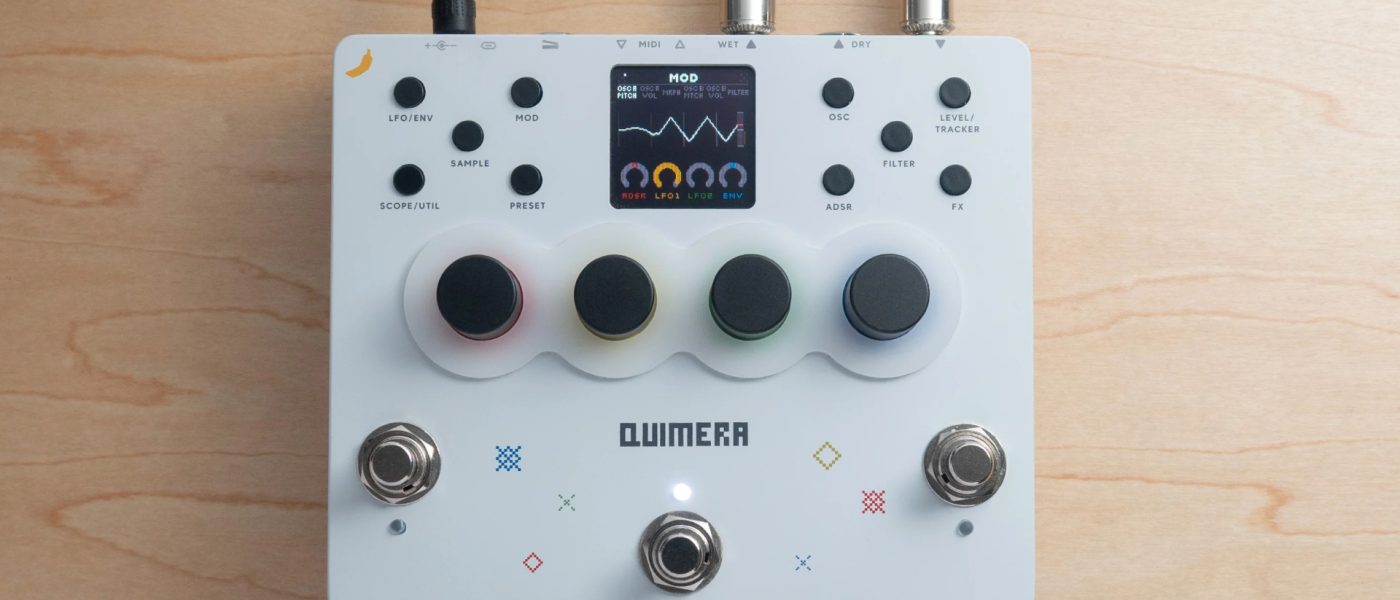
TL;DR: Bananana Effects has released the Quimera, a $399 polyphonic synth pedal that uses resynthesis to transform guitar or MIDI input into hybrid digital tones. It packs a dual-oscillator engine with VA, wavetable, and sample playback, plus a full suite of modulation and 14 effects. Available now, it’s a powerful bridge for guitarists seeking synth textures without extra pickups.
- Resynthesis engine analyzes input audio to preserve harmonic character while generating new synth tones, supporting polyphonic guitar tracking with ~5ms latency and no special pickup required.
- Dual multi-engine oscillators offer virtual analog (20 waves), wavetable (30+ tables, user import), and sample playback (30 onboard, user import/recording) with hard sync and morphing.
- Comprehensive modulation includes 2 LFOs, 3 ADSR envelopes, an envelope follower, and a multimode filter (LP, HP, BP, formant).
- Built-in multi-FX processor allows stacking up to 4 simultaneous effects from drive, modulation, delay, and reverb categories.
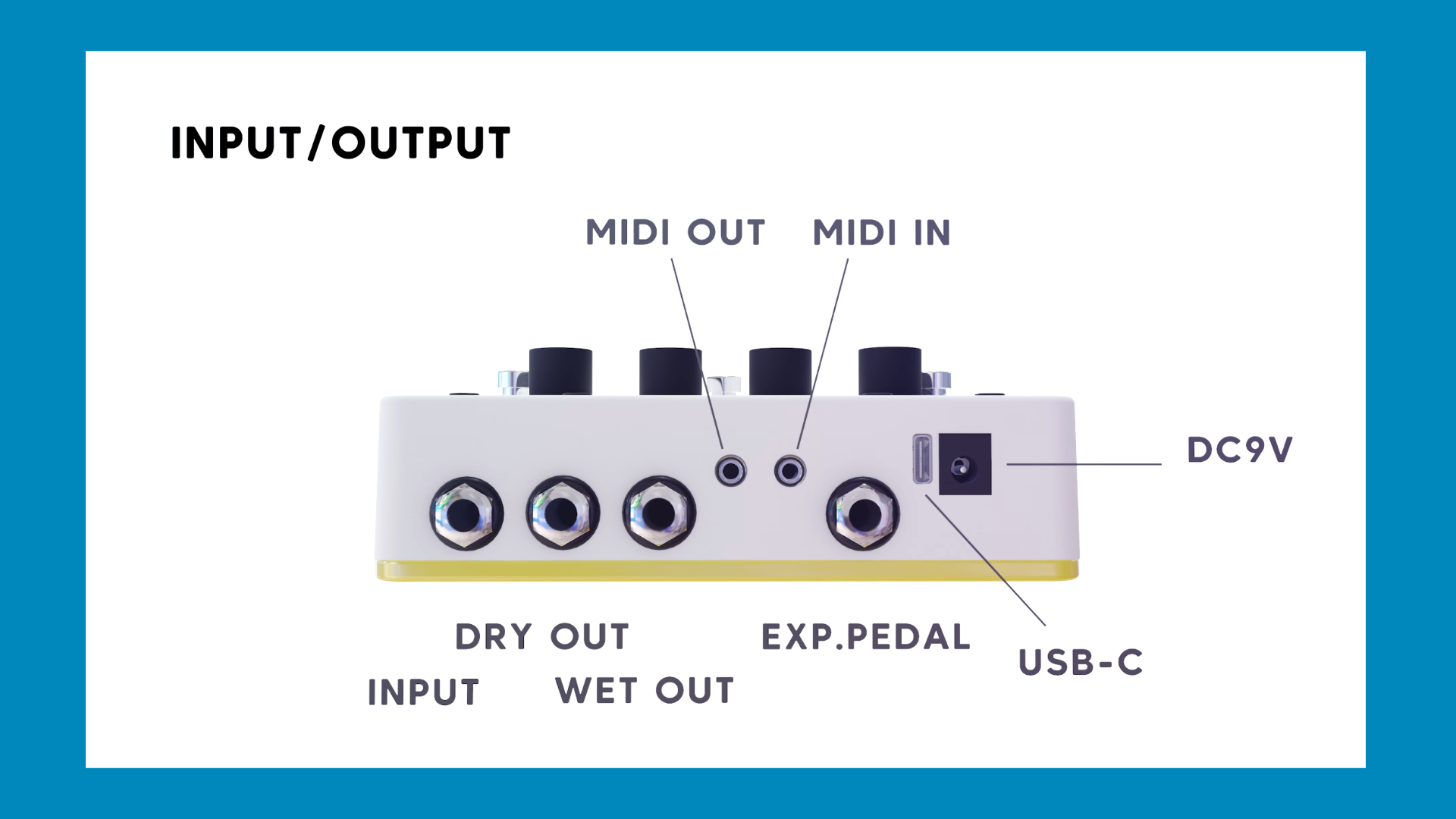
- Connectivity features mono in, dry/wet outs, TRS MIDI I/O, expression pedal input, USB-C for data/updates, and stores 128 presets across three banks.
Reading time: 4 min
Want more synth news before your next coffee break? Join the Noxal newsletter — no spam, just gear worth knowing about.
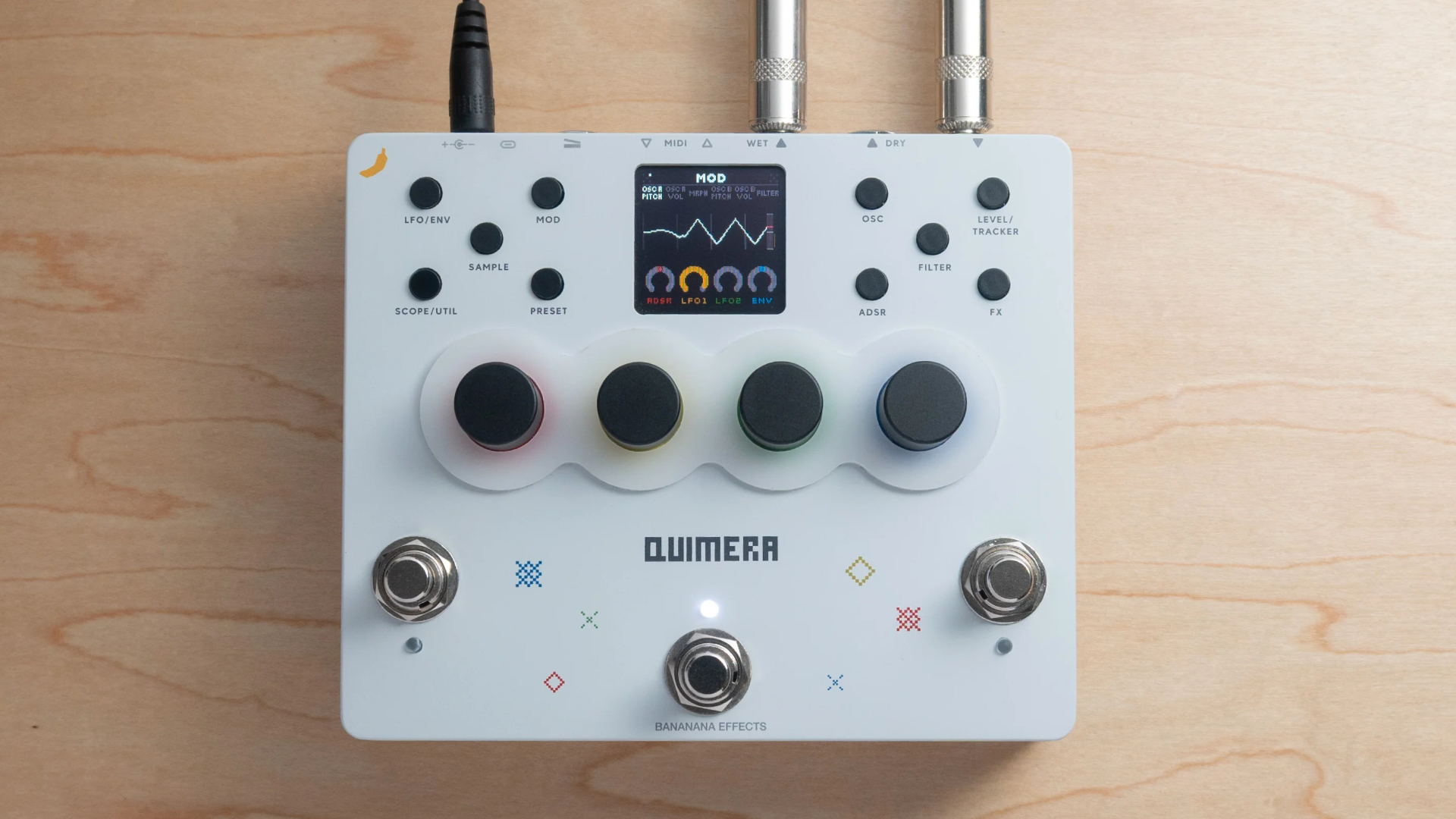
Not Your Grandad’s Synth Pedal

We at Noxal have seen our fair share of “synth pedals.” For years, the category often meant monophonic tracking that felt like negotiating with a stubborn patch cable, or units that demanded you bolt a weird hexaphonic pickup to your beloved axe. The Bananana Effects Quimera, now officially available after its NAMM 2026 tease, feels like a pointed response to that entire history. This isn’t just a pedal with a synth-like filter; it’s a full-blown, multi-oscillator polyphonic synthesizer that happens to live in a stompbox, and its secret weapon is a clever bit of digital alchemy called resynthesis.
The core premise is fascinating. Instead of simply tracking your pitch and triggering an unrelated oscillator, the Quimera’s engine analyzes your input signal—be it a strummed chord or a MIDI note—detects its fundamental frequencies and harmonics, and then uses that data to *inform* the synthesis. Bananana Effects promises this preserves the harmonic character of your instrument while synthesizing something new. In practice, from the demos now circulating, this creates a unique hybrid texture. It doesn’t sound like you’ve awkwardly glued a Juno to your Telecaster; it sounds like your guitar has developed a haunting, digital twin with its own ideas.
This approach also sidesteps the need for any extra hardware. The Quimera promises polyphonic tracking with near-zero latency (around 5ms) directly from your standard guitar output. For a guitarist, that’s the dream: plug in, play, and have the synth respond like an extension of your instrument, not a separate entity lagging behind. It’s a significant step forward in making synth textures genuinely playable on the fretboard.
The Engine Room: Oscillators and Beyond
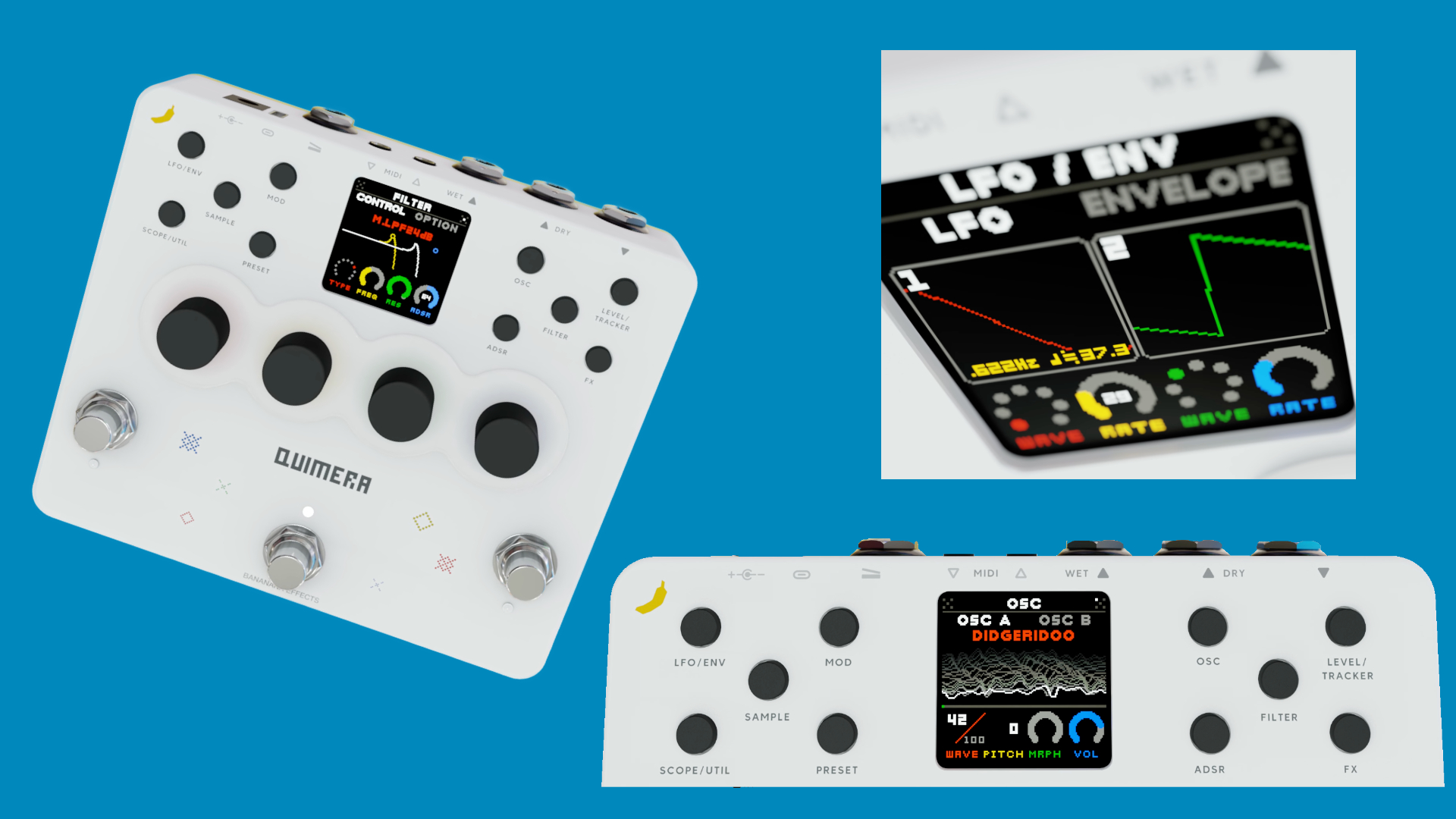
Once you get past the clever input analysis, you find a synth engine that would be respectable in a desktop module. Powered by an ARM Cortex M7, the Quimera is built around two fully independent, multi-engine oscillators. Each can be one of three things: a virtual analog source with 20 classic waveforms, a wavetable oscillator with 30 tables and user import via USB-C, or a sample playback engine. The inclusion of sample playback is a particularly interesting twist for a guitar-focused pedal.
The sample engine isn’t an afterthought. You get 30 samples out of the box, can import your own, and—get this—you can even record up to 2 minutes and 40 seconds directly into the pedal to use as source material. The playback modes go beyond simple triggering, offering forward, reverse, loop, and more experimental options like random and forward-reverse loop. It’s not quite granular, but it’s far more than I expected. This opens doors for guitarists to trigger pads, percussion hits, or vocal snippets, which is territory typically reserved for keyboardists or samplers.
From there, the signal hits a fully-featured multimode filter (lowpass, highpass, bandpass, and a spicy formant mode) with cutoff and resonance. It’s the subtractive synthesis foundation you know, but its behavior is constantly being shaped by that initial resynthesis process, making even a simple sawtooth feel responsive to your playing dynamics.
Modulation, FX, and the Guitarist’s Advantage
What good is a complex oscillator section without the means to twist it into motion? The Quimera is generously equipped here. You have two multi-wave LFOs and three dedicated ADSR envelopes (amp, filter, and a freely assignable mod envelope). Crucially for guitarists, there’s also an envelope follower that derives modulation from your input signal’s dynamics. This means your pick attack can naturally sweep a filter open, or a gentle chord swell can modulate oscillator sync—it’s organic modulation that feels intrinsically linked to your playing, not just a repeating cycle.
Then, as if the synth engine wasn’t enough, Bananana Effects decided to bake in a full multi-FX processor. You can run up to four effects simultaneously, one per slot, choosing from drives (soft/hard clip, bit crush), modulations (chorus, flanger, vibrato), delays, and reverbs. This means your otherworldly resynthesized pad can also be crushed, chorused, delayed, and drowned in reverb without ever leaving the box. For a pedalboard, that’s immense space-saving power.
Control is managed via three footswitches for preset navigation (128 presets total are stored across three banks) and performance. Around the back, an expression pedal input lets you map and control up to four parameters at once with your foot. For the studio tinkerer, full MIDI implementation via TRS jacks or USB-C means every parameter can be automated or controlled from your DAW.
Connections, Context, and Coffee Thoughts
The connectivity tells the story of a device with an identity crisis in the best way. There’s a mono input for your guitar, but also TRS MIDI in and out, allowing you to play the Quimera directly from a keyboard or sequencer. This raises the question I had when first reading the specs: what does it synthesize when fed a pure MIDI note with no audio to resynthesize? It likely defaults to its internal oscillator engines, making it a capable, if not flagship-level, desktop synth in its own right. The dry/wet outputs let you blend your clean signal with the processed chaos, and the USB-C port handles the heavy lifting of updates, sample/wavetable transfers, and MIDI data.
At $399 (plus the inevitable VAT/import dance for many), the Quimera sits in a competitive space. It’s up against other powerful polyphonic pedal-synths that have emerged in recent years. Its unique selling point is undeniably its resynthesis approach, which aims for a more integrated, organic fusion of source and synth rather than a simple trigger. It’s for the guitarist who doesn’t just want to *play synth sounds*, but wants their guitar to *become* a new kind of synthesizer.
From my perspective, with a cooling cup of Ethiopian pour-over at my elbow, the Bananana Effects Quimera is a thrillingly ambitious box. It refuses to be pigeonholed. It’s a guitar pedal, a MIDI synth, a sampler, and a multi-FX unit. That ambition is its greatest strength and its potential weakness—the learning curve looks steep. But for the player willing to dive in, it promises sounds that are genuinely novel, bridging the tactile world of the guitar with the infinite palette of digital synthesis in a way that finally feels seamless.
Frequently Asked Questions
Does the Quimera require a special 13-pin or hexaphonic pickup for guitar?
No, it does not. One of the Quimera’s key features is its ability to perform polyphonic pitch tracking directly from a standard guitar’s output jack, with a claimed latency of around 5ms. You just plug in and play.
Can I use it as a standalone synthesizer with a MIDI keyboard?
Yes. With its TRS MIDI in/out and USB MIDI support, you can control the Quimera’s entire synth engine via a MIDI keyboard or sequencer. When fed only MIDI data, it will generate sound from its internal oscillators (VA, wavetable, or samples) without the resynthesis process, as there’s no external audio to analyze.
What can the USB-C port be used for?
The USB-C port is a multi-tool: it handles firmware updates, allows you to import your own wavetables and audio samples to the pedal, and provides an alternative connection for MIDI data to and from your computer.
Now, if you’ll excuse me, I need to reheat my coffee and contemplate whether my bass guitar would mind being resynthesized into a choir of angry digital bees. For science.