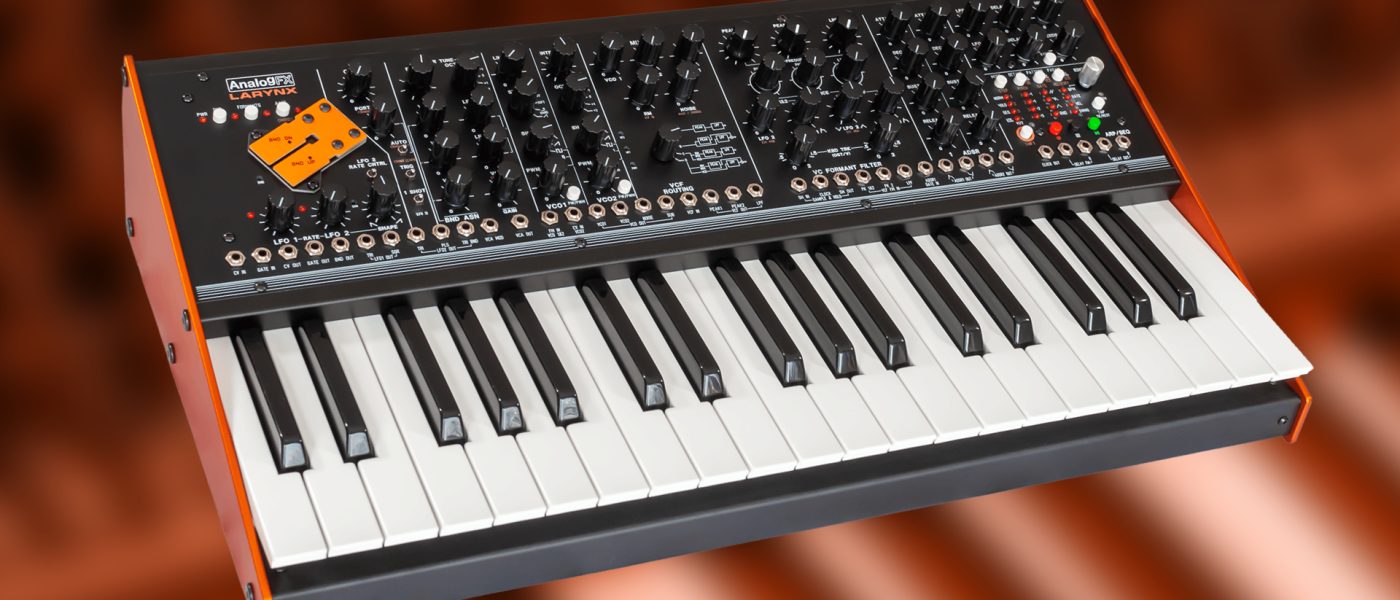
TL;DR: Dutch boutique synth maker AnalogFX has unveiled the Larynx, a keyboard version of their acclaimed SER-2020 formant synthesizer. It packs a 37-key keybed with aftertouch, a trio of CEM3350 filters for vocal-like formant shaping, a stereo delay, and a new arpeggiator/sequencer — all at a pre-order price of €1,124.09 (limited to 50 units).
- 37-key keyboard with aftertouch and Touch’n’Bend performance control replaces the SER-2020 desktop module’s lack of keys.
- Three CEM3350-based VCFs (24dB lowpass plus two resonant bandpass) enable unique formant filtering, including 16 pre-programmed voice formant settings.
- Built-in stereo delay with modulation from LFOs, plus a new arpeggiator/sequencer — both absent from the original SER-2020.
- Pre-order at €1,124.09 (€125 off retail), first batch limited to 50 units, shipping September 2026.
- AnalogFX continues the legacy of the Dutch Synton Syrinx, but this is an original reimagining, not a clone.
Reading time: 4 min
Want more synth news before your next coffee break? Join the Noxal newsletter — no spam, just gear worth knowing about.

What Is the AnalogFX Larynx?

We at Noxal have a soft spot for synthesis that doesn’t sound like every other analog monosynth out there. The AnalogFX Larynx is exactly that: a formant analog synthesizer in a keyboard format, born from the Dutch company’s SER-2020 desktop module. It’s not a clone of the legendary Synton Syrinx — that rare 1983 Dutch synth from the late Felix Visser — but a “reimagining,” which in the right hands means it inherits the vocal-like filter architecture while adding modern convenience.
The Larynx brings the SER-2020’s DNA to a 37-key keybed with aftertouch, ditching pitch and mod wheels for a Touch’n’Bend performance pad that modulates the entire signal path in real time. It’s semi-modular, so you can patch in your own CV madness, but the core voice is pure analog: two CEM3340-based multi-wave VCOs with sync, FM, and PWM, plus a sub-oscillator and noise generator.
I’ll admit, I was skeptical when I first heard “formant” — so many synths claim to do vocal-like sounds and end up sounding like a cat stuck in a filter. But AnalogFX has a track record with the SER-2020, and this keyboard version looks like a genuine upgrade, not a cash grab.
The Formant Engine That Makes It Sing
The heart of the Larynx — and what separates it from the endless parade of Moog clones — is its filter section. You get three CEM3350-based VCFs: a 24dB lowpass filter and two independent resonant bandpass filters. That’s an unusual setup, and it’s where the formant magic happens. By routing your VCOs through this trio, you can sculpt sounds that mimic human vowels or create animated bass textures that shift like speech.
A routing matrix in the mixer section lets you configure how the filters interact, and there’s a dedicated formant mode with 16 pre-programmed voice formant settings. These aren’t just presets you can dial in — they’re starting points for shaping tones that sound alive. The main VCF and both bandpass filters are fully modulatable via a filter modulation matrix, with two keyboard tracking controls giving you precise control over how the filters respond across the keys.
We’ve seen formant synthesis before — the Korg MS-20’s peak filter could get close, and the Syrinx itself is legendary — but the Larynx makes it accessible in a modern, playable package. It’s not a gimmick; it’s a genuinely different way to think about analog sound.
Key Specs and Extras
The Larynx isn’t just a rebadged SER-2020 with keys. AnalogFX has added several extras that make it worth the upgrade even if you own the desktop version. First, there’s a stereo delay with control over time, feedback, mix, and modulation from LFO1 and LFO2 — this can do classic echoes or modulated chorus effects, with CV inputs for external control.
On the bottom right of the panel, you’ll find a new arpeggiator and sequencer. AnalogFX is keeping details close to the chest — no word on step count or pattern features yet — but it’s a welcome addition for a keyboard synth that aims to be a performance instrument. Modulation comes from two ADSR envelopes, two LFOs, a sample & hold generator, routable aftertouch, and MPE support. Connectivity includes line output, headphone jack, expression/hold pedal, and MIDI/USB MIDI.
Auto-glide is also onboard, because nothing says “formant synth” like sloppy portamento into a vocal filter. I’d love to hear a demo — there isn’t one yet — but the SER-2020’s sound is well documented, and I expect the Larynx to deliver the same vocal richness with added stereo depth.
Market Context and Who Is It For
In a market flooded with semi-modular analog synths that all seem to be variations on the same subtractive theme — looking at you, Behringer and Moog — the Larynx stands out as something genuinely different. It’s specialized, yes, but that’s its strength. If you’re tired of the same old VCO-VCF-VCA chain and want to explore formant synthesis without hunting down a vintage Syrinx, this is your ticket.
At €1,124.09 pre-order (€1,249 retail), it’s not cheap, but it’s competitive with other boutique analog synths in this space. The limited first batch of 50 units adds a collectible urgency, though I suspect AnalogFX will produce more if demand warrants. The Larynx is for the adventurous synth fan — someone who values character over convenience, who wants to make their basslines talk, and who isn’t afraid of a few patch cables.
Shipping in September 2026, the Larynx arrives just in time for Superbooth 26 (May 7–9), where I’m sure AnalogFX will have a working unit. We at Noxal will be there, coffee in hand, waiting to hear if the formant filter lives up to the hype.
Frequently Asked Questions
Is the Larynx a clone of the Synton Syrinx?
No. AnalogFX describes it as an “analog reimagining” of the Syrinx, not a clone. It uses the same CEM3350-based formant filter architecture but adds modern features like stereo delay, arpeggiator, sequencer, and MPE support.
How many keys does it have?
37 keys with aftertouch. No pitch or mod wheels — instead, it uses a Touch’n’Bend performance pad for real-time modulation across the signal path.
Can I use it without a computer?
Yes. It’s a standalone keyboard synth with MIDI and USB MIDI support, plus CV patch points for semi-modular patching. The built-in arpeggiator and sequencer make it self-contained for live performance.
I’m already imagining the formant filter making my morning coffee sound like a baritone — but let’s stick to caffeine, not vocal synthesis, for now. Pre-order at your own risk, but bring a spare patch cable.