TL;DR: The long-awaited Drift DJ Industries Zero, a portable, battery-powered two-deck DJ device, is finally available for pre-order. After a year of anticipation, the price has nearly doubled from its initial $499 estimate to a final MSRP of $899. Shipping is slated to begin in the summer of 2026.
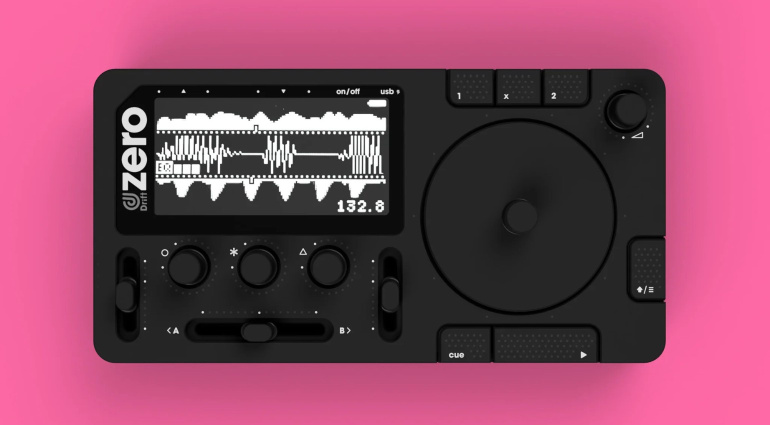
- The Zero is a standalone, battery-powered two-channel DJ device with a single jog wheel, timestretch, beat grids, effects, and internal recording.
- Its price has increased significantly from the $499 quoted in 2025 to a final $899 for the pre-order.
- Unique features include configurable I/O for CV, clock, and audio, allowing integration with modular synth and vintage gear.
- It uses a proprietary library and playlist system for track management, eschewing traditional DJ software.
- Manufacturing is emphasized as local to Chicago, the home of house music and the company’s base.
Reading time: 4 min
Want more synth news before your next coffee break? Join the Noxal newsletter — no spam, just gear worth knowing about.

The Long Road to Zero
We at Noxal have a soft spot for gear that feels like a passion project, the kind of device that emerges from a decade of tinkering in a workshop fueled by equal parts caffeine and obsession. The Drift DJ Industries Zero fits that bill perfectly. First whispered about in mid-2024, this Chicago-born portable DJ device promised a unique take on two-deck mixing. A year ago, the news was that it was finally heading into production with a tantalizing price tag of $499. Then, as the source text so dryly notes, “life happened.” The radio silence was broken not with a shipping notice, but with a pre-order announcement and a new price that made my espresso taste a little more bitter: $899.
The narrative here is a familiar one in our niche: a small, independent manufacturer (in this case, founder Jared Wheeler’s Drift DJ Industries) pours years of development into a dream machine. They float an initial, optimistic price point to gauge interest. Then, the harsh realities of component costs, manufacturing, and perhaps a changed economic landscape between 2025 and 2026 come crashing down. The result is a product that has evolved from a “must-have curiosity” into a “serious investment.” It’s a journey that inspires sympathy for the maker but gives any potential buyer serious pause.
More Than a DJ Box: A Hybrid Heart
So, what exactly is the Zero? On its surface, it’s a self-contained, battery-powered two-channel DJ mixer/player. It has a single, central jog wheel for controlling two decks, tempo-stretched playback (so your track doesn’t sound like a chipmunk when you speed it up), beat grids for sync, a three-band EQ per channel, and effects like delay, reverb, and flange. There’s also a looper and, charmingly, the ability to record mixes internally—a nod to the mixtape era. This is all managed through a proprietary library system, letting you import and organize tracks with metadata and cue points directly on the device, free from a laptop.
This is where it gets interesting for us hardware synth folk. The Zero isn’t just trying to be a tiny CDJ. Its secret sauce is its configurable inputs and outputs. These aren’t just for audio; they can route CV, clock, and sync signals. This transforms it from a closed DJ system into a potential hub for a hybrid or fully hardware live set. Imagine clocking your entire modular rack from the Zero’s grid, or using a MIDI/DIN sync adapter to drive a vintage drum machine like a TR-606 or a bassline generator like the iconic TB-303. Suddenly, this isn’t just for blending tracks; it’s for integrating them into a live electronic performance where the DJ device becomes the master clock and audio brain.
Specs, Context, and The Sticker Shock
Let’s talk brass tacks. The pre-order price is $899, with shipping projected for Summer 2026. That is a substantial leap from the $499 hoped-for price of April 2025. The company cites the changed world, and they’re not wrong. Global supply chains, component shortages, and inflation have hit every corner of our hobby. However, this price shift places the Zero in a different competitive bracket. For under a grand, you’re entering the territory of robust, prosumer DJ controllers that often include software licenses, or even the lower end of the standalone “all-in-one” market from established players like Pioneer DJ or Denon.
The Zero’s value proposition, therefore, hinges entirely on its unique features: its portability (truly battery-powered for gigs anywhere), its Chicago-based manufacturing story, and most critically, its hybrid CV/clock connectivity. For the traditional DJ, the price may be a hard sell for a single-jog-wheel device from a new company. For the hardware performer, the modular tinkerer, or the DJ who wants to seamlessly weave a Volca or a Eurorack case into their set, those extra ports might justify the premium. It’s a niche within a niche, but as we know, that’s often where the most exciting gear lives.
Who Is This For, Really?
After poring over the details, I see three clear archetypes for the Zero’s ideal user. First, the Hardware Purist DJ: someone who loves the idea of a laptop-free, focused mixing experience but wants more flexibility and a better “story” than a standard all-in-one unit. The local manufacturing and house music heritage are potent branding for this crowd.
Second, the Live Electronic Performer: This is the user who might currently use an iPad or a laptop running Ableton to trigger backing tracks and clock hardware. The Zero offers a dedicated, performance-optimized device for that role, with the bonus of being a fully functional DJ mixer. It bridges the gap between a DJ set and a live PA.
Finally, the Studio Experimenter: As one commenter on the source article astutely noted, the internal recording and flexible I/O make the Zero look like a fascinating tool for capturing modular synth jams or acting as a simple, creative hub for hardware sequencing. It’s an expensive niche recorder, but its multi-function nature could be appealing. For everyone else—the beginner DJ or the club-standard professional—the Zero’s unique appeal may be overshadowed by its price and unconventional design.
Frequently Asked Questions
Why did the price of the Drift DJ Industries Zero increase so much?
The price increased from an estimated $499 in April 2025 to a final MSRP of $899 for the pre-order launch. While not explicitly detailed by the manufacturer, such increases are typically due to rising costs of components, manufacturing, and logistics in the time between initial prototyping and final production, compounded by broader economic inflation.
Can I use the Zero with my modular synth or vintage gear?
Yes, this is one of its key features. The Zero has configurable inputs and outputs that can transmit and receive CV (Control Voltage) and clock signals. This means you can use it to clock your Eurorack system or, with the appropriate adapter, sync to vintage gear that uses DIN sync (like many Roland instruments from the 80s).
Do I need a computer to use the Drift DJ Industries Zero?
You need a computer to initially import and organize your music library onto the device via its proprietary software. However, for actual performance and mixing, the Zero is designed to be completely standalone. You do not need a laptop connected to DJ with it, which is a core part of its portable, focused design philosophy.
I’ll be waiting for the first hands-on reviews with a freshly brewed pot of coffee, wondering if this is the genius bridge between my mixer and my modular, or just a very expensive, very dedicated mixtape machine.