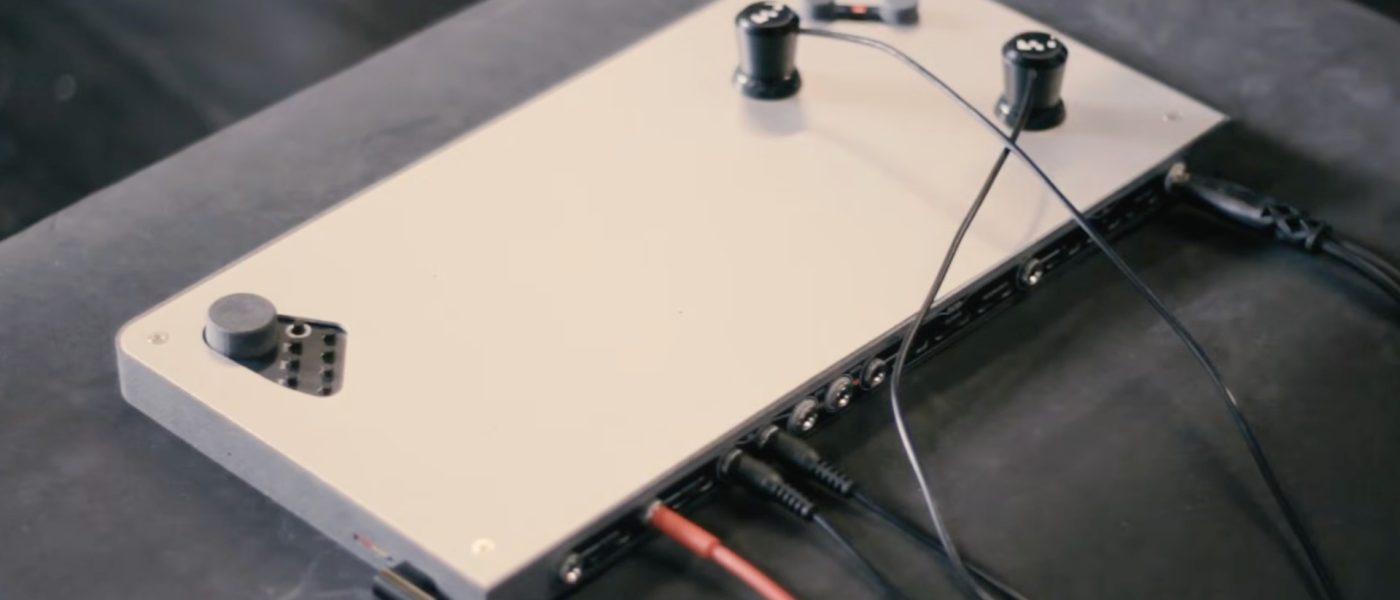
TL;DR: KOMA Elektronik and Passpartout Duo have unveiled the Haloplane, a sister instrument to the Chromaplane. It uses the same electromagnetic field and pickup coil interface but ditches the analog oscillators for a digital core housing a micro-loop sampler and a wavetable synthesizer. It will debut at Superbooth 2026, with pricing and final specs still to be announced.
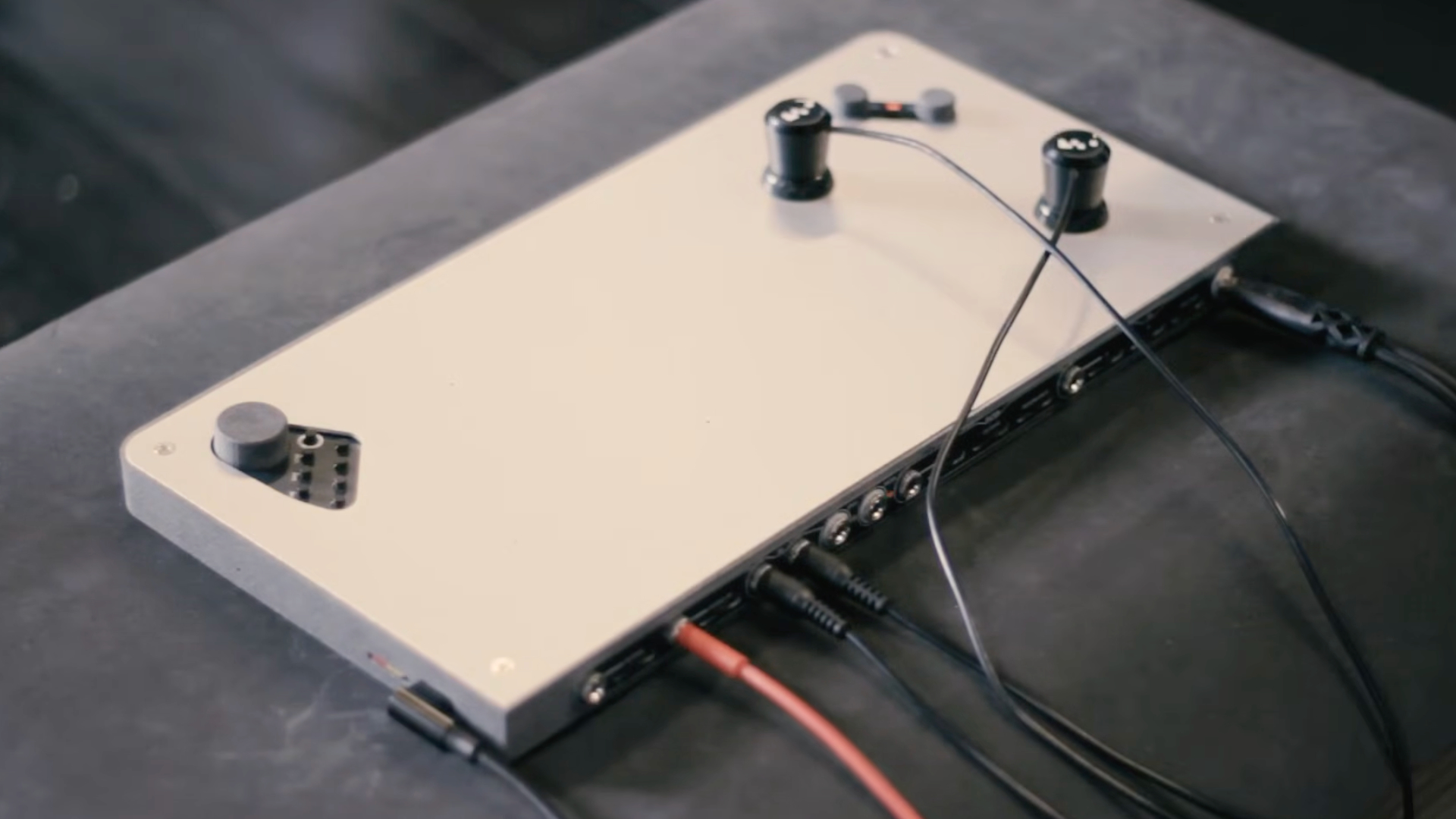
- Same unique interface as the Chromaplane: seven electromagnetic fields played with physical pickup coils.
- New digital sound engine featuring a micro-loop sampler and a wavetable synthesizer.
- Sound design is handled via a dedicated cross-platform wireless app, not directly on the hardware.
- Promises greater sonic versatility and expressivity than its analog sibling.
- Will be showcased at Superbooth 2026 and Sonar festival; price and availability are TBA.
Reading time: 4 min
Want more synth news before your next coffee break? Join the Noxal newsletter — no spam, just gear worth knowing about.
What Is The Haloplane?

In the world of hardware synths, where “innovation” often means a new filter model or another analog monosynth, a truly novel interface is a rare and precious thing. KOMA Elektronik, with the Passpartout Duo, gave us one such gem in 2024 with the Chromaplane: a polyphonic electromagnetic synth played by moving physical pickup coils over a surface. It was weird, wonderful, and undeniably unique. Now, ahead of Superbooth 2026, they’re not iterating on that concept but creating a sibling for it. Enter the Haloplane, described not as an evolution, but as a sister product with a “different sonic direction.”
The core proposition is simple yet brilliant: take the captivating, multidimensional playability of the Chromaplane’s electromagnetic field and coil interface, but swap out the analog sound engine for a digital one. Where the Chromaplane offered analog square-wave oscillators and a filter, the Haloplane houses a dual digital core comprising a micro-loop sampler and a wavetable synthesizer. This isn’t a replacement; it’s an alternative. It’s for the sound designer who was mesmerized by the Chromaplane’s playability but wished its sonic palette was as expansive as its interface.
This move is a fascinating case study in product development. Instead of forcing more features into the original chassis, KOMA and Passpartout Duo are letting the interface be the constant. The experience and ideas generated from the first instrument have directly informed this second, parallel path. It suggests they believe the true innovation isn’t just the electromagnetic tech, but the new performance language it enables, which can be applied to vastly different sound-generation methods.
The Interface: A Familiar Touch of Magic
Let’s be clear: the Haloplane’s raison d’être is its interface. It inherits the Chromaplane’s seven highly customizable electromagnetic fields and the same pair of handheld pickup coils. This means you don’t play keys or pads; you conduct an invisible orchestra of magnetic force. Swiping, swinging, tilting, and hovering the coils over the surface manipulates the sound in a continuous, fluid, and deeply expressive manner. It’s an interface that demands physical engagement and rewards nuance, pulling you away from the screen and into a more tactile relationship with sound.
This physicality is the Haloplane’s greatest strength and its point of continuity. The promise is that the “even higher degree of expressivity and control” comes from applying this already-proven multidimensional control system to more complex sound sources. Imagine granularly scrubbing through a micro-loop by moving a coil laterally, or morphing wavetable positions with a tilt. The potential for intricate, performative sound design is immense, and it all stems from this singular, magical way of interacting with an instrument.
However, there’s a significant twist in the workflow. While you *play* the sounds expressively on the hardware, you apparently do not *design* them there. KOMA and Passpartout Duo have developed a cross-platform app that connects wirelessly to the Haloplane to function as its engine editor. This separation of duties—design in app, perform on hardware—is a modern approach. It keeps the hardware interface clean and focused on playability but adds a layer of computer dependency that purists might balk at. The success of this model hinges entirely on the depth and intuitiveness of that app.
The Digital Heart: Samples and Wavetables
This is where the Haloplane carves its own identity. By replacing analog oscillators with a digital duo of a micro-loop sampler and a wavetable synth, it directly addresses a common critique of the Chromaplane: that its sound, while charmingly lo-fi, was somewhat limited. The Haloplane is betting on versatility. A micro-loop sampler suggests granular-esque manipulation of tiny audio fragments, perfect for glitchy textures, rhythmic stutters, and abstract atmospheres. The wavetable engine opens the door to evolving pads, sharp leads, and complex timbres that analog square waves simply cannot produce.
The big, unanswered questions swirl around these engines. Can you sample directly into the Haloplane, or is it playback-only? How deep is the synthesis architecture for each engine—are we talking basic playback or full-featured sound design with modulation, filters, and effects? The provided details are tantalizingly vague, describing “full sound-design functionality” without specifics. This strategic ambiguity is classic pre-Superbooth fare, saving the juicy details for the live reveal.
There’s also mention of using the Haloplane as a USB audio controller, which is a clever addition. It implies the electromagnetic control data can be mapped to parameters in a DAW or other software, effectively turning the unique interface into a general-purpose MIDI controller. This dual functionality—as a standalone instrument and a control surface—adds practical value for the modern, hybrid studio, making the Haloplane more than just a fascinating oddity.
Context and Questions for Superbooth
The Haloplane arrives at an interesting time. KOMA Elektronik has also just reintroduced its mighty Komplex Sequencer, signaling a period of renewed activity and refinement. The Haloplane feels like part of this refreshed vision: exploring the outer edges of interface design while grounding it in powerful, modern sound generation. Its debut at Superbooth 2026 is perfectly staged; there’s no better venue to let artists and producers get their hands on the coils and experience its peculiar magic firsthand.
Who is this for? It’s for the performer and sound designer who values unique expression over immediate familiarity. It’s for the Chromaplane admirer who wanted more sonic firepower. It’s for the studio experimentalist looking for a controller that is also a complete, weird instrument. It is decidedly not for the analog purist or the musician seeking a straightforward, immediate synth voice. The Haloplane demands engagement with its unique physicality and its accompanying digital workflow.
As we count down to May 2026, the key questions remain: Price? Availability? The true depth of the sound engines? The quality of the essential editing app? The early prototype performance on Passpartout Duo’s YouTube channel sounds promising—digital, crisp, and full of movement—but the proof will be in the hands-on demo. One thing is certain: in a market saturated with variations on a theme, the Haloplane, like its sister before it, is aiming to be a theme of its own.
Frequently Asked Questions
Can I design sounds directly on the Haloplane hardware?
No, according to the initial information. Sound design for the micro-loop sampler and wavetable synthesizer engines is handled through a dedicated cross-platform app that connects wirelessly to the Haloplane. The hardware itself is focused on the expressive performance interface using the pickup coils.
What’s the main difference between the Haloplane and the Chromaplane?
The core difference is the sound engine. The Chromaplane is an analog synthesizer with square-wave oscillators and a filter. The Haloplane is a digital instrument featuring a micro-loop sampler and a wavetable synthesizer. They share the identical electromagnetic field and pickup coil interface for playing.
When and where can I try the Haloplane?
KOMA Elektronik and Passpartout Duo plan to showcase the Haloplane at Superbooth 2026 in Berlin (May 7-9, 2026) and at the Sonar festival. General availability, pricing, and detailed specifications are still to be announced following these events.
I’ll be calibrating my expectations—and my coffee grinder—for a deep dive into those electromagnetic fields come May 2026. Some interfaces are just worth the wait.