.nox-summary { background-color: #f5f5f5; padding: 1em; border-left: 4px solid #e8a020; }
.nox-takeaways { background-color: #f0f0f0; padding: 1em 1em 1em 2.5em; }
.nox-reading-time { font-style: italic; color: #666; }
.nox-cta { background-color: #1a1a1a; color: #fff; padding: 1em; text-align: center; border-radius: 4px; }
.nox-toc { background-color: #f9f9f9; padding: 1em; border: 1px solid #ddd; margin-bottom: 2em; }
.nox-toc h2 { margin-top: 0; }
.nox-faq { background-color: #f9f9f9; padding: 1em; border-top: 3px solid #333; margin-top: 2em; }
.nox-faq h3 { color: #333; }
.nox-closing { font-style: italic; text-align: center; padding: 1em; color: #555; }
TL;DR: Developer DUB-Russell has dropped WTF!, a free, third-party firmware that transforms any Noise Engineering Versio module into a stereo granular processor and beat-repeat effect. It offers three distinct modes for mangling audio, full CV control, and leverages the Versio platform’s unique flashability. This isn’t an update; it’s a completely new instrument for your existing hardware.
- WTF! is a free, third-party firmware for the Noise Engineering Versio Eurorack module platform.
- It turns the module into a real-time stereo granular & beat-repeat FX unit with a 90-second buffer.
- Features three core modes: Granular, Beat-Repeat, and a softer “Cloud” granular texture.
- Offers full CV control over all new parameters and uses all the module’s existing knobs and switches.
- Demonstrates the powerful, open-ended potential of Noise Engineering’s flashable Versio platform.
Reading time: 4 min
Want more synth news before your next coffee break? Join the Noxal newsletter — no spam, just gear worth knowing about.
WTF Is WTF!?
Let’s cut through the noise. The Noise Engineering Versio module you bought as a reverb or distortion unit just got a secret identity. Developer DUB-Russell (known for the intriguing “THE SEMI MODULAR BEAT-MACHINE” software) has released WTF!, an alternative firmware that completely reprograms your Versio. This isn’t a minor tweak or a preset pack; it’s a brain transplant. With a few clicks using Noise Engineering’s Librarian app, your module sheds its old skin and emerges as a dedicated, real-time stereo granular synthesizer and beat-repeat effect. The best part? The surgery is free.
The concept is deliciously simple in execution, if complex under the hood. WTF! continuously records incoming audio into a generous internal buffer—about 90 seconds worth. It then chops this buffer into tiny fragments called “grains” and reassembles them on the fly based on your control. What was a coherent melody or rhythm going in can become a stuttering, time-stretched, reversed, or probabilistically glitched cloud of sound coming out. It takes the core concept of granular processing, a technique often associated with sprawling desktop software, and crams it into a hands-on, CV-able Eurorack module. I’ve spent mornings with far less rewarding and more expensive pursuits.
Modes of Mayhem
WTF! isn’t a one-trick glitch pony. It provides three distinct operational modes, selected via the Versio’s toggle switches, each offering a different flavor of audio decomposition. The central “Granular” mode is your classic, bread-and-butter granular processor. It splits audio into grains and replays them from shifting positions in the buffer, giving you control over the size, spacing, and trajectory of these sonic particles. It’s the mode for creating everything from subtle texture to complete melodic disintegration.
Then there’s the “Repeat” mode, which shifts focus squarely to beat-repeat-style effects. Think of it as a live, performable stutter and buffer hold effect. It’s designed for rhythmic mangling, perfect for tripping up a drum loop or creating rolling builds and breaks. The third mode, “Cloud,” is another granular variant but with a stated goal of producing a “softer, cloud-like texture.” This is your go-to for creating ambient pads from a single note or smearing percussive hits into ethereal washes. It’s the difference between a digital glitch and an analog dream.
Further refining the texture, you get three grain playback directions: forward, reverse, and ping-pong. The combination of a primary mode and a playback direction opens up a vast field of possible outcomes. A beat-repeat in reverse ping-pong? A granular cloud in forward play? The permutations mean that even after your third coffee, you’ll still be finding new corners of this firmware to explore.
Hands on the Knobs
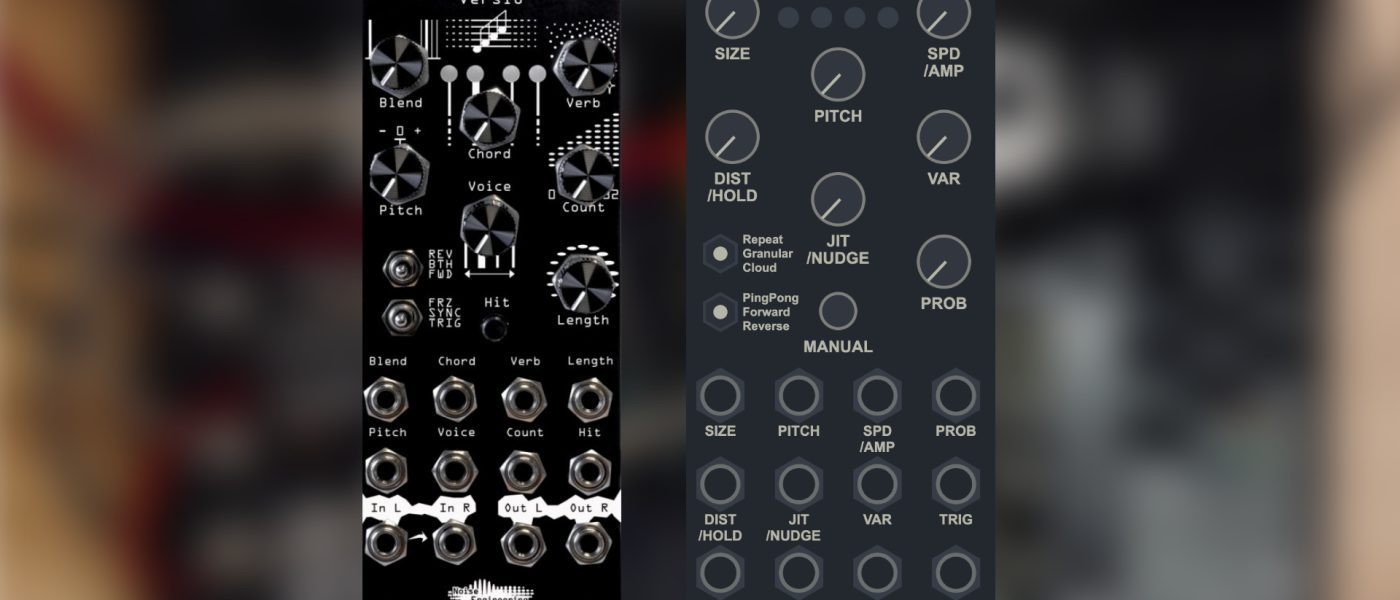
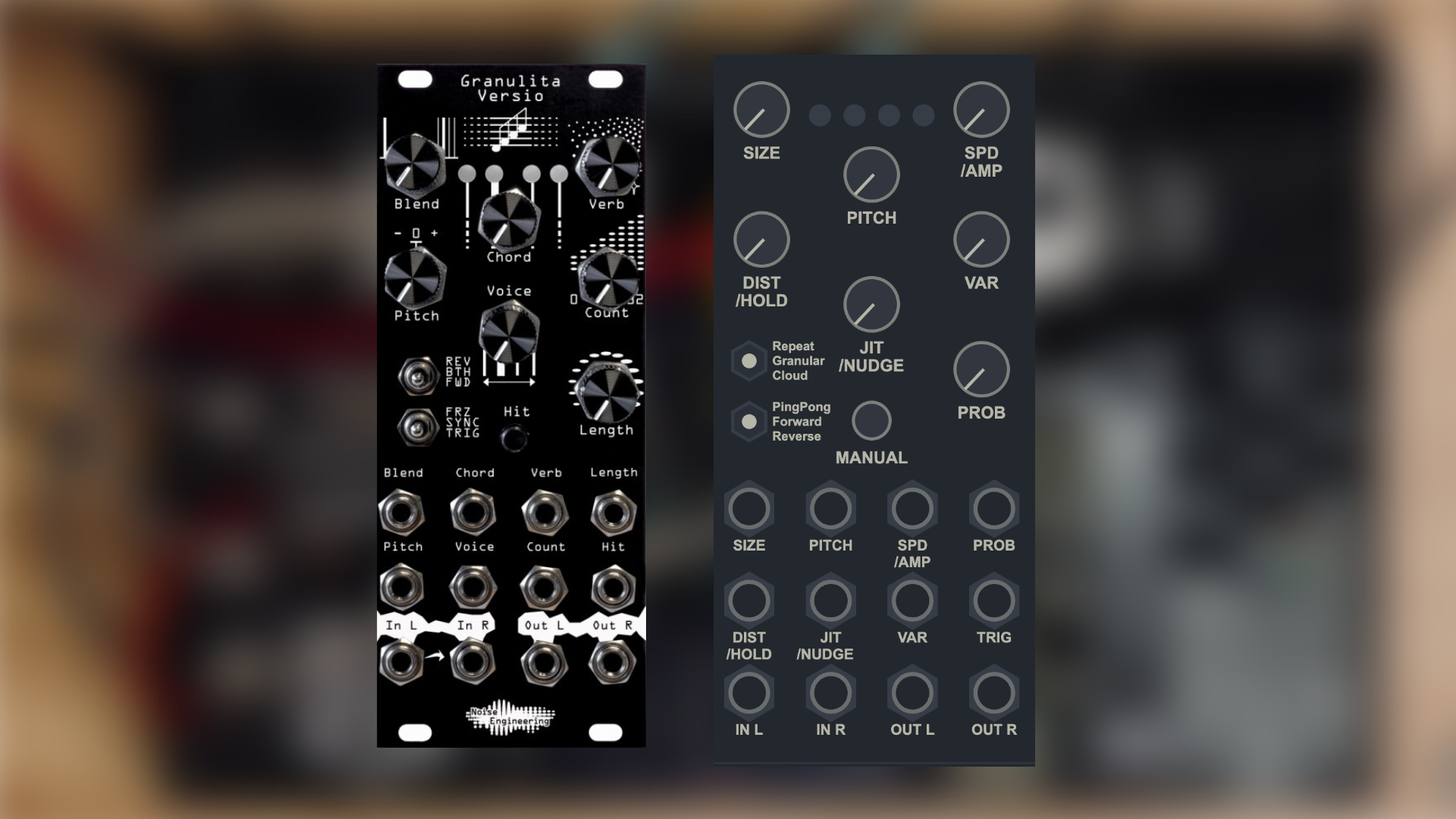
A clever firmware is useless if the interface is a maze of hidden menus. Thankfully, WTF! makes full, intelligent use of the Versio’s hardware. All the knobs, switches, and CV inputs are remapped to the new parameters, meaning you don’t lose that essential tactile connection. Depending on your selected mode, the knobs control a deep set of parameters. For the granular engines, you have grain Size, Distance (between grains), Speed, Jitter, Variation (randomization), and Probability. In Repeat mode, you get controls for Hold Time and Nudge, essential for timing your stutters to the groove.
The real magic sauce for modular users is the inclusion of full CV control over all these parameters. Every knob function can be modulated via the Versio’s CV inputs. Want an LFO to modulate grain size for a rhythmic texture? Or an envelope to trigger probability bursts? This firmware invites your entire system to play along. It transforms the Versio from a static effect into a dynamic, patchable sound-design node. It respects the modular ethos while delivering a shockingly powerful digital process.
Why This Matters (Beyond Being Free)
WTF! is a stellar effect in its own right, but its existence is a louder statement about the Versio platform and the future of hardware. Noise Engineering didn’t just make a module; they made a flashable platform with an open invitation. By providing the tools, they’ve enabled a ecosystem where the community—like DUB-Russell—can expand the functionality of the hardware indefinitely. Your Versio is no longer just the effect you bought; it’s a potential vessel for any firmware the community dreams up. This blurs the line between hardware and software in the most empowering way.
For the user, this is a paradigm shift. It future-proofs your investment and encourages experimentation. Trying WTF! carries virtually no risk—if it’s not your cup of tea, you can flash back to the stock firmware or try another alternative in minutes. It turns gear acquisition into a software download. In a market obsessed with new, shiny black boxes, the Versio platform argues for depth over breadth, for upgrading the brain instead of the body. WTF! is a potent proof of concept: the most exciting new module in your rack this month might be the one that’s already there, just waiting for a new idea.
Frequently Asked Questions
Is the WTF! firmware really free?
Yes, completely. DUB-Russell has released it as a free download. You only need a Noise Engineering Versio module and the free Noise Engineering Librarian desktop application to install it.
Will installing WTF! erase my original Versio firmware?
Flashing the WTF! firmware will overwrite the current firmware on the module. However, the process is non-destructive and reversible. You can use the Noise Engineering Librarian to re-flash the original factory firmware (or any other compatible firmware) at any time.
What Versio modules are compatible with WTF!?
WTF! is designed for the Noise Engineering Versio platform. This includes all Versio-series modules (like the Desmodus Versio, Melotus Versio, etc.), as they all share the same core hardware. The firmware will work on any of them, transforming its function regardless of its original branding.
Now, if you’ll excuse me, I need to pour a fresh cup and see if I can make my morning podcast sound like it’s being broadcast from a collapsing star. For science.