
TL;DR: Akai has unveiled the MPC Sample, a new standalone sampler and sequencer designed to strip away the complexity of modern MPCs. It promises a focused, immediate beatmaking experience centered on sampling and sequencing, harking back to the workflow of classic hardware. This is not a flagship but a deliberate step back towards simplicity.
- A new, standalone MPC focused purely on sampling and sequencing, omitting the plugin instruments and deep DAW integration of recent models.
- Features a 7-inch multi-touch display, 16 velocity-sensitive pads, and dedicated hardware controls for core functions like sampling, trimming, and sequencing.
- Designed for immediacy, aiming to reduce menu-diving and get users creating beats faster with a more tactile, classic MPC workflow.
- Likely positioned as a more affordable entry point into the standalone MPC ecosystem compared to the MPC One or Live II.
- Represents a strategic shift for Akai, acknowledging a market desire for simpler, more focused creative tools alongside their feature-packed flagships.
Reading time: 4 min
Want more synth news before your next coffee break? Join the Noxal newsletter — no spam, just gear worth knowing about.
The MPC Sample Unpacked
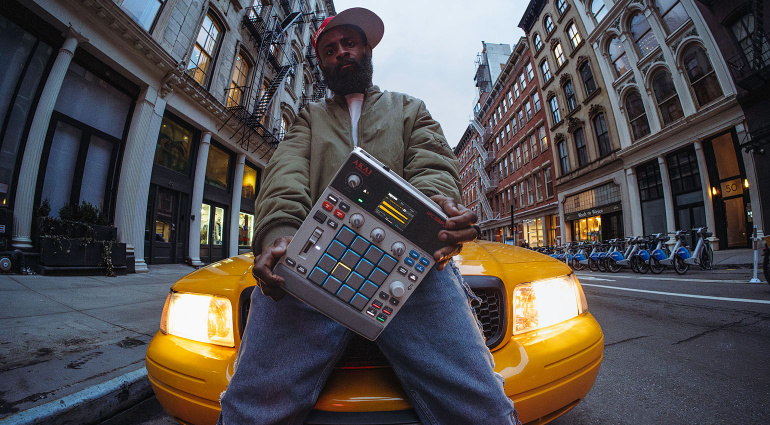
Let’s cut through the noise. The Akai MPC Sample is not another incremental update to the MPC One or Live II. It is, from what we can glean, a deliberate paring back. The core proposition is right there in the name: Sample. This is a standalone unit built around the foundational MPC pillars of sampling audio, chopping it, and sequencing it into beats, all without a computer. The included image hints at a familiar but refined form factor: a central multi-touch screen flanked by 16 classic MPC pads and, crucially, a set of dedicated hardware buttons and knobs for immediate control.
Gone, it seems, are the bundled virtual instruments like the Hype synth or Electric Piano, and likely scaled back is the deep MPC 2.0/3.0 DAW-style software integration. This machine appears to ask a simple question: what if an MPC just did the sampling and sequencing parts exceptionally well, without trying to be a full production suite? The answer, Akai hopes, is a faster, more intuitive, and arguably more fun creative tool. It’s a hardware sketchpad for ideas, prioritizing tactile feedback over sub-menus.
This isn’t merely nostalgia bait. It’s a recognition that for many, the joy of hardware often lies in limitation and focus. By removing options, you remove a layer of decision fatigue. When your machine is called “Sample,” your mission is clear. No wondering if you should design a wavetable instead; your job is to find a sound, capture it, and make it groove. In an era of infinite options, that kind of creative directive can be liberating.
Back-to-Basics Philosophy

The philosophy here is as important as the specs. Modern MPCs are powerful, but with that power comes complexity. Booting up an MPC One can feel like launching a DAW on a small screen, with plugin instruments, mixer views, and automation lanes. The MPC Sample seems to be Akai’s response to a growing murmur in the community: a desire for the immediacy of the older models like the MPC 1000 or 2500, but with the modern conveniences of a responsive touchscreen and solid-state reliability.
This “back to the roots” approach is about workflow. Imagine a dedicated Sample button that instantly arms recording from your input. Imagine Trim, Edit, and Sequence modes accessible via one-press hardware buttons, with parameters controlled by physical knobs. This is the promised land of “sampling and sequencing on the fly” that the source text mentions. It’s about reducing the layers between your idea and the beat. The goal isn’t to build a final, polished track entirely in the box (though you could), but to capture the raw energy of creation without friction.
We at Noxal see this as a savvy, almost rebellious move. In a market racing to add features, Akai is subtracting them. They are betting that a significant segment of producers, beatmakers, and performers value flow state over feature count. It’s a bet that says the heart of the MPC legend wasn’t its later ability to run VSTs, but its original, groundbreaking ability to turn found sound into rhythm with unparalleled feel and speed.
Spec Sheet and Studio Fit
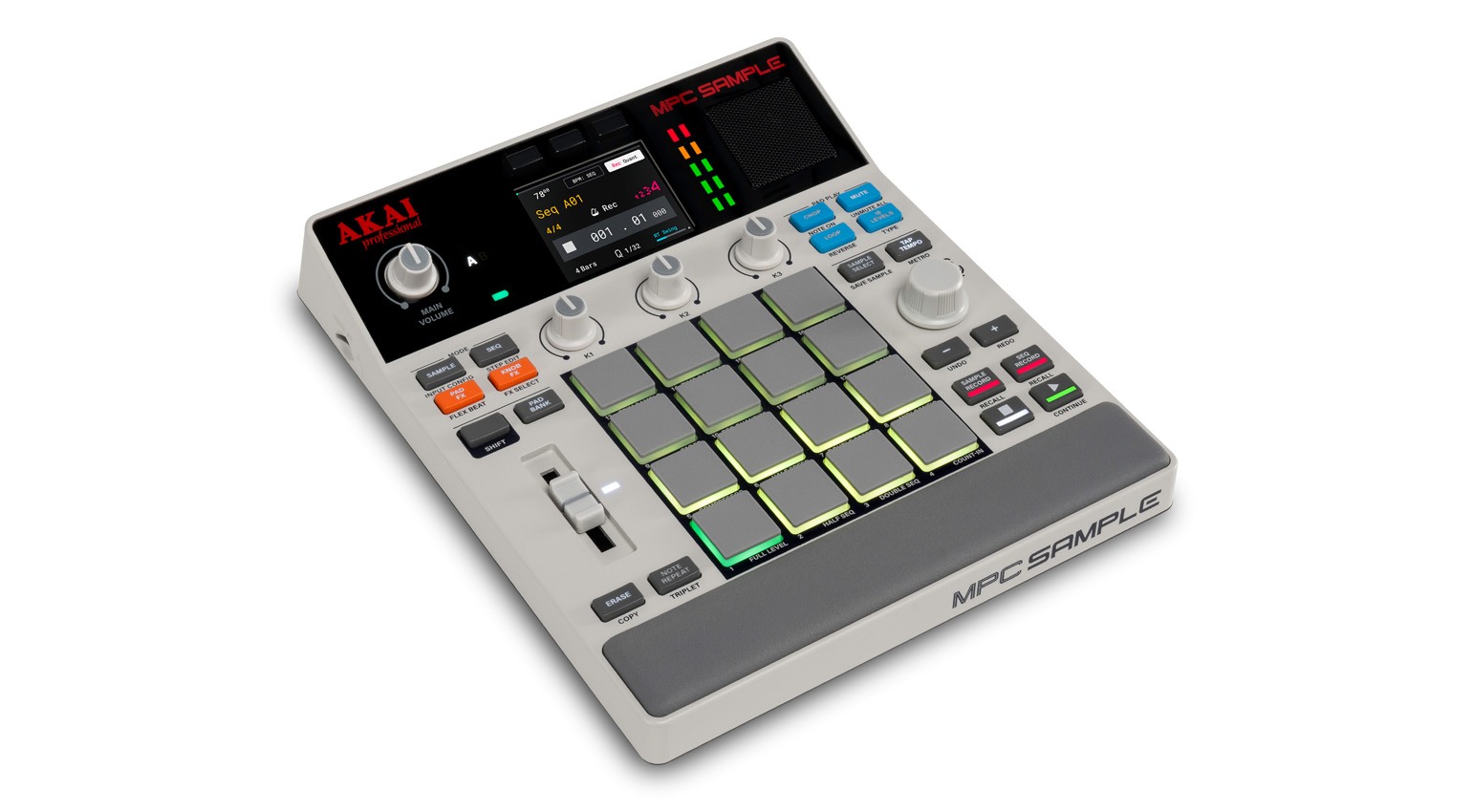
While full official specs are still emerging, we can make educated guesses. The 7-inch touchscreen is a given, likely the same bright, capable display used on other recent MPCs. The 16 velocity- and pressure-sensitive pads will be the same excellent ones we know. I/O will probably include stereo audio inputs and outputs, a headphone jack, MIDI, and USB for controller mode and file transfer. The big question is internal storage and RAM; we expect it to be sufficient for sample-based work but not overkill, aligning with the focused mission.
Where this machine will truly be defined is in its software. The operating system will likely be a stripped-down, streamlined version of MPC OS. Think of it as “MPC OS Essentials.” The browser will be for samples and projects, not instrument plugins. The main views will be Sample Edit, Program Edit, and Grid/Track View sequencing. Effects will likely be present—the classic filters, EQs, and dynamics are essential sampling tools—but the vast suite of modern plugins might be trimmed. This focused spec sheet is its greatest strength, promising quicker load times, a more stable system, and a UI that doesn’t require a manual to decipher.
In a studio context, the MPC Sample slots in as the idea generator. It’s the box you turn on when the computer feels oppressive. It’s perfect for sampling vinyl directly, flipping a YouTube clip, or building a drum kit from field recordings. Its sequences can then be exported via USB to your DAW for further arrangement, or it can serve as the brain of a hardware setup via its MIDI ports. It doesn’t want to be the center of your universe; it wants to be the spark that starts the fire.
Who Is This Machine For?
So, who is the ideal user for this back-to-basics beatmaker? First, the hardware purist and sampling enthusiast. If you believe sampling is an art form and your workflow is built around chopping and rearranging audio, this machine is designed for you. Second, the beginner intimidated by modern MPCs. The MPC Sample could be the perfect, less daunting entry point into Akai’s world, teaching the core principles without the overwhelming sidebar of features.
Third, the veteran producer seeking a dedicated sketchpad. Many of us with rooms full of gear still crave a simple, inspiring tool for quick ideas. The MPC Sample promises to be that “no distractions” device. Finally, the performer. A simpler, more robust system with immediate controls is often preferable on stage. Less can go wrong, and what you need is always right at your fingertips.
It is not for the producer who needs built-in synths, extensive audio track recording, or deep DAW integration within the box. For that, the MPC One or Live II remain superb choices. The MPC Sample is a declaration that sampling and sequencing are enough to build an entire world of music upon. It’s a niche product, but one that speaks directly to the soul of why many of us fell in love with hardware in the first place.
Frequently Asked Questions
Does the MPC Sample have built-in synth plugins like Hype or Electric Piano?
Based on its focused “sampling and sequencing” description, it is highly unlikely. The MPC Sample appears to be deliberately stripped of the virtual instruments found in other modern MPCs to prioritize a simpler, sample-dedicated workflow.
Can the MPC Sample still be used as a controller for MPC Software or a DAW?
Almost certainly. USB connectivity will likely allow it to function as a controller for MPC Software on a computer, and its MIDI ports will enable it to control other hardware. Its core value, however, is as a standalone instrument.
How does the MPC Sample differ from an MPC One?
The MPC One is a full-featured, entry-level flagship with plugin instruments, extensive audio tracks, and deep software integration. The MPC Sample is a focused tool that removes many of those advanced features to offer a more immediate, classic sampling and sequencing experience, potentially at a lower price point.
Now, if you’ll excuse me, I need to go clear a space on my desk for a potential new sketchpad. This news has rendered my current coffee insufficient for the ensuing gear-lust.