TL;DR: Elektron has dropped the Tonverk 1.3.0 update, and it’s a significant one. The headline act is Wavefinder, a new wavetable synthesis engine that fundamentally expands the sampler’s sonic palette into the realm of synthesis. Alongside this, workflow refinements like per-subtrack muting and pattern looping make the hardware feel more immediate and musical.
- The new Wavefinder engine adds two independent, blendable wavetable oscillators with scanning, modulation, and custom wavetable import.
- Enhanced workflow features include per-subtrack muting for tighter rhythms and pattern section looping for more dynamic sequencing.
- This update follows the substantial 1.2.0 release, which added a granular engine, new reverbs, a filter folder effect, and a random arpeggiator.
- Tonverk is evolving from a powerful sampler into a true hybrid instrument, blending sample playback with robust synthesis engines.
- The updates are free for existing owners, dramatically increasing the instrument’s value and capability without a hardware revision.
Reading time: 5 min
Want more synth news before your next coffee break? Join the Noxal newsletter — no spam, just gear worth knowing about.
From Sampler to Synthesizer

Let’s be clear: Elektron doesn’t do timid updates. When they drop a major OS revision, it’s less of a tweak and more of a tectonic shift in what the hardware is capable of. The Tonverk 1.3.0 update is precisely that kind of event. It arrives hot on the heels of the already substantial 1.2.0 release, which, let’s not forget, grafted a granular engine onto this sampling powerhouse. If 1.2.0 was about deconstructing sound, 1.3.0 is about building it from the ground up with the introduction of the Wavefinder wavetable synthesis engine.
This marks a pivotal moment for Tonverk. It began life as arguably the most sophisticated and intuitive sampler in Elektron’s storied lineup, a spiritual successor to the Digitakt with a lush screen and a deep, sample-focused workflow. But with Wavefinder, Elektron is explicitly steering it into new territory. It’s no longer just a device for mangling and manipulating audio you feed it; it’s now a genuine sound source in its own right. For users who have spent months or years building libraries, this is like discovering a secret laboratory hidden behind a bookcase in your studio.
The strategic intent is unmistakable. In a market crowded with capable samplers, differentiation is key. By layering granular synthesis (1.2.0) and now wavetable synthesis (1.3.0) onto its core sampling DNA, Elektron is crafting a unique hybrid. It’s positioning Tonverk not as a mere sample playback unit, but as a complete sound-design workstation where any sound—captured, fractured, or synthetically generated—can be sequenced, modulated, and performed with that distinctive Elektron flow.
Wavefinder Deep Dive
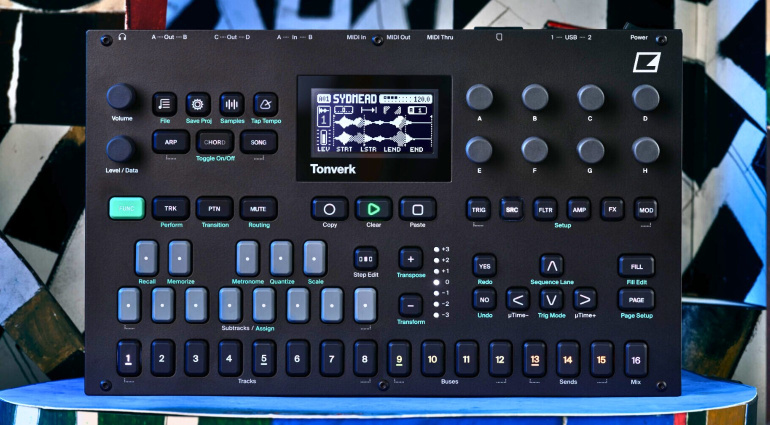
So, what exactly is Wavefinder? It’s not a slapped-on afterthought; it’s a fully-fledged dual-oscillator wavetable synth living inside the Tonverk. You get two independent wavetable oscillators that can be blended with precise balance control. The magic starts with scanning—you can morph through the positions of a wavetable, unlocking everything from smooth, evolving pads to harsh, digital stabs. Modulation sources (likely the excellent LFOs and macros Tonverk already possesses) can be assigned to this scan position, bringing predictable or chaotic movement into the sound.
But the real game-changer, the feature that had me spilling my morning espresso, is the ability to import your own wavetables. This isn’t just about having a selection of classic waveforms from the 80s; it’s a direct pipeline from your computer-based wavetable editors straight into the hardware. Want to use a wavetable you crafted in Serum or a unique one-shot sample converted into a spectral table? Now you can. This transforms Wavefinder from a cool feature into a profoundly personal tool. It bridges the gap between the limitless potential of software and the tactile, performative joy of hardware.
The integration appears seamless. You can create these new wavetable sounds and immediately drop them into any of Tonverk’s eight tracks, leveraging all the existing filters, amplifiers, effects, and that brilliant parameter-lock system. It means a bassline conceived in Wavefinder can sit in a track right next to a drum loop built from classic TR samples and a lead line rendered from a granular cloud. The sonic possibilities explode, yet the workflow—the crucial Elektron “feel”—remains consistent and inviting.
Workflow Wins and Musicality

While Wavefinder steals the show, the 1.3.0 update is peppered with smaller, brilliantly thoughtful workflow enhancements that collectively elevate the entire experience. The most immediately useful is per-subtrack muting. Each of Tonverk’s eight tracks can host up to eight subtracks (think layers or variations). Now, you can mute these subtracks in relation to each other. This is a powerhouse for rhythmic construction, allowing you to build and subtract elements on the fly to create tension, drops, and evolving patterns without jumping between patterns. It brings a level of performative control that feels essential for live use.
Another gem is pattern section looping. This allows you to define a specific segment of a longer pattern and loop just that section. Imagine having a 64-step sequence but wanting to jam on a funky 4-bar chord progression within it. Now you can isolate and loop those 16 steps, making the sequencer feel more like an instrument and less like a linear timeline. It’s a feature that encourages play and improvisation, which is where the best ideas often come from.
These updates, alongside the expanded arpeggiator from 1.2.0 that now offers more variation, demonstrate Elektron’s focus on musicality. They’re not just adding checkboxes to a spec sheet; they’re removing friction between the idea in your head and the sound coming from the speakers. It’s about making the hardware feel more immediate, more responsive, and ultimately, more fun to use when the inspiration hits.
The Evolving Tonverk Hybrid
Stepping back, the narrative around Tonverk has completely changed in a matter of months. The 1.2.0 update with its Grainer engine and fantastic new effects like the metallic Steel Box Reverb and brutal Filter Folder already pushed it beyond pure sampling. Now, with Wavefinder, the transformation is complete. Tonverk has shed any lingering “just a sampler” label to emerge as a legitimate hybrid instrument. It can sample, it can granulate, and it can synthesize from wavetables. This trifecta is incredibly potent.
This evolution also speaks to Elektron’s software-driven development philosophy. They are building instruments that improve with age. For an existing Tonverk owner, these two massive updates represent a staggering increase in value at no extra cost. Your hardware today is fundamentally more powerful and versatile than the one you unboxed. In an industry often obsessed with the next shiny box, this commitment to deepening an existing platform is commendable and deeply rewarding for the community.
Who is this for now? It’s for the sound designer who wants a single hardware hub for all sonic manipulation. It’s for the live performer who needs a compact, reliable brain that can generate entire sets from scratch. And it’s for the Elektron enthusiast who craves that specific workflow but wanted more synthesis under the hood. With these updates, Tonverk isn’t just competing with other samplers; it’s carving out its own category as a unified sound-computation instrument. The only question left is what they’ll add next.
Frequently Asked Questions
Can I use my own wavetables with the new Wavefinder engine?
Yes, absolutely. This is one of the most powerful aspects of the update. You can import custom wavetable files into the Tonverk, allowing you to use tables created in software like Serum, Pigments, or from your own sample sources. This turns the feature from a preset playground into a deeply personal sound design tool.
Do the new workflow features like subtrack muting work with existing projects?
They should integrate seamlessly. Features like per-subtrack muting and pattern section looping are functions of the sequencer and OS, not the sound data itself. Your existing projects will benefit from these new performance and editing capabilities immediately, allowing you to rework old patterns with new flexibility.
Is the Tonverk now a better choice over a dedicated wavetable synth like a Hydrasynth or Modwave?
It’s a different proposition. Dedicated wavetable synths will offer deeper synthesis architectures specifically for that purpose. Tonverk’s strength is integration. Wavefinder gives you potent wavetable sounds within the Elektron ecosystem, alongside sampling, granular synthesis, and that legendary sequencer. If you want a standalone synth engine, look elsewhere. If you want wavetables as part of a broader, performative hardware workflow, Tonverk just became incredibly compelling.
Well, there goes the afternoon. Time to brew a fresh pot, import some utterly ridiculous custom wavetables, and see if I can make the Tonverk sound like a fax machine having an existential crisis. The update, as they say, is installed.