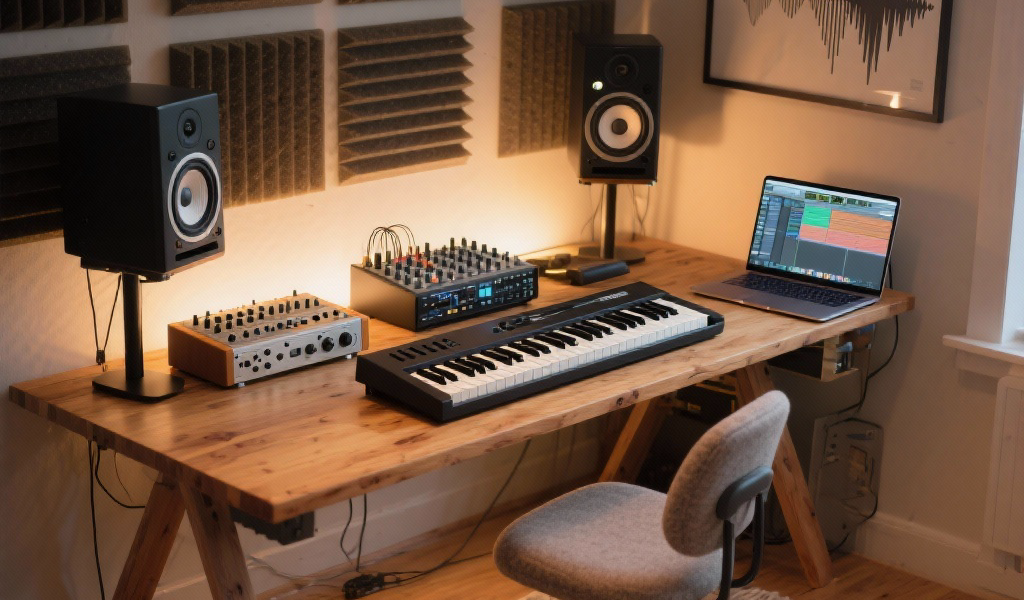
For as long as producers have been making noise, the debate has raged: hardware or software? Here at Noxal, we believe that this isn’t a binary choice but a spectrum of endless creative possibilities. That’s why we’re passionate about hybrid workflows: hardware + software in music production.
Hybrid workflows unlock a new dimension of creativity, marrying the tactile joy of physical instruments with the boundless flexibility of the digital realm. Join us as we explore why this integrated approach isn’t just a trend but the very pulse of contemporary music production.
Summary: Embracing hybrid workflows, which blend hardware and software in music production, deepens creativity, enhances sonic character, and modernizes performance. This article explores its evolution, advantages, challenges, and tips for setting up an efficient hybrid environment.
Key Takeaways:
- Hybrid workflows merge the tactile nature of hardware with the limitless possibilities of software.
- The right balance between hardware synths and software can greatly enhance production capabilities.
- There are trade-offs in complexity and recall with hybrid setups, yet the creative benefits often outweigh the cons.
- Synthesizers play a vital role in hybrid setups, bringing unique textures and character.
- Live performance techniques can enrich studio practice, enhancing workflow and creativity.
Estimated Reading Time: 8 minutes
Join our newsletter for more insights and notifications about upcoming articles on music production.
Table of Contents
- The Evolving Landscape of Music Production: A Tale of Two Worlds
- Hybrid Workflows: A Symphony of Strengths (and a Few Compromises)
- Synthesizers at the Core: Why They Thrive in Hybrid Setups
- Tapping into Live Performance Synergy: Practical Tips for Your Studio
- Crafting Your Own Hybrid Heaven: Actionable Advice
- The Best of Both Worlds: A Nexus of Inspiration
- FAQ
The Evolving Landscape of Music Production: A Tale of Two Worlds
Rewind a few decades, and music production was almost exclusively hardware-based. From massive mixing consoles to groundbreaking hardware synths like the Minimoog, physical gear dominated. These machines were more than tools; they shaped entire genres. The limitations of these instruments often led to iconic sounds.
Then came the digital revolution. The advent of the DAW (Digital Audio Workstation) democratized music-making. Suddenly, one laptop could house an entire studio, attracting a new generation of producers. However, many began to miss the immediate, hands-on connection that hardware offered—an experience that has led to the rise of hybrid workflows.
Hybrid Workflows: A Symphony of Strengths (and a Few Compromises)
Adopting a hybrid workflow is like assembling a dream team for your music production. Let’s break down the pros and cons.
- Unleashed Creativity Through Tactile Interaction: Twisting the VCF knob on a physical synth or tapping a beat on a drum machine feels fundamentally different than clicking a mouse. This feedback leads to unexpected directions and a more playful approach to sound design.
- Diverse Sonic Character: Hardware synths offer a unique warmth, while software synths provide digital precision. A hybrid setup allows layering these strengths, giving tracks incredible depth.
- Optimized Workflow & Performance Integration: Hardware excels at real-time performance, allowing for jamming and immediate idea generation, while software provides the precision needed for editing and automation.
- Cost-Effectiveness & Scalability: You can start with powerful software synths and gradually add hardware as budget allows, making high-quality production accessible.
However, it comes with potential challenges. Increased complexity can hinder creative flow, and hardware can present space and latency concerns. Additionally, perfect recall of settings can be elusive, requiring careful note-taking.
Synthesizers at the Core: Why They Thrive in Hybrid Setups
It’s impossible to discuss hybrid workflows without emphasizing synthesizers. From Kraftwerk to modern pop, they’re integral to all genres. In hybrid setups, they become even more powerful.
Hardware synths offer direct interaction, bypassing the mouse barrier and encouraging experimentation. In contrast, software synths provide immense versatility within the DAW, allowing for the perfect blend of analog character and digital versatility.
Tapping into Live Performance Synergy: Practical Tips for Your Studio
Hybrid workflows encourage a performance-oriented mindset, enhancing creativity.
- Treat Your Hardware as Performers: Approach hardware as instruments. Jamming on them can capture spontaneous brilliance.
- Master Your MIDI Integration: Learn effective MIDI routing for seamless control over both hardware and software, enhancing your studio’s interactivity.
- Seamless Audio Routing: Invest in a quality audio interface and set up dedicated tracks for each piece of gear. Explore parallel processing for added texture.
- Embrace Creative Limitations: Quicker decisions in a live setting can lead to organic musical decisions. Commit to performances for more human feel.
Crafting Your Own Hybrid Heaven: Actionable Advice
Dive into hybrid workflows with the following actions:
- Start Small, Grow Smart: Begin with what you need. Add gear gradually without overwhelming your creativity.
- Learn Your Core Tools: Master your DAW and favorite tools. Develop a solid understanding before expanding.
- Prioritize Your Audio Interface: Invest in a high-quality interface crucial for your hybrid setup’s performance.
- Experiment Fearlessly: Try unconventional methods—mixing hardware and software in unique ways can lead to groundbreaking sounds.
- Organize Your Studio: Good cable management and workspace organization foster clarity and creativity.
- Commit to Learning: Embrace technical challenges as learning opportunities; utilize online resources and communities.
The Best of Both Worlds: A Nexus of Inspiration
The journey through hybrid workflows reflects the evolution of music production. It celebrates creativity, merging the character of hardware synths with the flexibility of software synths.
Here at Noxal, we are inspired by those pushing boundaries. The future of electronic music harnesses the power of every tool. It’s about experimenting and expressing your unique voice within an interconnected soundscape.
What’s your hybrid secret weapon? Share your experiences in the comments!
FAQ
Q: What are hybrid workflows?
A: Hybrid workflows blend traditional hardware gear with software, providing a unique creative process that leverages the strengths of both realms.
A: Hybrid workflows blend traditional hardware gear with software, providing a unique creative process that leverages the strengths of both realms.
Q: Why is a good audio interface important?
A: A good audio interface ensures quality sound, low latency, and compatibility with various hardware and software in your studio.
A: A good audio interface ensures quality sound, low latency, and compatibility with various hardware and software in your studio.
Q: How can I manage complex setups?
A: Invest in proper cable management, create clear documentation for your setup, and use templates in your DAW for efficiency.
A: Invest in proper cable management, create clear documentation for your setup, and use templates in your DAW for efficiency.
As you dive into your hybrid adventures, remember: even the best synths can’t fix a poorly organized studio. So keep your cables neat and your creativity flowing, and may your tracks never suffer from ‘synthesizer envy’!